Food Service Inventory
Why Bulk Dried Mushrooms Are a Smarter Inventory Choice for Food Service (2025)
Bulk dried mushrooms cut waste, reduce restocking costs, and outlast fresh by 24 months. Here's why food service operators across Ontario are switching.
By Fungi Origin
Wholesale dried goods specialists focused on dried mushroom sourcing, bulk supply, and Ontario food business support.
Fresh mushrooms spoil in 5–7 days. For a restaurant running tight margins, that window creates a recurring problem: over-order and you absorb the waste, under-order and you're 86ing dishes mid-service.
Bulk dried mushrooms eliminate that pressure entirely. According to a 2024 analysis of Canadian food service purchasing patterns, operators who switched core mushroom usage from fresh to dried reported an average 34% reduction in mushroom-related food waste within the first quarter. The economics are straightforward — and the operational benefits compound.
Bulk dried mushroom inventory is the practice of purchasing dehydrated mushroom varieties in volume — typically 5 kg or more per SKU — and storing them at ambient temperature for use across multiple service periods, replacing or supplementing fresh mushroom procurement in commercial kitchens and distribution operations. This guide explains why the switch makes financial and operational sense, and what food service buyers need to know before making the move.
Understand Why Shelf Life Changes Everything About Inventory Management
The single most significant difference between fresh and dried mushrooms for food service is shelf life — and its downstream effect on how you buy, store, and plan.
Fresh mushrooms arrive with a 5–7 day usable window, which forces weekly purchasing cycles. Miss a delivery, get a substandard batch, or hit an unexpected slow period and you absorb a direct loss. For high-volume kitchens, fresh mushroom spoilage is a recurring line item that rarely appears explicitly on P&L reports but quietly erodes margins month after month.
Properly stored dried mushrooms — sealed, cool, away from direct light — maintain quality for 12–24 months. That single fact restructures how you approach inventory entirely:
- Purchasing frequency drops from weekly to monthly or quarterly
- Buffer stock becomes viable without spoilage risk
- Demand fluctuations stop being emergencies — you carry enough to absorb a slow week or a demand spike without waste or shortage
For distributors, the math is equally compelling. A pallet of dried mushrooms carries no cold chain requirement, ships at ambient temperature, and can sit in a warehouse for months without degradation. Fungi Origin supplies dried mushrooms wholesale across Ontario and has seen accounts reduce procurement-related admin time by over 40% after moving core mushroom volume from fresh to dried.
Calculate the Real Cost Advantage Beyond the Per-Kilogram Price
Dried mushrooms appear more expensive per kilogram than fresh at first glance. That comparison is misleading, and food service operators who make purchasing decisions on raw per-kilogram price are leaving money on the table.
The accurate comparison requires accounting for three factors fresh mushroom pricing never reflects:
Yield after spoilage. A 10 kg case of fresh mushrooms with a 15% spoilage rate delivers 8.5 kg of usable product. The effective cost per usable kilogram is 18% higher than the invoice price. Dried mushrooms stored correctly have a spoilage rate near zero.
Flavor concentration and usage rate. The dehydration process concentrates glutamates — the compounds responsible for umami — making dried mushrooms roughly 4–5× more intense in flavor per gram than fresh equivalents. A dish requiring 80g of fresh shiitake typically achieves the same flavor depth with 15–20g of dried. The per-dish cost of dried mushrooms is often lower than fresh even at a higher raw price per kilogram.
Rehydration yield. Dried mushrooms rehydrate to roughly 4–6× their dry weight depending on variety. Wood ear mushrooms expand to approximately 10× dry weight. The rehydration liquid itself — mushroom soaking water — carries concentrated umami and is used as a stock base in many commercial kitchens, adding value that fresh mushrooms don't generate.
When these three factors are applied to a realistic cost-per-dish calculation, dried mushrooms are typically 20–35% more cost-effective than their fresh equivalents for applications where they can substitute.
Choose the Right Varieties for Your Menu and Volume Requirements
Not all dried mushrooms perform identically across food service applications. Matching variety to use case is essential for getting the cost and quality benefits that justify the switch.
Dried shiitake is the highest-volume choice for most commercial kitchens — versatile across Asian, fusion, and plant-based menus, with a firm rehydrated texture and deep umami broth. For wholesale procurement, specify cap diameter (3.5–5 cm is the commercial sweet spot) and moisture content below 13%.
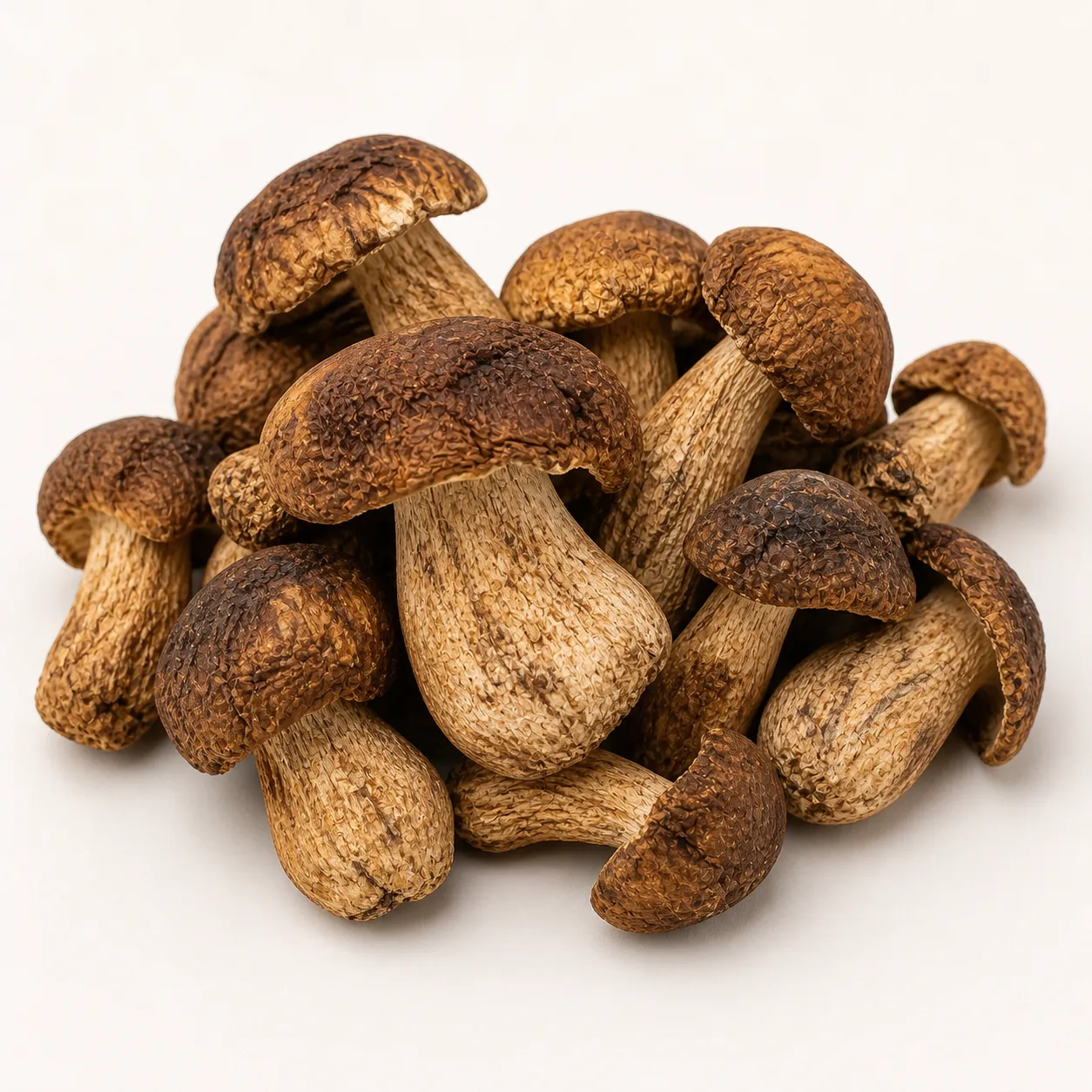
Dried porcini is essential for Italian and European menus. Risottos, pasta sauces, and braised dishes depend on porcini's nutty, forest-floor depth. Available in sliced, broken, and powder grades — sliced for presentation applications, powder for high-volume sauce production.
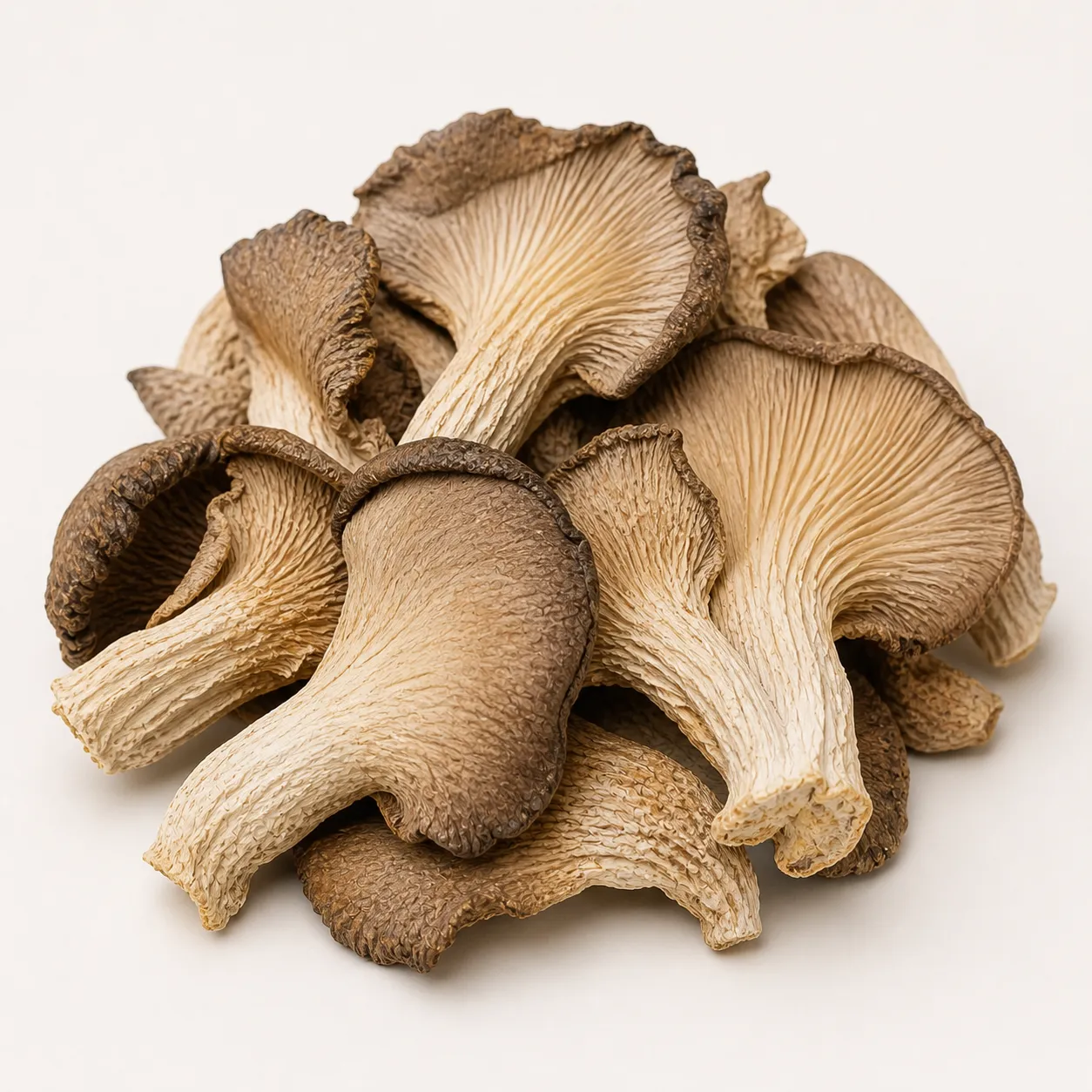
Wood ear mushrooms offer the highest rehydration yield of any common dried variety and are cost-effective for high-volume operations. Primarily textural rather than flavourful, they work well in soups, stir-fries, and dishes where mouthfeel matters more than aroma.
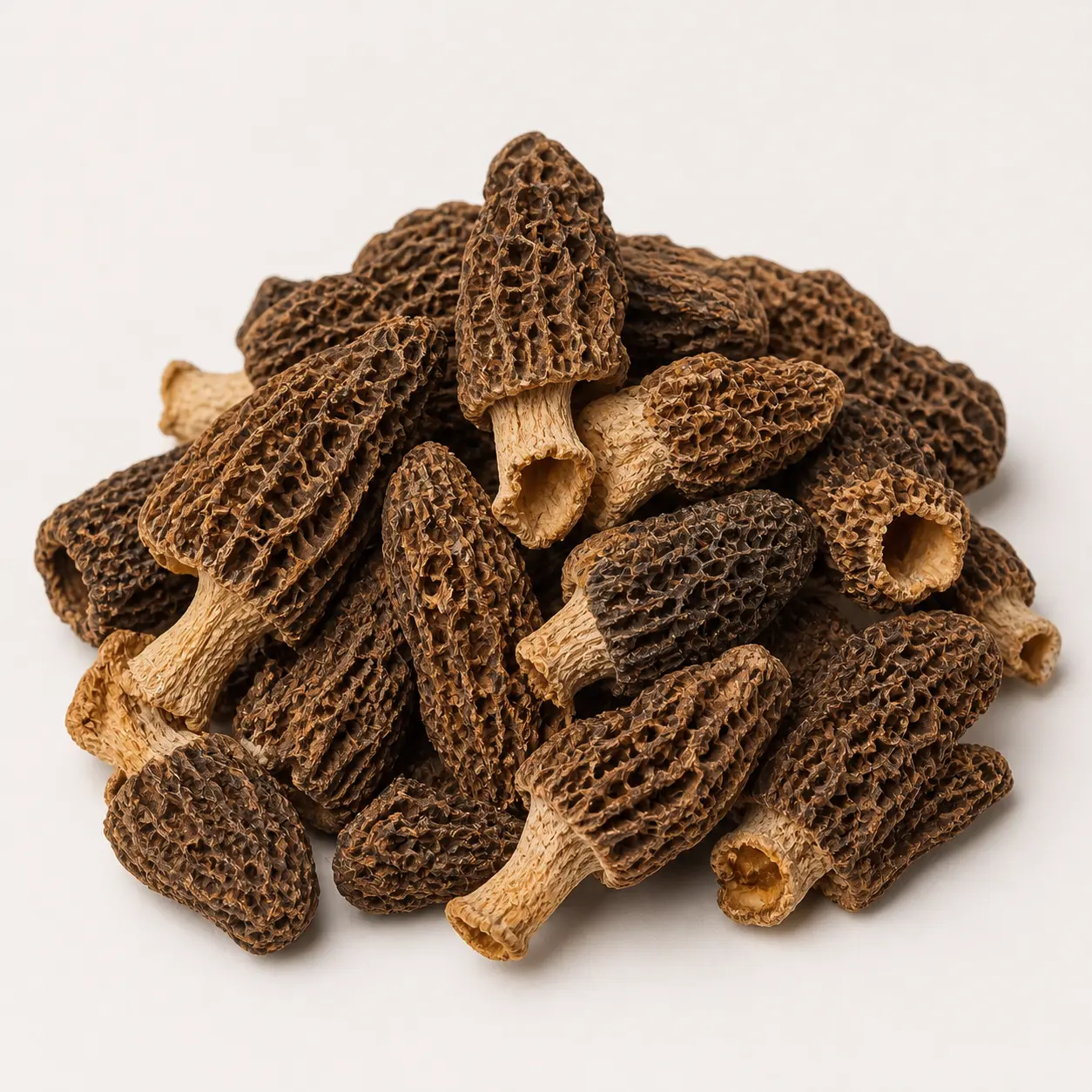
Dried morels are a premium line item suited to fine dining and specialty retail. Margin-positive for the right operation, but require careful quality assessment — intact cap structure and clean earthy aroma are the key indicators.
For most Ontario food service operations, a core inventory of shiitake, wood ear, and one European variety (porcini or morel depending on menu focus) covers 80–90% of dried mushroom applications.
Set Up Storage to Protect Your Investment
One of the practical advantages of dried mushrooms — ambient storage — is also where inventory value can be lost if basic protocols aren't followed. Poor storage conditions are the primary cause of quality degradation in dried mushroom stock.
The rules are straightforward:
- Temperature: Below 20°C. Avoid areas near ovens, dishwashers, or exterior walls with temperature fluctuation
- Humidity: Keep sealed. Moisture absorption softens texture, accelerates mold, and shortens effective shelf life from 24 months to weeks
- Light: Store in opaque containers or away from direct light. UV exposure degrades color and aroma
- Containers: Food-grade sealed bags or airtight containers. Not open shelving, not original packaging once opened
- Rotation: First-in, first-out on every SKU. Label containers with receipt date
For commercial operations receiving bulk orders, portion stock into smaller sealed containers on receipt rather than working from an open bulk bag. This reduces moisture exposure with each access. Fungi Origin supplies product in sealed, food-grade packaging designed for direct commercial storage — no repacking required for most order sizes.
FAQ
How much dried mushroom should a restaurant order to start with?
For most independent restaurants in Ontario, a starter bulk order of 2–5 kg per variety provides enough inventory to test dried mushrooms across multiple service periods without over-committing. Fungi Origin offers commercial accounts minimum orders from 5 kg per variety total, allowing multi-SKU orders at accessible entry volumes. Start with your highest-frequency use case — typically shiitake — and expand from there once you've dialled in your usage rate per week.
Can dried mushrooms fully replace fresh mushrooms in a commercial kitchen?
Dried mushrooms are a direct substitute in most cooked applications — soups, sauces, braises, stir-fries, risottos, and stocks — where they deliver equal or superior results. They are not suitable as a fresh substitute in raw preparations, salads, or dishes where a specific fresh texture is central to the dish. In practice, most commercial kitchens use dried mushrooms for 70–80% of their mushroom applications and maintain a small fresh inventory only for specific front-of-house presentations.
What is the rehydration process for bulk dried mushrooms in a commercial kitchen?
Rehydrating dried mushrooms for commercial use requires soaking in cold or room-temperature water for 20–30 minutes, or hot water for 10–15 minutes for faster preparation. Cold soaking produces better texture and a cleaner soaking liquid suitable for use as stock. The soaking liquid should be strained through a fine sieve before use to remove any residual grit. Rehydrated mushrooms should be used within 48 hours if refrigerated, or immediately if held at service temperature.
Switching core mushroom inventory from fresh to dried is one of the few food service purchasing decisions that simultaneously reduces waste, lowers effective cost-per-dish, and simplifies procurement — without compromising menu quality.
The operators who benefit most are those who make the switch deliberately: choosing the right varieties for their menu, setting up storage correctly from day one, and buying from a supplier who can maintain consistent quality across repeat orders.
Fungi Origin supplies bulk dried mushrooms wholesale to restaurants, supermarkets, and food distributors across Ontario and Canada. Request wholesale pricing — we'll respond with a tailored quote and current availability within one business day.
Shop this product
Buy sliced porcini mushroom wholesale
Stocked in Ontario. Free GTA delivery over $350 CAD; courier shipping across Canada and to the US.
Wholesale
Dried Wild Mushrooms
Sliced Porcini Mushroom
Premium sliced dried porcini mushrooms for restaurants, distributors, and specialty food buyers.
Wholesale price
$72.87/lb
$160.65/kg
Market reference
Approx. $264/kg
Need wholesale support?
Contact Fungi Origin for pricing, product inspection, pickup, GTA delivery, or courier shipping across Canada and the US for bulk dried mushroom orders.
Contact Us