Cordyceps flower
How to Store Dried Cordyceps Flower for Better Quality
Learn how to store dried cordyceps flower away from moisture, heat, light, odours, and pests, with practical checks for home and restaurant inventory.
By Editorial Team
Food sourcing and kitchen operations specialists covering ingredient procurement, storage science, and commercial kitchen efficiency across Canada.
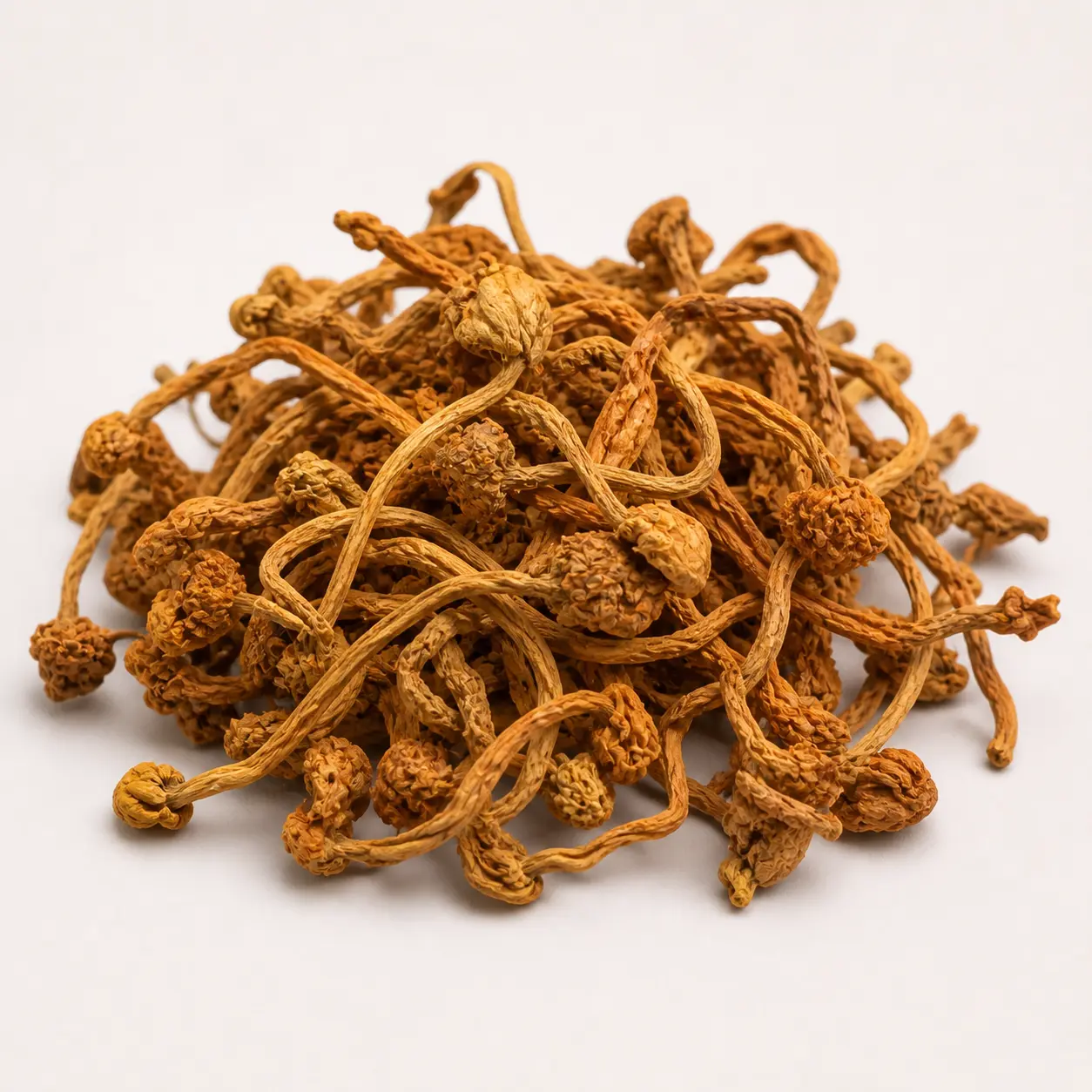
Dried cordyceps flower keeps best in a sealed, food-safe package in a cool, dry, dark place, away from steam, strong odours, sunlight, and temperature swings. After opening, remove only what you need with a dry utensil, press excess air from the package or transfer the product to a clean airtight container, and close it immediately. Good cordyceps flower storage is mainly moisture control, not simply putting every bag in a refrigerator. A stable dry pantry can be better than a refrigerator that repeatedly introduces condensation.
This guide concerns dried culinary Cordyceps militaris, commonly sold as cordyceps flower. It does not establish a universal expiry date or make medicinal claims. The package directions, best-before information, supplier specification, and condition of the actual lot should guide the final decision.
Protect dried cordyceps flower from five quality risks
Moisture is the first storage risk because a dried ingredient readily picks up humidity from its surroundings. A package left open beside a sink, stockpot, dishwasher, or rice cooker can soften even when no water is visibly spilled. Once the strands are less dry, they may clump, lose their clean aroma, or become more vulnerable to spoilage.
Heat and direct light can also reduce sensory quality. Do not keep the bag above a range, beside an oven, in a sunny window, or under a hot service light. Choose a cabinet or dry-storage shelf with a reasonably stable room temperature. A consistently cool area is more useful than moving the product repeatedly between warm and cold locations.
Dried ingredients can absorb surrounding odours. Keep cordyceps flower away from detergents, spices with penetrating aromas, dried seafood, and any chemical storage area. The package should never share a shelf with non-food chemicals. Pest prevention matters as well: keep the storage area clean, inspect incoming cartons, close inner bags, and avoid leaving loose strands or food dust on shelves.
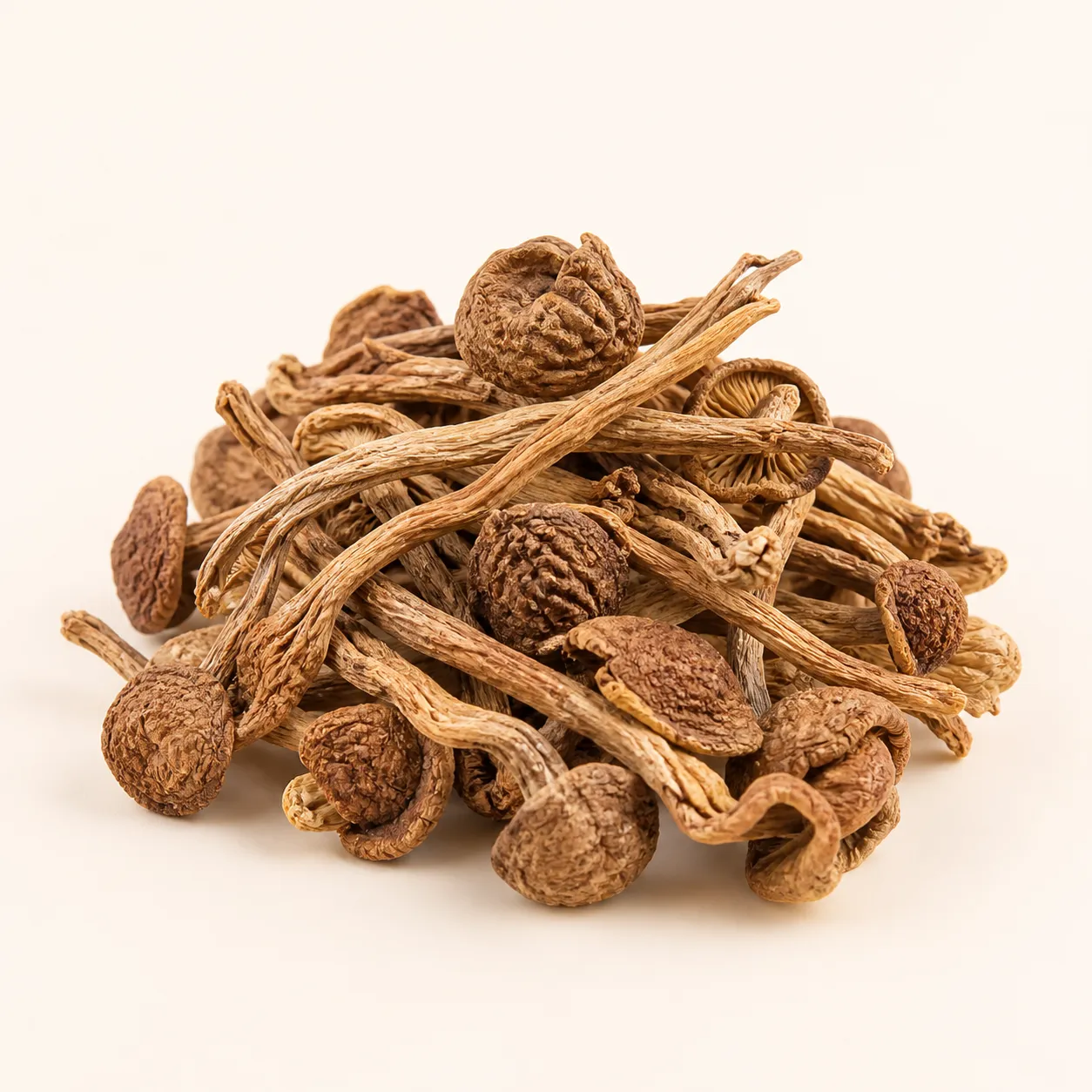
Finally, prevent physical damage. The slender orange strands can break when a soft bag is compressed under heavy cartons. Broken material may still be usable in soup, but excessive breakage changes appearance, portioning, and customer expectations. Store it where the package will not be crushed.
Choose packaging that stays sealed after opening
The best container is clean, dry, food-safe, odour-free, and easy to close completely. If the original pouch has a reliable resealable closure and remains intact, keeping the product in it preserves the original lot and label information. Press out excess air without crushing the strands, seal the top, and place the pouch upright in a protected bin if the storeroom is busy.
If the original package cannot be resealed, transfer the contents to a suitably sized airtight container. Oversized containers hold more humid air and encourage staff to reach deeply into the product. A transparent container makes inspection easy, but it should still be stored in a dark cabinet. An opaque container provides light protection, provided the label remains readable.
Copy the product name, supplier, lot code, opening date, and best-before information onto the working container. Never combine a new lot with the remains of an old one. Mixing removes traceability and can hide a quality change. Restaurants can divide a large carton into smaller working packs so the main supply is not opened throughout every service.
Desiccant packets should be used only when they were supplied for that food package or when the packaging system has been professionally specified. They are not a substitute for fixing a humid room or an unsealed lid, and their “do not eat” status must be clear to staff.
For examples of product format and packing information, review the Fungi Origin dried cordyceps flower page and confirm current details before ordering.
Decide whether pantry, refrigerator, or freezer is appropriate
For routine use, a cool and dry pantry is usually the simplest choice when the label does not require refrigeration. It avoids the moisture that can condense when a cold package is opened in a warm kitchen. Follow any storage statement on the package. The Canadian Food Inspection Agency explains that date markings and storage instructions have specific roles, so a best-before date should be read together with the stated conditions rather than treated as a guarantee under any storage environment.
Refrigeration may be useful in a persistently hot or humid building, but only with excellent moisture control. Keep the product double-sealed. Before opening, allow the closed package to approach room temperature so condensation forms outside the barrier rather than on the food. Remove the portion, reseal promptly, and return it only if that is the established storage procedure. Constant cycling is undesirable.
Freezing is rarely necessary for a normal turnover of dried cordyceps flower. If a business chooses frozen storage for a long holding period, the package must be moisture- and freezer-resistant, and it should remain sealed while returning to room temperature. Repeated thawing and opening defeats the purpose. Always validate the process against the supplier’s written instructions.
Once cordyceps flower has been soaked or cooked, it is no longer a dry shelf-stable ingredient. Treat it as prepared food, refrigerate promptly, label the preparation time, and follow the kitchen’s food-safety plan rather than the dry-product best-before date.
Inspect the product before every batch
A quick visual, aroma, and texture check catches storage problems before the ingredient enters a large recipe. Properly dried strands should match the product’s normal colour and aroma and should not feel unexpectedly damp or sticky. Natural variation exists, so compare the sample with the supplier specification and a known acceptable lot rather than expecting every strand to be identical.
Stop and investigate if you see visible mould, active insects, webbing, water damage, an uncharacteristic sour or musty odour, or unexplained clumping and moisture. Do not rinse visible mould away and serve the ingredient. Isolate the affected lot, retain its label and lot code, photograph the condition, and contact the supplier. When safety is uncertain, discard the product according to the business procedure.
A faded orange colour alone does not prove that the food is unsafe, but it can indicate age, light exposure, or a sensory change. Evaluate colour together with aroma, dryness, packaging integrity, date information, and traceability. Restaurants should define an acceptance standard so one cook is not making an improvised decision during service.
Rotate inventory and buy an amount you can actually use
The practical shelf life of an opened pack depends on handling and turnover, not just the printed date. Mark the receiving and opening dates, place older acceptable stock in front, and use first-expire-first-out rotation. Conduct a short weekly check for damaged seals, humidity, pests, and slow-moving lots.
Estimate usage from real recipes. If one soup batch uses 30 grams and the kitchen sells four batches per week, monthly use is about 480 grams before accounting for testing or waste. That estimate helps select a case size that can be opened and used under controlled conditions. The dried cordyceps flower buying guide explains other purchasing checks, while what cordyceps flower is provides identification and culinary context.
For wholesale orders, ask for the pack format, case quantity, lot identification, date information, storage directions, and current specification. Fungi Origin does not recommend inventing a longer shelf life after repacking. Your internal label should preserve, not replace, the supplier information.
Frequently asked questions
Does dried cordyceps flower need refrigeration?
Not automatically. If the label permits room-temperature storage, a sealed package in a cool, dry, dark pantry is often appropriate. Refrigeration can help in a hot, humid environment only when the product is protected from condensation and odour. Follow the package and supplier instructions for the specific lot.
How long does dried cordyceps flower last after opening?
There is no responsible universal number for every product and kitchen. Packaging, humidity, temperature, handling, and the original best-before date all matter. Record the opening date, keep the package sealed, rotate stock, and reject the product if inspection shows moisture, pests, mould, or an abnormal odour.
Can dried cordyceps flower be stored in a glass jar?
Yes, if the jar is food-safe, completely clean and dry, odour-free, and fitted with a tight lid. Keep it in a dark cabinet, label it with the original product and lot details, and do not top it up with a new lot before the old lot is removed and the jar is cleaned.
Build a storage routine around the actual package
Keep dried cordyceps flower sealed, dry, dark, clean, and protected from heat, odours, pests, and crushing. Preserve traceability, inspect before use, and treat soaked product as prepared food. For current case sizes, packaging, specifications, or a sample discussion, contact Fungi Origin with your expected monthly usage and application.
Shop this product
Buy cordyceps flower wholesale
Stocked in Ontario. Free GTA delivery over $350 CAD; courier shipping across Canada and to the US.
Wholesale
Dried Specialty Goods
Cordyceps Flower
Quality dried cordyceps flower suitable for soups, restaurants, and bulk resale.
Wholesale price
$15.62/lb
$34.43/kg
Market reference
Approx. $57–108/kg
Need wholesale support?
Contact Fungi Origin for pricing, product inspection, pickup, GTA delivery, or courier shipping across Canada and the US for bulk dried mushroom orders.
Contact Us