Morel Mushroom
How to Choose High-Quality Dried Morel Mushrooms (Buyer's Checklist)
A practical 6-point checklist for evaluating dried morels — color, aroma, moisture, debris, packaging, and origin. Avoid bad lots and overpaying.
By Editorial Team
Food sourcing and kitchen operations specialists covering ingredient procurement, storage science, and commercial kitchen efficiency across Canada.
Dried morels look deceptively similar across vendors — until you cook them. A bad lot wastes hundreds of dollars in inventory, frustrates kitchen staff, and erodes trust in the supplier. The difference between premium and mediocre morels often comes down to six checkpoints buyers can verify before placing an order or within minutes of receiving a shipment. Choosing high-quality dried morel mushrooms means evaluating six criteria — color, aroma, moisture content, debris level, packaging integrity, and origin transparency — before payment is finalized or before a shipment is accepted into inventory.
Inspect Color and Visual Uniformity
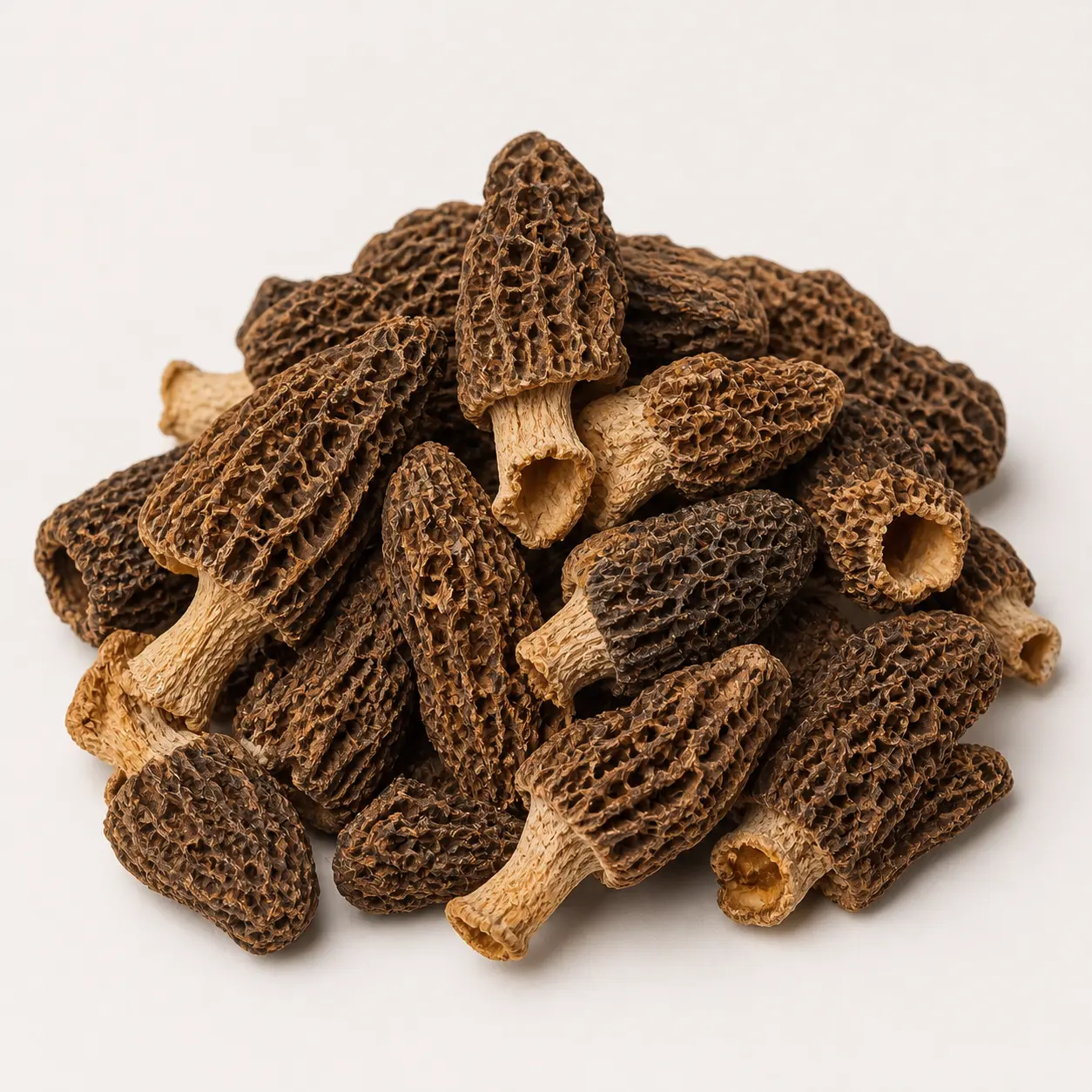
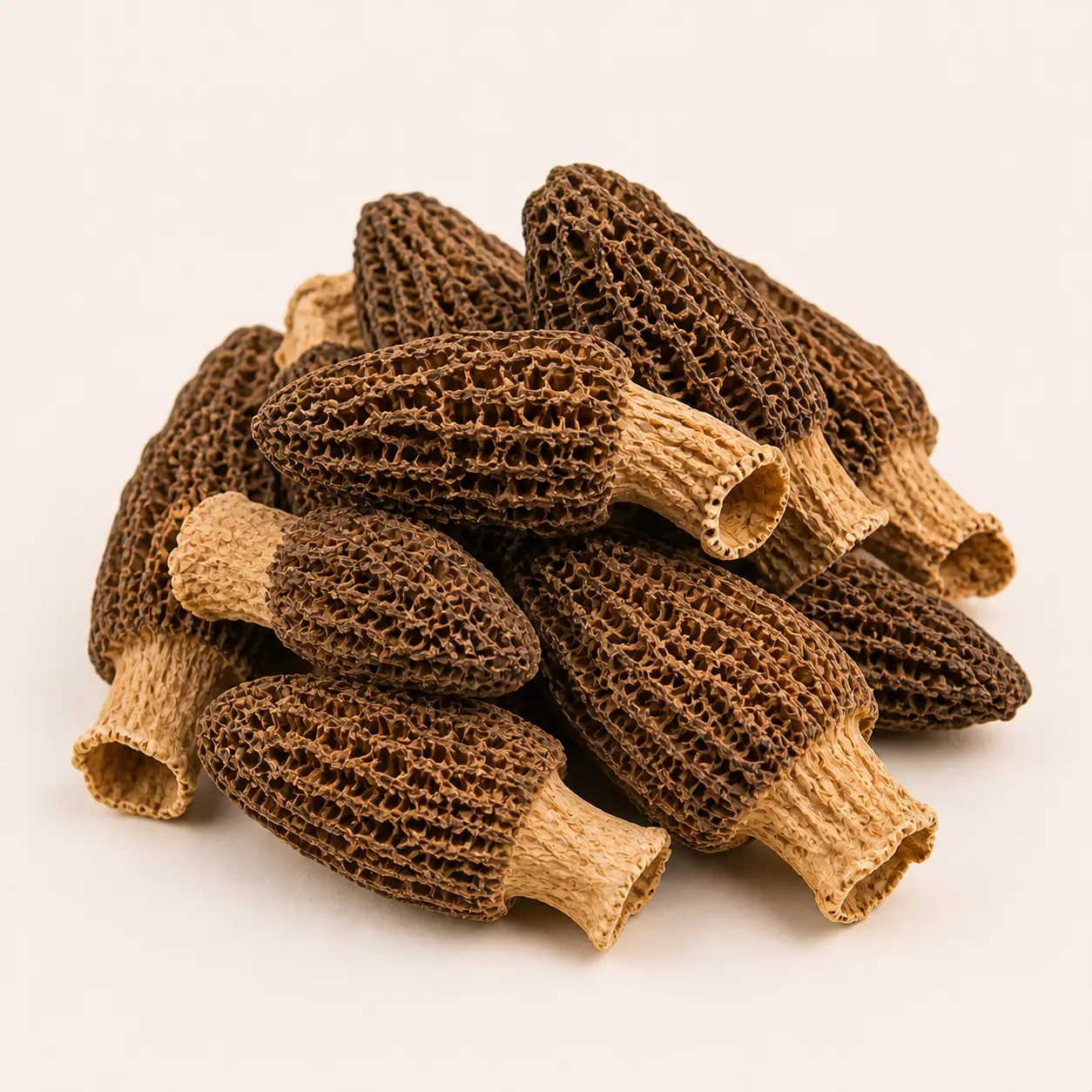
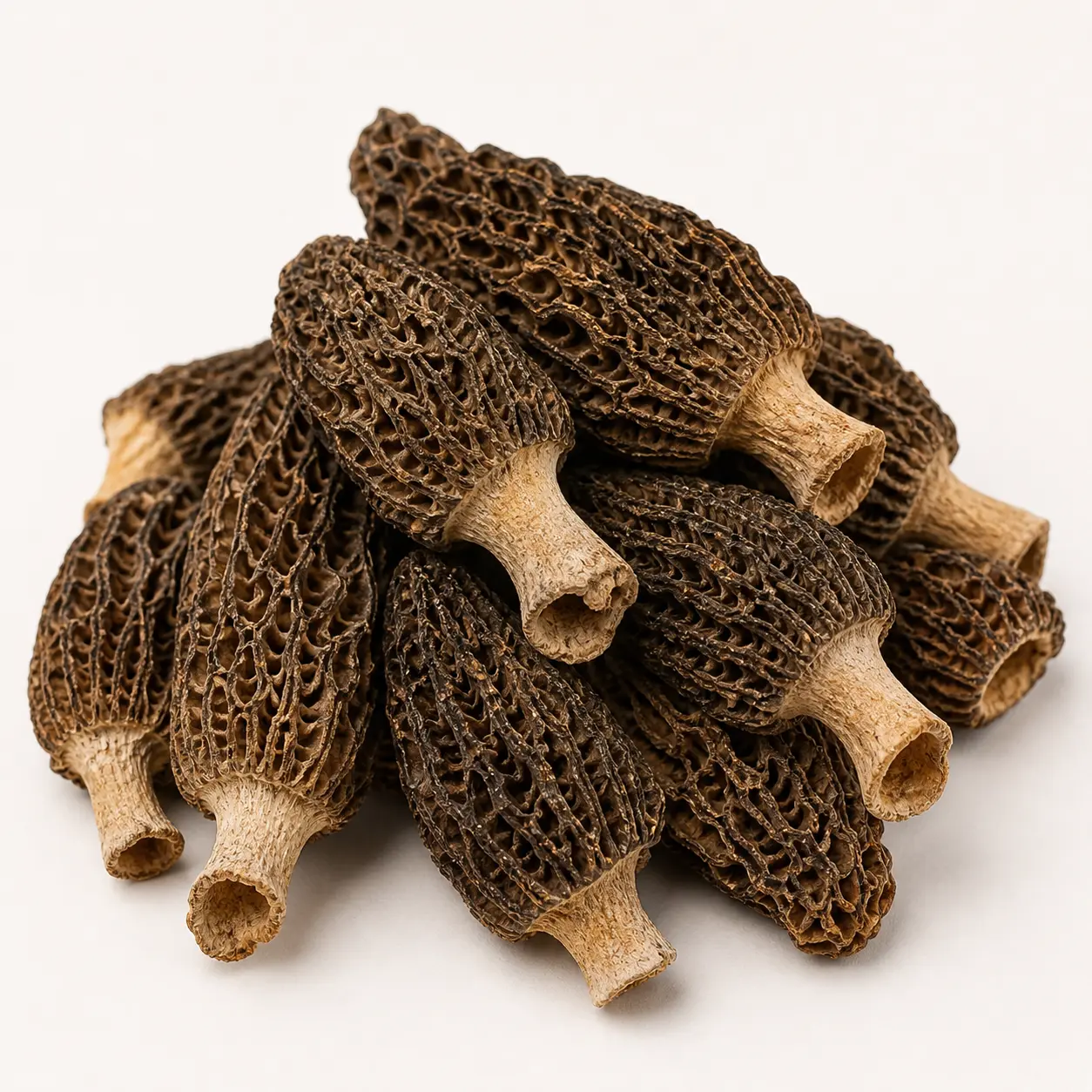
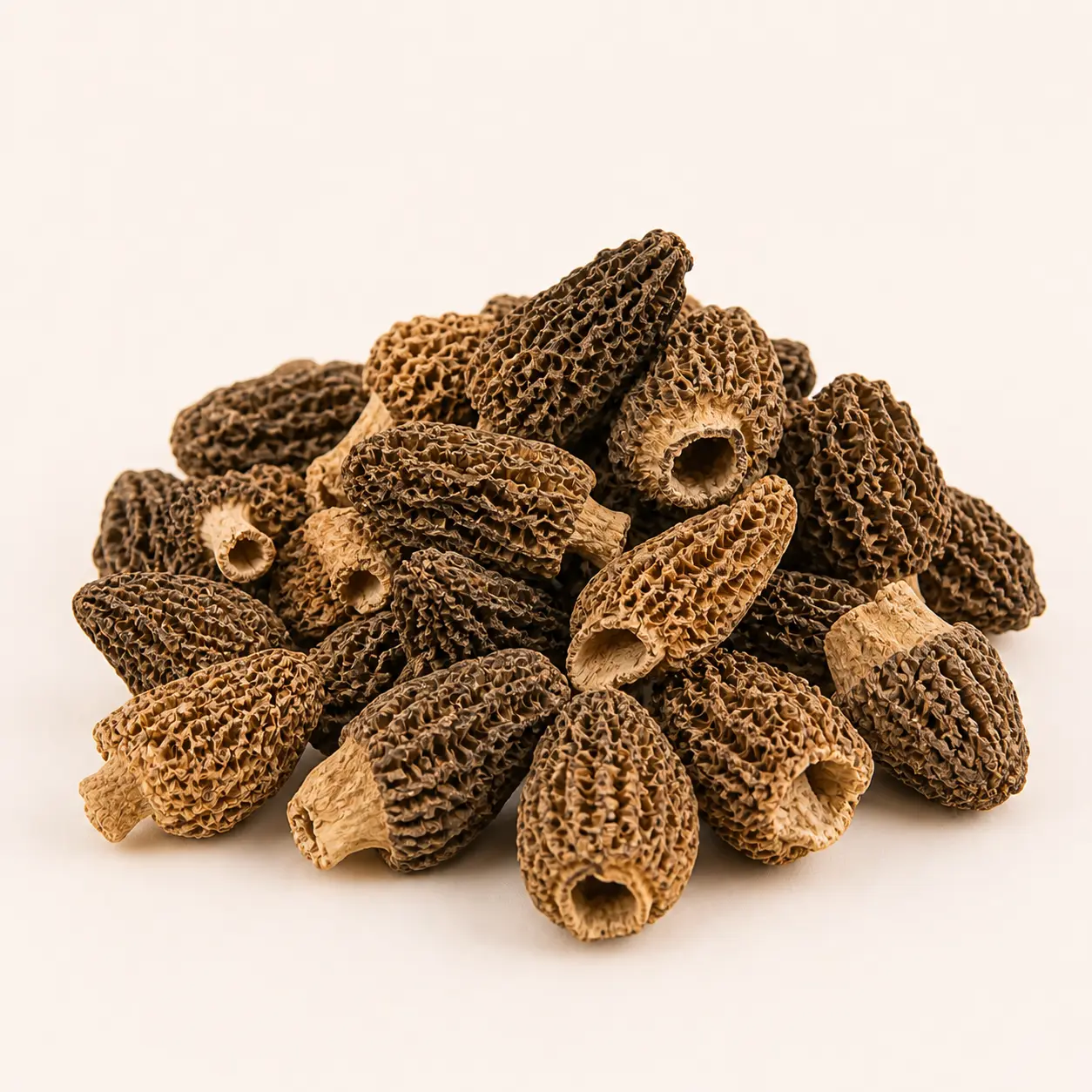
Color is the first quality signal a buyer can verify. Premium dried morels show a deep, consistent brown to near-black color across the lot, with the honeycomb cap structure clearly defined. Off-color morels indicate quality issues that often go deeper than appearance.
Watch for these red flags:
- Gray or white surface coating — likely mold from improper drying or storage
- Pale yellow or beige caps — under-mature harvest or sun-bleached
- Black powdery residue — could be charred from over-drying
- Inconsistent color across the bag — multiple harvests blended together
Black morels (Morchella elata group) should be near-black to dark chocolate brown. Yellow morels (Morchella esculenta) show tan to deep amber. Both should have clear honeycomb ridge definition that hasn't collapsed or merged. According to a 2023 quality assessment by the North American specialty mushroom trade association, color uniformity correlates strongly with proper drying technique and storage humidity control.
Smell-Test for Aroma Intensity and Cleanliness
Aroma is the most reliable single quality indicator and the hardest to fake. Open the bag, take a deep inhale, and judge the aroma against three benchmarks. Premium morels produce a strong, complex, earthy scent — sometimes described as nutty, smoky, or meaty.
What different aromas signal:
- Strong earthy, nutty, slightly smoky — premium quality, properly dried and stored
- Faint or dusty — old lot or poorly stored
- Musty or mildewy — humidity damage; reject the lot
- Chemically or harsh — possible sulfite treatment or chemical drying agents
- Fishy or ammonia-like — bacterial breakdown; reject immediately
A trustworthy supplier will let you sample the aroma before you commit to a wholesale order. Fungi Origin sends pre-purchase aroma samples for first-time wholesale buyers and welcomes warehouse-visit inspection for established accounts.
Check Moisture Content and Snap Test
Properly dried morels are crisp, lightweight, and snap rather than bend. Dried morel caps should have a moisture content below 12% — the threshold below which the mushrooms remain microbiologically stable and free from mold risk over a 24-month shelf life.
Practical at-receiving moisture tests:
- Snap test — pinch a cap between thumb and forefinger; it should crackle or snap
- Weight test — premium dried morels feel almost weightless for their size
- Shake test — a properly dried lot rattles audibly inside the bag
- Bend test — caps that bend without breaking are too moist
Suppliers should provide moisture documentation on the packing list. A reputable lot certificate states the measured moisture percentage, harvest origin, and grade. If the supplier can't or won't provide this, you have your answer about quality.
Evaluate Debris, Stems, and Cap Integrity
Even premium morels contain some debris — small pieces of forest soil, broken cap fragments, or stem trim. The question is how much. Acceptable thresholds for Grade A morels are no more than 3% debris by weight, with whole or near-whole caps making up at least 90% of the lot.
Quick evaluation method:
- Pour a small portion onto a white plate
- Count whole caps versus broken pieces and fragments
- Look for visible grit, sand, twigs, or insect debris
- Check for evidence of pest activity (webbing, holes, larvae casings)
According to 2024 import data, lots with debris levels above 8% are considered commercial-grade rather than Grade-A and should price 25–40% lower. Don't pay Grade-A prices for commercial-grade debris content. A clean lot reflects careful foraging, sorting, and packaging — and a supplier who values their reputation.
Verify Packaging, Origin, and Documentation
Quality control extends beyond the mushrooms themselves to how they're packaged and documented. Premium morels arrive in resealable, food-grade barrier bags with desiccant packets to prevent humidity ingress during transport and storage.
Documentation that should accompany a wholesale order:
- Country and region of origin (e.g., Yunnan China, Pacific Northwest)
- Harvest year — morels lose quality after 24 months even when stored well
- Grade certificate with size and quality classification
- Moisture content measurement
- Lot or batch number for traceability
- Importer or distributor identification for Canadian regulatory compliance
Fungi Origin includes a full lot information card with every wholesale shipment, providing transparency from foraging region through to the warehouse shipment date. This kind of documentation isn't optional for a serious supplier — it's the standard.
Frequently Asked Questions
How can I tell if dried morels have gone bad?
Bad dried morels show three clear signs: musty or mildew odor (rather than earthy), white or gray surface mold, and a soft or rubbery texture instead of crisp snap. Discard the lot if any of these appear. Properly stored dried morels maintain quality for 18–24 months in airtight containers in a cool, dark place.
Should I buy Chinese morels or North American morels?
Both regions produce excellent morels, and quality depends on the supplier rather than the country. Yunnan and Sichuan morels are the global volume leader and offer consistent quality at competitive pricing. Pacific Northwest morels are scarcer and usually priced higher. Quality of grading and storage matter more than geographic origin.
What's the difference between Grade A and Grade B dried morels?
Grade A dried morels feature whole intact caps, uniform deep color, less than 3% debris, less than 12% moisture, and complete grade documentation. Grade B lots include broken caps, mixed sizes, slightly higher debris, and may lack origin paperwork. Grade B morels are 25–40% cheaper and acceptable for sauces, stocks, and powders.
Buy with Confidence Using a Six-Point Inspection
Quality dried morels reward the buyer who runs a quick six-point check on every shipment — color uniformity, aroma intensity, moisture and snap, debris level, packaging integrity, and origin documentation. Suppliers who consistently pass these checks earn long-term wholesale relationships; those who don't reveal themselves on the first lot.
Browse Fungi Origin's graded dried morel selection where every wholesale shipment ships with full lot documentation, or contact our team for a pre-purchase sample of any grade you're evaluating.
Shop this product
Buy morel mushroom small wholesale
Stocked in Ontario. Free GTA delivery over $350 CAD; courier shipping across Canada and to the US.
Wholesale
Dried Wild Mushrooms
Morel Mushroom Small
Small-grade dried morel mushrooms with excellent wholesale value.
Wholesale price
$85.02/lb
$187.43/kg
Market reference
Approx. $419/kg
Need wholesale support?
Contact Fungi Origin for pricing, product inspection, pickup, GTA delivery, or courier shipping across Canada and the US for bulk dried mushroom orders.
Contact Us