Shiitake Mushroom
Best Dried Mushrooms for Asian Restaurants in Canada
Five dried mushrooms every Asian restaurant should stock — shiitake, wood ear, oyster, lion's mane, and cordyceps flower — with use cases and pricing.
By Editorial Team
Food sourcing and kitchen operations specialists covering ingredient procurement, storage science, and commercial kitchen efficiency across Canada.
Asian cuisines rely on dried mushrooms more than virtually any other cooking tradition. From Cantonese clay pot dishes to Sichuan stir-fries to Korean banchan to Japanese kaiseki, dried mushrooms aren't optional — they're structural ingredients that define authentic flavor profiles. The Asian restaurants in Canada getting this right stock multiple dried mushrooms strategically, deploying each species to specific dishes rather than relying on shiitake alone for everything. The best dried mushrooms for Asian restaurants in Canada are shiitake, wood ear (black fungus), oyster mushroom, lion's mane, and cordyceps flower — five complementary species that together cover the full range of dim sum, hot pot, stir-fry, soup, and tasting menu applications across Chinese, Japanese, Korean, Vietnamese, and pan-Asian cuisines.
Stock Shiitake as the Core Workhorse
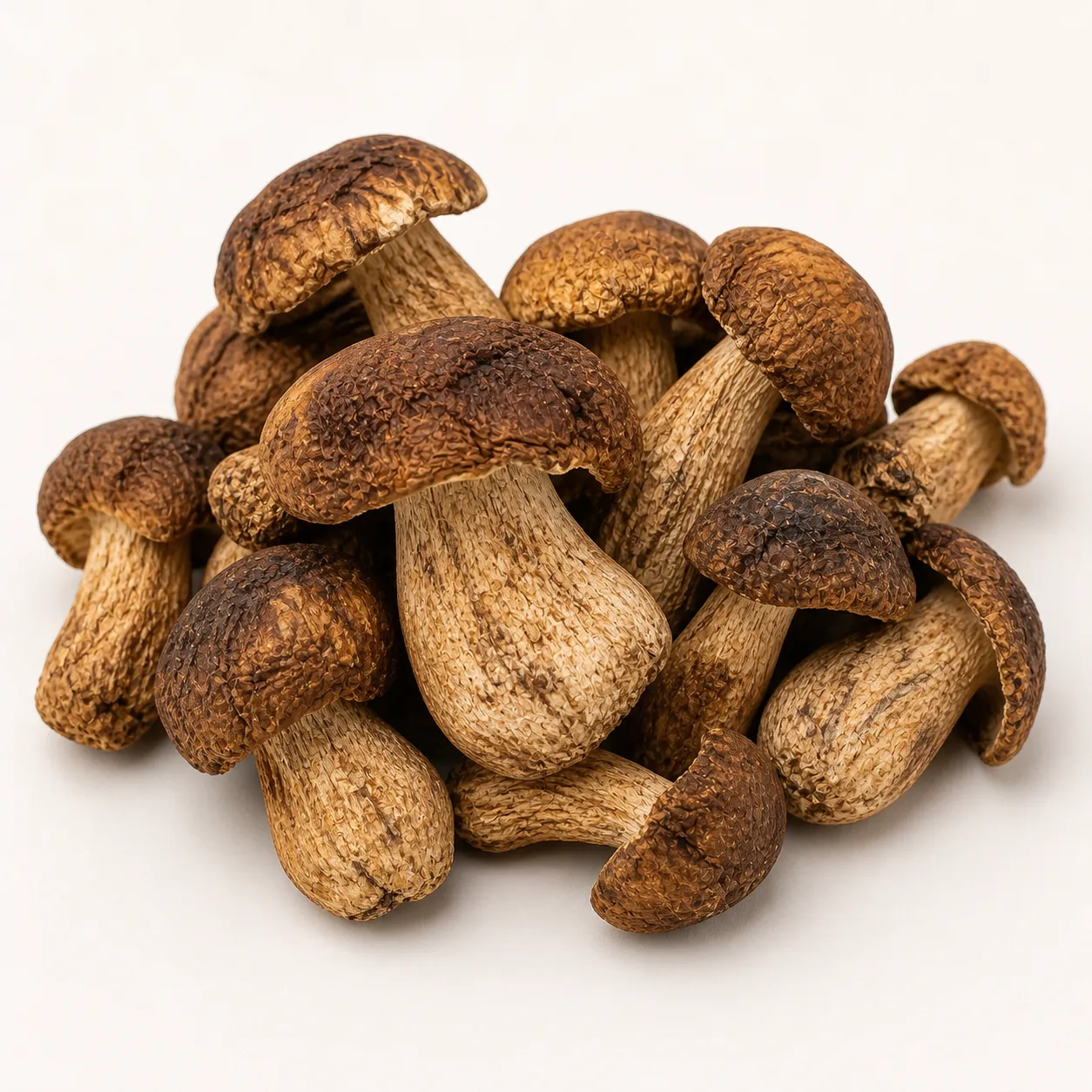
Shiitake (Lentinula edodes) is the most essential dried mushroom for any Asian restaurant. It anchors broths and stocks, contributes umami depth to sauces, plays a structural role in vegetarian preparations, and appears as a featured ingredient in countless traditional dishes.
Recommended shiitake program for an Asian restaurant:
- Sliced koshin shiitake — 65% of shiitake volume; daily sauté and stir-fry production
- Whole koshin shiitake — 20%; soups, stocks, classic preparations
- Whole donko shiitake — 8%; showcase dishes, premium hot pot, fine dining
- Shiitake stems and pieces — 7%; stocks, sauces, batched preparations
Annual shiitake consumption for a full-service Canadian Asian restaurant typically runs 25–80kg, depending on menu prevalence. At 2025 wholesale pricing of CAD $40–$70/kg for sliced koshin Grade A, that's a CAD $1,500–$5,500 ingredient line annually — modest against the menu revenue it supports.
Add Wood Ear (Black Fungus) for Stir-Fries and Hot Pot
Wood ear mushroom (Auricularia auricula-judae) — also called black fungus, cloud ear, mu er, or kikurage — is the second-most-important dried mushroom for Asian restaurants, particularly Chinese and Korean operations. Its distinctive crunchy texture is unmatched by any other commercial mushroom.
Wood ear applications in Asian restaurants:
- Sichuan hot pot ingredient — table-side cooking standard
- Cantonese stir-fries — adds textural contrast to vegetable and meat dishes
- Korean japchae and banchan — visual and textural component
- Hunan and Sichuan cold dishes — wood ear salad with chili oil
- Cantonese soup ingredients — particularly congee and slow-simmered soups
- Vietnamese rice noodle dishes — adds texture to bun bo hue and similar dishes
Wood ear is also remarkably affordable — typically CAD $20–$45/kg dried at wholesale, the lowest-cost serious dried mushroom in the Asian restaurant program. Annual consumption typically runs 10–25kg, generating substantial menu integration at minimal ingredient line cost. The safety note: always rehydrate wood ear correctly (cool water, not extended room-temperature soak) to avoid food-safety concerns documented in research.
Add Oyster Mushrooms for Stir-Fries and Vegan Menus
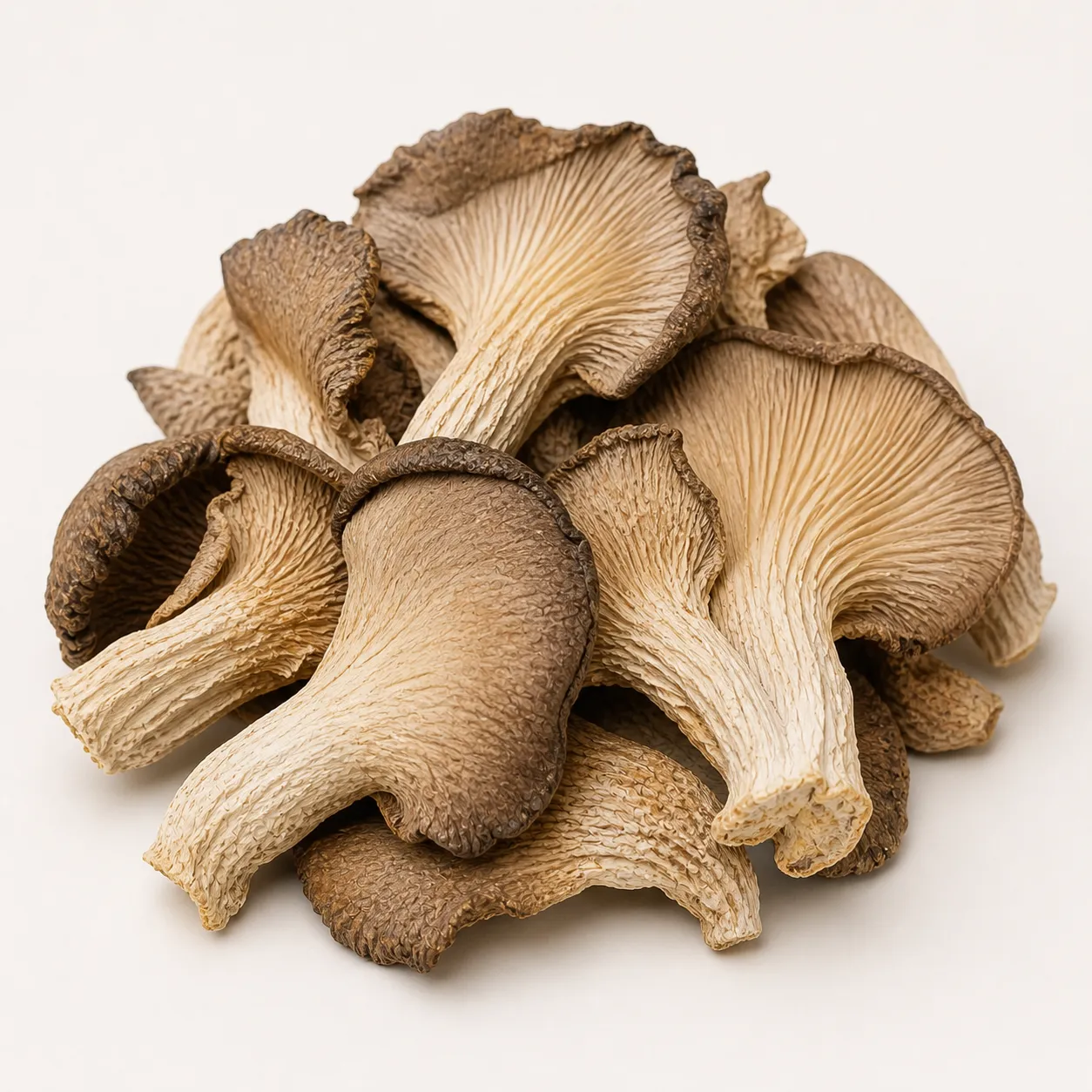
Dried oyster mushrooms (Pleurotus ostreatus and Pleurotus eryngii — king oyster) are increasingly prominent in Asian restaurants, particularly for vegetarian, vegan, and Buddhist-cuisine menu items. They deliver textural variety that shiitake and wood ear can't provide.
Oyster mushroom applications:
- Vegetarian "abalone" — king oyster cut into rounds for Cantonese vegan-banquet dishes
- Stir-fried oyster mushroom dishes — quick-cook with garlic and chilies
- Vegan dim sum fillings — chopped king oyster as meat replacement
- Buddhist-cuisine clay pot preparations — slow-cooked oyster mushroom features
- Korean japchae enrichment — sliced oyster mushrooms as protein component
- Pan-Asian noodle bowls — oyster mushrooms as topping protein
Wholesale pricing runs CAD $50–$95/kg for dried oyster mushroom Grade A — moderate cost with broad application range. King oyster (eryngii) particularly delivers a meaty texture that elevates vegan menu items in Asian restaurants targeting plant-based diners.
Add Lion's Mane for Plant-Based and Modern Menu Items
Lion's Mane (Hericium erinaceus) has become increasingly important in modern Asian restaurants — particularly higher-end and fusion concepts — for plant-based menu items and traditional Chinese medicinal-cuisine preparations.
Lion's Mane applications in Asian restaurants:
- Vegan "scallop" or "abalone" — center-of-plate plant-based main courses
- Traditional Chinese medicinal soups — pairs with goji, dates, longan
- Buddhist-cuisine "mock meat" preparations — Lion's Mane braised in soy
- Modern Korean and Japanese fusion — Lion's Mane in ramen, bibimbap variations
- Plant-based dim sum — Lion's Mane in dumplings and steamed buns
- Wellness-positioned menu items — featuring Lion's Mane's cognitive-support research
Wholesale pricing runs CAD $90–$140/kg for whole dried Grade A — mid-premium cost suitable for menu items priced to support the ingredient. Annual consumption for a Canadian Asian restaurant featuring Lion's Mane regularly typically runs 2–6kg.
Add Cordyceps Flower for Soups and Premium Dishes
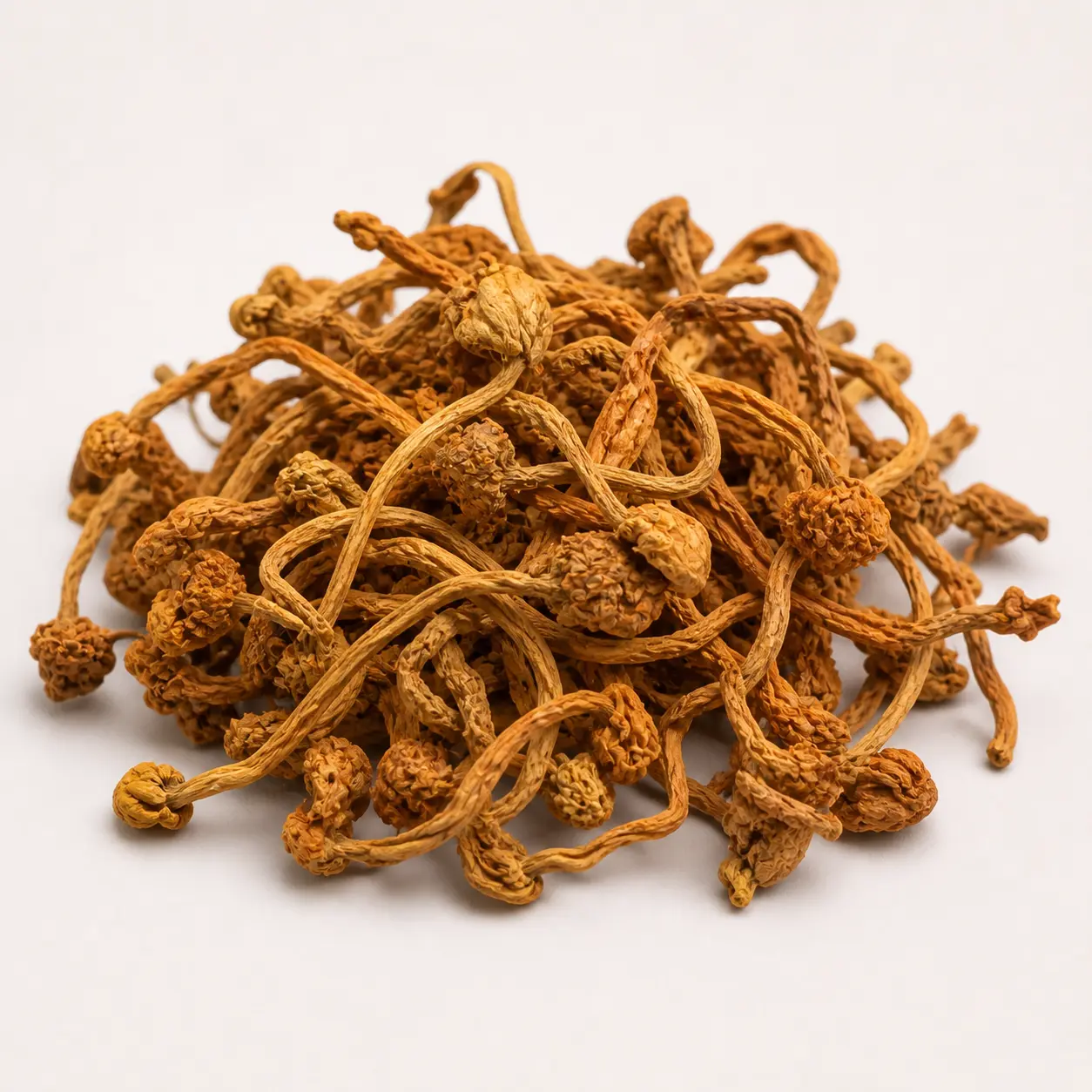
Cordyceps flower (Cordyceps militaris cultivated form) is the most distinctive dried ingredient in this five-mushroom Asian restaurant program. Despite its name, it's not the same as wild cordyceps (Cordyceps sinensis) — it's a cultivated cousin with similar visual identity at dramatically lower cost.
Cordyceps flower applications:
- Premium hot pot specialty — adds visual drama and traditional medicinal positioning
- Soup garnish and ingredient — particularly Cantonese double-boiled soup styles
- Traditional Chinese medicinal-cuisine preparations — pairs with chicken, pork, traditional herbs
- Tea and tonic beverages — increasingly popular at higher-end Asian restaurants
- Modern Asian fine dining — featured ingredient in tasting menu courses
- Wellness positioning — supports menu items targeting health-conscious diners
Wholesale pricing runs CAD $90–$160/kg for dried Grade A cordyceps flower — premium pricing justified by its niche role and traditional positioning. Annual consumption is typically modest (1–4kg) but supports high-margin menu items.
Frequently Asked Questions
How much should an Asian restaurant budget annually for dried mushrooms?
A full-service Canadian Asian restaurant should budget CAD $3,500–$11,000 annually for dried mushrooms across the five-mushroom program (shiitake, wood ear, oyster, lion's mane, cordyceps flower). Shiitake accounts for roughly 50% of that spend; wood ear another 15%; the remaining 35% split across oyster, lion's mane, and cordyceps flower. The investment supports CAD $35,000–$120,000 in mushroom-featured menu revenue depending on menu pricing and item velocity.
Can I source all five mushrooms from one Canadian supplier?
Yes, direct importer-distributors like Fungi Origin carry all five Asian-cuisine mushroom species in graded formats. Single-supplier sourcing simplifies accounting, consolidates shipping, and unlocks multi-cluster wholesale pricing typically 8–15% better than buying each mushroom from separate vendors. Most Asian restaurants benefit from a single mushroom-program supplier rather than scattered specialty buyers.
What's the most underused dried mushroom in Asian restaurants?
Cordyceps flower is the most underused dried mushroom in Canadian Asian restaurants. Many operators skip it because of cost concerns or unfamiliarity, but the menu-revenue lift from featuring cordyceps in premium soups and tasting menus typically returns 5–10x the ingredient cost. Even modest 1kg annual purchasing transforms specific high-margin menu items.
Build a Five-Mushroom Asian Restaurant Program
Shiitake for daily core use, wood ear for textural variety in stir-fries and hot pot, oyster mushroom for vegan menu development, Lion's Mane for plant-based and modern fusion items, and cordyceps flower for premium soups and tasting menus. Together, the five-mushroom program covers every major Asian restaurant application — from neighborhood operations to fine-dining concepts — at sustainable food cost structures.
Contact the Fungi Origin Asian-restaurant program team for a tailored five-mushroom starter pack, or browse the full graded selection across all five species.
Shop this product
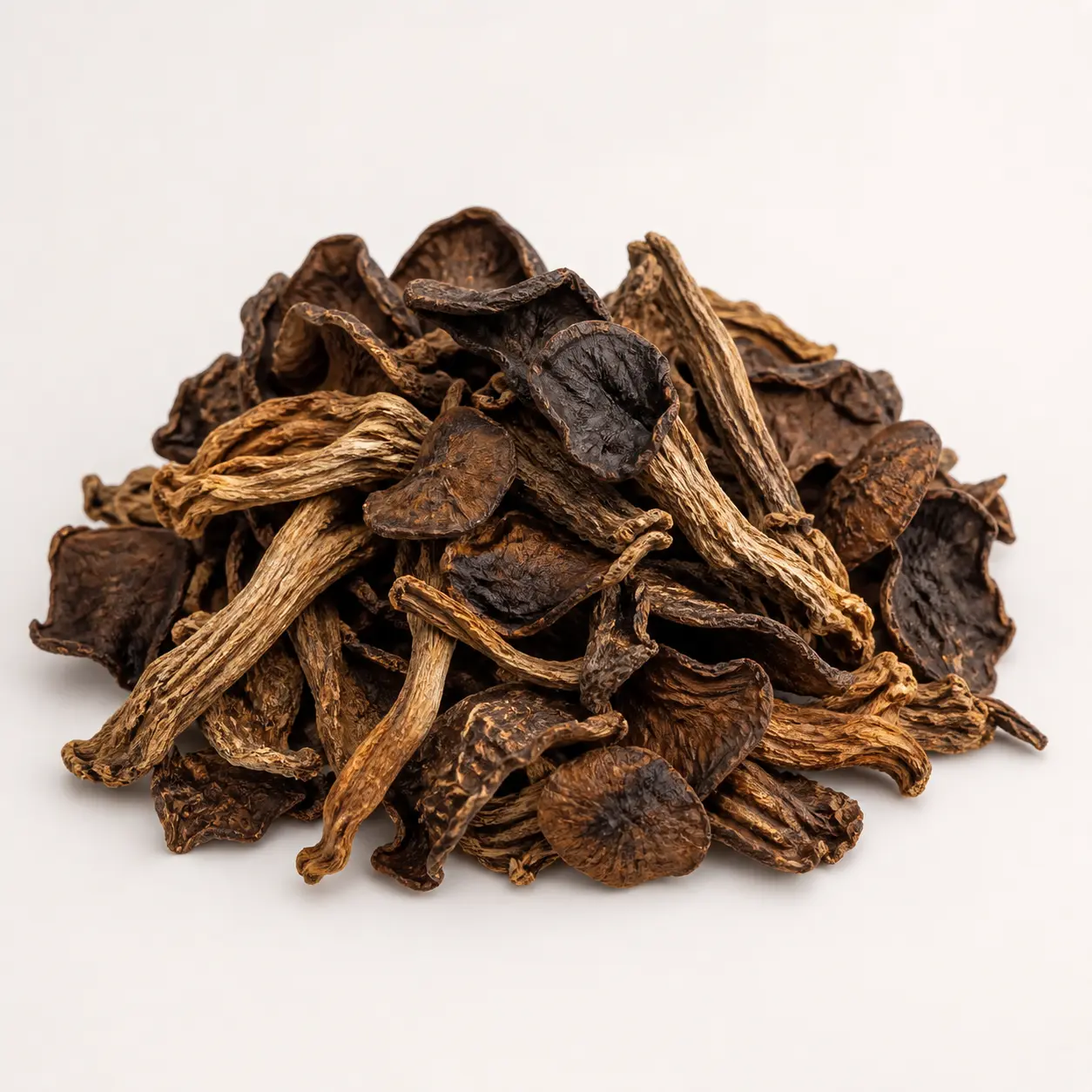
Buy black fungus wholesale
Stocked in Ontario. Free GTA delivery over $350 CAD; courier shipping across Canada and to the US.
Wholesale
Dried Fungus
Black Fungus
Clean and well-selected dried black fungus suitable for food service and retail resale.
Wholesale price
$15.62/lb
$34.43/kg
Market reference
Approx. $59–80/kg
Need wholesale support?
Contact Fungi Origin for pricing, product inspection, pickup, GTA delivery, or courier shipping across Canada and the US for bulk dried mushroom orders.
Contact Us