Black Fungus / Wood Ear
Black Fungus Health Benefits and Nutrition Facts
Black fungus delivers fiber, iron, B vitamins, and circulation-supporting compounds in a low-calorie package. Honest research overview for Canadian buyers.
By Editorial Team
Food sourcing and kitchen operations specialists covering ingredient procurement, storage science, and commercial kitchen efficiency across Canada.
Black fungus has been used in traditional Chinese medicine for over 2,000 years — primarily for circulation and "blood health." Modern research has begun examining these traditional uses with surprisingly supportive findings. Black fungus delivers significant fiber, iron, and bioactive compounds linked to cardiovascular benefits in published studies. The nutrition story is more substantial than the mushroom's modest commercial profile would suggest. Black fungus is a nutrient-dense edible fungus rich in dietary fiber, iron, calcium, B vitamins, and bioactive polysaccharides, with traditional and modern research suggesting cardiovascular benefits, anticoagulant effects, immune support, and gastrointestinal health support — all delivered at under 70 calories per 30g dried portion.
Examine the Macronutrient and Mineral Profile
Black fungus delivers an impressive nutrient profile for a low-calorie food. A standard 30g portion of dried black fungus (rehydrating to roughly 180g) provides approximately 65 calories, 3g of protein, 18g of carbohydrate (8g of which is fiber), and minimal fat.
Mineral and vitamin profile per 30g dried:
- Iron — 5.4mg (30% daily value)
- Calcium — 116mg (12% DV)
- Potassium — 220mg
- Magnesium — 36mg
- B-vitamins (riboflavin, pantothenic acid, niacin) — meaningful contributions
- Selenium — modest contribution
The iron content is particularly noteworthy. Black fungus delivers more iron per portion than most plant foods, making it a meaningful contribution to iron-conscious diets — vegetarian, vegan, and pre-pregnancy nutrition specifically. The non-heme iron in black fungus pairs well with vitamin-C-rich ingredients (peppers, citrus, tomato) for absorption optimization.
Understand the Circulation and Cardiovascular Research
Black fungus's most-cited health area is circulation and cardiovascular support. Traditional Chinese medicine has used black fungus for these purposes for centuries; modern research has begun examining the underlying mechanisms with interesting findings.
Cardiovascular and circulation research highlights:
- Anticoagulant effects — multiple studies show black fungus extracts reduce platelet aggregation
- Cholesterol modulation — animal studies suggest cholesterol-lowering effects
- Polysaccharide compounds — appear to influence blood-clotting pathways
- Anti-inflammatory effects — may contribute to vascular health
- Traditional use convergence — modern research aligns with centuries-old TCM applications
The anticoagulant effect deserves specific attention. According to a 2023 review in the Journal of Ethnopharmacology, black fungus extracts show measurable platelet-inhibition effects similar in mechanism (though not in magnitude) to aspirin. People taking blood-thinning medications (warfarin, clopidogrel, aspirin) should consult a healthcare provider before consuming large amounts of black fungus, as the additive effect could increase bleeding risk.
For the general population, normal culinary use of black fungus delivers modest, gentle support for cardiovascular health as part of a broader healthy diet. It's not a medical treatment, but the traditional reputation has more substance than many "wellness foods."
Look at the Fiber and Gut Health Story
Black fungus delivers exceptional fiber content for a mushroom — 8g per 30g dried portion is genuinely high. The fiber consists primarily of beta-glucans and other soluble fibers that interact with gut microbiome and digestive function.
Fiber and gut-health benefits:
- High soluble fiber — beta-glucans support beneficial gut bacteria
- Prebiotic effects — feeds health-supporting microbiome species
- Cholesterol management — soluble fiber binds bile acids
- Satiety contribution — high fiber promotes fullness with low calories
- Gentle laxative effect in some individuals at higher portions
For consumers focused on gut health, fiber intake, or diabetes-friendly eating, black fungus is a meaningful contributor. The low glycemic load combined with high fiber content makes it a particularly strong fit for blood-sugar-conscious diets.
Review Antioxidant and Bioactive Compounds
Beyond the well-documented cardiovascular and fiber benefits, black fungus contains several other bioactive compounds with research interest. The body of evidence is smaller than for compounds like shiitake's lentinan, but it's growing.
Notable bioactive compounds in black fungus:
- Beta-glucans — immune-modulation effects similar to other medicinal mushrooms
- Auriculariac acid and related compounds — under research for cardiovascular and metabolic effects
- Polysaccharides — antioxidant and immune-supporting properties
- Melanin compounds — contribute to color and have antioxidant properties
- Phenolic compounds — broad antioxidant activity
It's important to be honest about what these findings mean. Most evidence comes from cell-culture and animal studies rather than large human clinical trials. Black fungus is a nutritious food with promising bioactive compounds, not a proven medical treatment. The traditional Chinese medicine framework for the mushroom predates modern research by centuries and shouldn't be dismissed, but specific medical claims should be supported by appropriate clinical evidence rather than tradition alone.
Use Black Fungus Realistically and Safely
Black fungus has a strong food-safety profile when handled correctly (see rehydration guidelines), but several health-related considerations are worth noting.
Practical guidance for using black fungus:
- Standard culinary portion — 15–30g dried (rehydrated) per serving
- Daily safe consumption — no defined upper limit for normal culinary use
- Anticoagulant medication interaction — consult provider if on blood thinners
- Pregnancy — likely safe in normal culinary amounts; consult provider for larger therapeutic uses
- Mushroom allergies — discontinue if any allergic-type reactions
- Food-safety practice — always rehydrate within 2 hours at room temperature
For wellness-focused consumers, black fungus is a reasonable functional food addition delivering meaningful fiber, iron, and bioactive compounds at low calorie cost. Most health-focused benefits accumulate over time through regular dietary inclusion rather than acute supplementation. Fungi Origin's dried black fungus is sourced from documented cultivation operations with food-safety quality assurance.
Frequently Asked Questions
Is black fungus good for the heart?
Research and traditional use both suggest black fungus offers modest cardiovascular benefits. The mushroom contains compounds with documented anticoagulant effects, may help modulate cholesterol levels, and delivers high soluble fiber that supports cardiovascular health generally. As a dietary inclusion, black fungus is a reasonable choice for heart-conscious eating; it's not a substitute for prescribed cardiovascular medications.
Can people on blood thinners eat black fungus?
People on prescription anticoagulant medications (warfarin, apixaban, clopidogrel, aspirin) should consult their healthcare provider before consuming large amounts of black fungus. The mushroom's natural anticoagulant compounds could interact with prescribed blood thinners, potentially increasing bleeding risk. Normal culinary amounts in occasional dishes are typically not concerning, but regular daily consumption deserves a medical conversation.
Is black fungus a good source of iron?
Yes, black fungus is one of the better plant-source iron foods available. A 30g dried portion provides approximately 5.4mg of iron — about 30% of the daily value. The iron is non-heme form (less efficiently absorbed than meat iron), but absorption improves substantially when consumed alongside vitamin-C-rich ingredients. For vegetarian and vegan diets, regular black fungus inclusion can meaningfully support iron status.
Add Black Fungus to a Nutrition-Forward Kitchen
Black fungus delivers real, measurable nutritional value alongside its central role in Asian cuisines — high fiber, significant iron, B vitamins, calcium, and bioactive compounds with researched cardiovascular benefits. For Canadian chefs and retailers building nutrition-forward menus or specialty product lines, dried black fungus earns shelf space on both texture and nutrition merits.
Browse Fungi Origin's dried black fungus collection — for documented quality and full nutrition transparency in your kitchen or retail program.
Shop this product
Buy black fungus wholesale
Stocked in Ontario. Free GTA delivery over $350 CAD; courier shipping across Canada and to the US.
Wholesale
Dried Fungus
Black Fungus
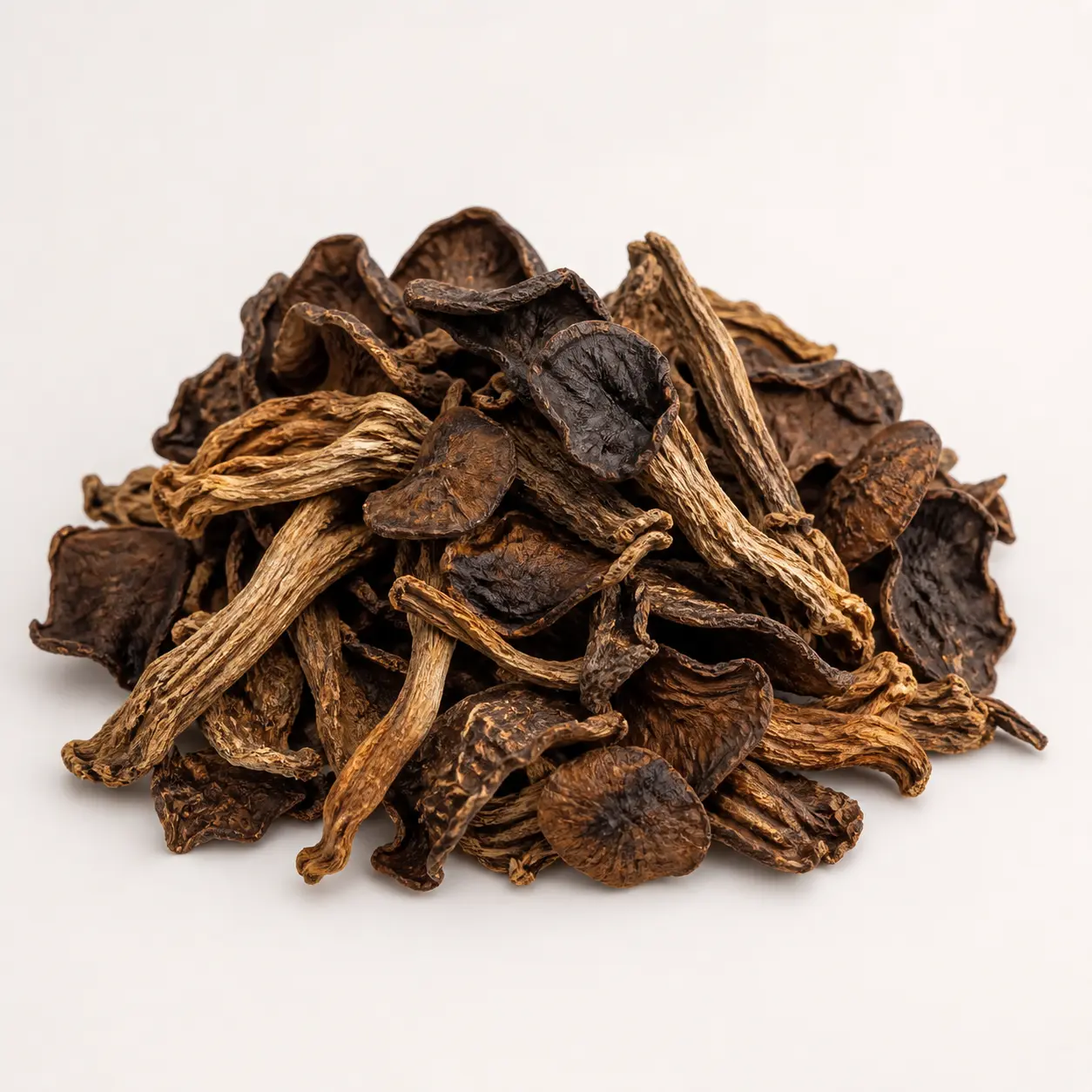
Clean and well-selected dried black fungus suitable for food service and retail resale.
Wholesale price
$15.62/lb
$34.43/kg
Market reference
Approx. $59–80/kg
Need wholesale support?
Contact Fungi Origin for pricing, product inspection, pickup, GTA delivery, or courier shipping across Canada and the US for bulk dried mushroom orders.
Contact Us