Morel Mushroom
Dried Morel Mushroom Price in Canada (2026 Pricing Guide)
What dried morels actually cost in Canada — retail, wholesale, by grade, by origin, with seasonal price drivers and how to buy at the right moment.
By Editorial Team
Food sourcing and kitchen operations specialists covering ingredient procurement, storage science, and commercial kitchen efficiency across Canada.
Dried morel pricing in Canada confuses almost everyone — the same product can list at CAD $50 in one shop and CAD $400 in another, with no obvious reason. The drivers behind the price spread are real and predictable, but they aren't widely understood. Buyers who learn the price-formation logic stop overpaying and start sourcing strategically. Dried morel mushroom prices in Canada range from CAD $160 to over CAD $400 per kilogram at wholesale and CAD $14 to $45 per 28g pack at retail, driven by grade, harvest year, origin, and the supply-chain layers between the foraging region and the buyer.
Break Down the Wholesale Price Range
Wholesale dried morel pricing in 2025–2026 falls into a relatively predictable range when grade and volume are matched. Outliers above and below the range almost always indicate a quality or supply-chain issue worth investigating.
Standard wholesale ranges for Grade A morels:
- Pieces and broken caps — CAD $130–$170/kg
- Petite/Small whole caps — CAD $160–$210/kg
- Medium whole caps — CAD $200–$260/kg
- Large whole caps — CAD $250–$320/kg
- Extra Large/Jumbo — CAD $300–$420/kg
Pricing scales inversely with order volume. The same Medium-grade morel that sells for CAD $260/kg at 1kg drops to CAD $190/kg at 25kg+ committed-contract volumes. According to 2024 Canadian wholesale specialty-foods data, the typical price spread between 1kg and 50kg orders sits around 25–32%.
Pieces and powder grades represent 40–50% of true wholesale specialty-mushroom volume because they fit a wide range of restaurant applications (sauces, stocks, dustings) at materially lower per-gram cost than whole caps.
Identify the Five Main Price Drivers
Five variables drive almost all of the price variation in the dried morel market. Understanding each one helps the buyer interpret quotes and recognize when something is off.
The five drivers:
- Grade and size — premium whole caps cost up to 2.5x what pieces cost
- Harvest year — current-year morels command a 10–20% premium over second-year
- Origin — Pacific Northwest and Turkish morels typically cost more than Yunnan/Sichuan
- Volume — 1kg pricing differs from 25kg pricing by 25–35%
- Supply chain depth — direct importer vs. distributor vs. retailer markups stack
A morel quote should make sense across these five variables. A "Grade A whole cap at CAD $130/kg" is suspicious — that's pieces-grade pricing for whole-cap claims. A "Pacific Northwest jumbo at CAD $250/kg" is also suspicious — that combination should price closer to CAD $400+. Honest pricing tracks the drivers.
Compare Retail vs. Wholesale Pricing
The retail markup on dried morels is among the steepest in the specialty foods category. A Grade A medium morel that costs a Canadian importer CAD $145/kg landed can retail at CAD $1,200/kg-equivalent in a small specialty pack — roughly 8x the import cost.
Where the retail price stack accumulates:
- Importer to distributor — 18–28% markup
- Distributor to retailer — 25–40% markup
- Retailer to consumer — 50–100% markup
- Small-pack repackaging — adds 30–60% on top of bulk-equivalent pricing
- Branded specialty packaging — often another 20–35%
The resulting retail price isn't unreasonable in absolute terms — niche ingredients at small scale carry handling costs — but it's why direct-import channels exist for repeat buyers. A Canadian restaurant or grocer paying retail prices for 5kg/year of dried morels overpays by an average of CAD $1,500–$3,500 annually versus a direct-importer wholesale relationship.
Plan Around Seasonal Price Movement
Dried morel prices move on a predictable annual cycle tied to the spring foraging season. Buyers who time their purchases to the cycle save 8–18% versus reactive spot-buying.
The annual price cycle in Canada:
- March–April — last-season inventory thinning; spot prices rising
- May–June — current-year fresh harvest; dried product begins shipping
- July–September — new-harvest inventory peaks in Canadian warehouses; pricing softens
- October–November — pricing stable; ideal window for annual contracts
- December–February — inventory tightening; pricing climbing toward next spring
The best window to buy and lock in annual contracts is October–November, when current-year inventory has settled and pricing reflects actual supply rather than forecast scarcity. Spot purchases in March–April routinely cost 12–20% more than the same product purchased four months earlier. According to a 2024 Canadian specialty-foods purchasing analysis, foodservice operators on annual contracts saved an average of CAD $0.18 per gram versus spot-market peers — about CAD $1,800 on a 10kg annual program.
Decide What to Pay Based on Application
The "right" price for dried morels depends on what you're using them for. Premium whole caps for plate features justify premium pricing; pieces and powder for sauces and stocks should never cost the same as whole caps regardless of supplier marketing.
Application-matched pricing targets:
- Featured plate dishes (visible whole caps) — pay for Medium or Large Grade A
- Sauces and reductions (mushroom is integrated) — pay only for Pieces or B-grade
- Risottos and grain dishes (mid-visibility) — Medium Grade A or Pieces work
- Powders and dustings — Powder grade or self-grind from B-grade
- Stuffed presentations (visible jumbo) — only pay for Jumbo Grade A
A Canadian restaurant operator running a smart morel program might purchase 60% Pieces grade (CAD $150/kg-tier), 30% Medium whole (CAD $230/kg-tier), and 10% Large whole (CAD $290/kg-tier) — a blended cost of roughly CAD $200/kg supporting a full menu range. Buying 100% Large grade for everything would push the blend to CAD $290/kg with no improvement in guest experience for the integrated applications.
Frequently Asked Questions
Why are dried morels so expensive?
Dried morels are expensive because they're entirely wild-foraged (no commercial cultivation at scale), only available in spring, and require labor-intensive sorting and drying. A kilogram of dried morels represents roughly 8–10kg of fresh morels, which represents days of foraging across remote forest terrain. The supply is genuinely limited and the labor input is high.
Is it cheaper to buy fresh morels and dry them at home?
Almost never. Fresh morel retail prices in Canada run CAD $80–$150 per kilogram during peak season, and the 8–10:1 fresh-to-dried weight ratio means home-drying produces effectively CAD $640–$1,500/kg-equivalent dried product. Add the energy and equipment cost, and home-drying matches or exceeds buying quality dried morels directly.
Do morel prices change each year in Canada?
Yes, dried morel prices fluctuate significantly each year based on the spring foraging yield. Strong yield years can drop wholesale pricing by 15–25%; poor yield years (drought, cold spring, fire-area access restrictions) can spike pricing by 20–40%. Current-year pricing typically firms up by July as new-harvest inventory reaches Canadian warehouses.
Buy Smart, Not Just Cheap
The right dried morel price isn't the lowest — it's the price that matches the grade you actually need to the application you're using it for. Use Grade A whole caps where they show on the plate; use Pieces and B-grade where they don't. Lock in annual contracts during the favorable October–November window. Skip retail markups by going direct to import channels for any volume above 1kg/year.
Get current grade-by-grade pricing from the Fungi Origin wholesale team — pricing transparent, lot documentation included, and same-week Canadian-warehouse shipping standard.
Shop this product
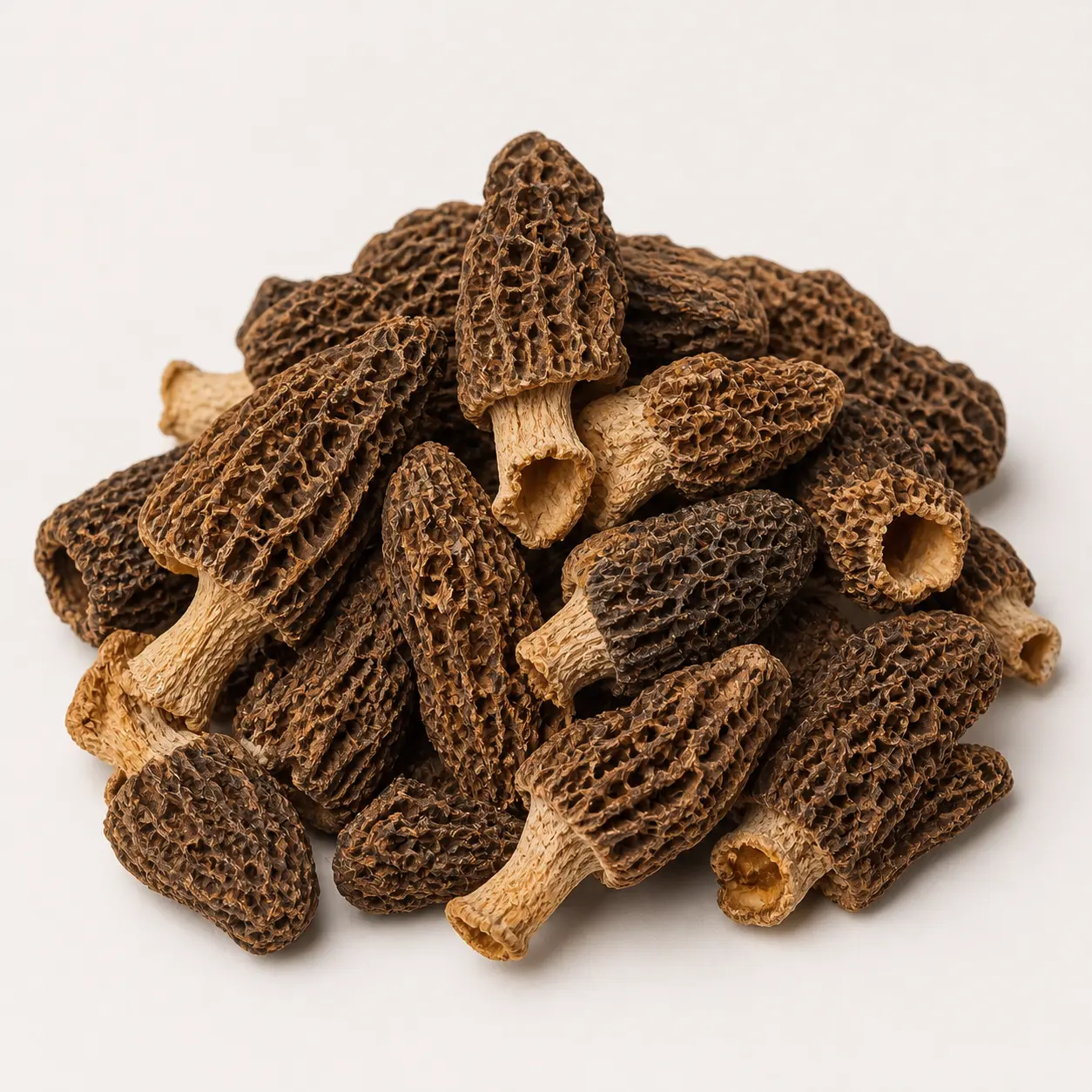
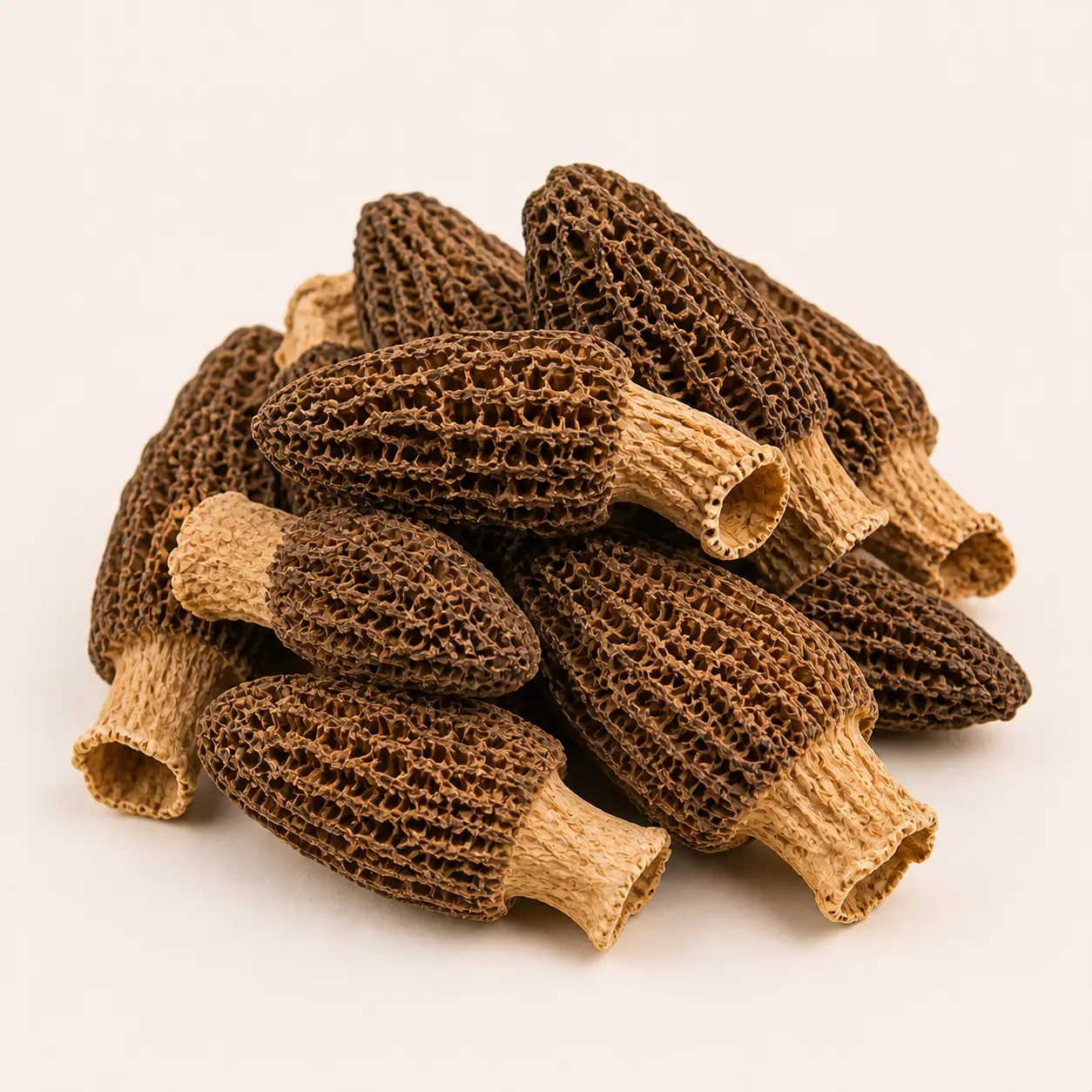
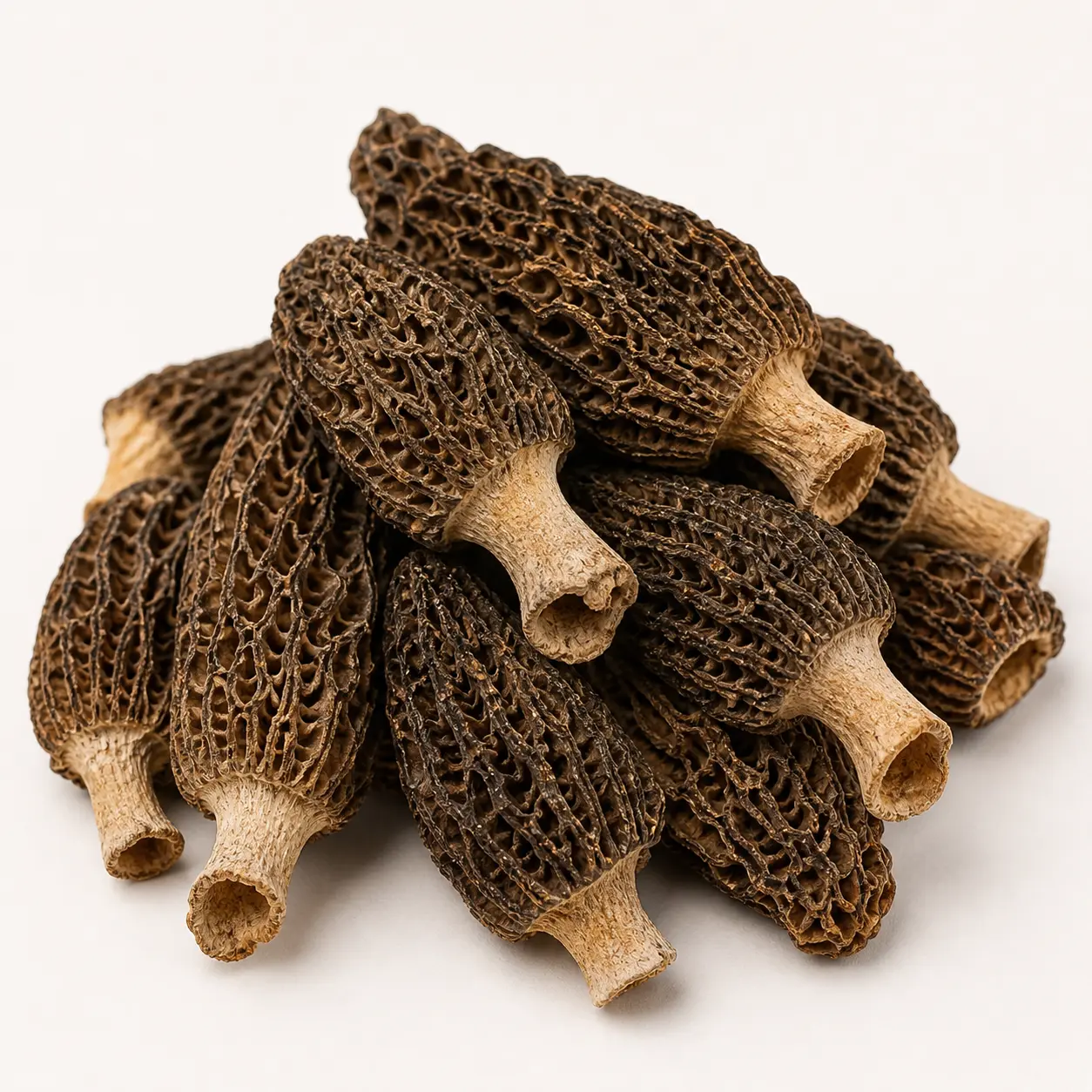
Buy morel mushroom small wholesale
Stocked in Ontario. Free GTA delivery over $350 CAD; courier shipping across Canada and to the US.
Wholesale
Dried Wild Mushrooms
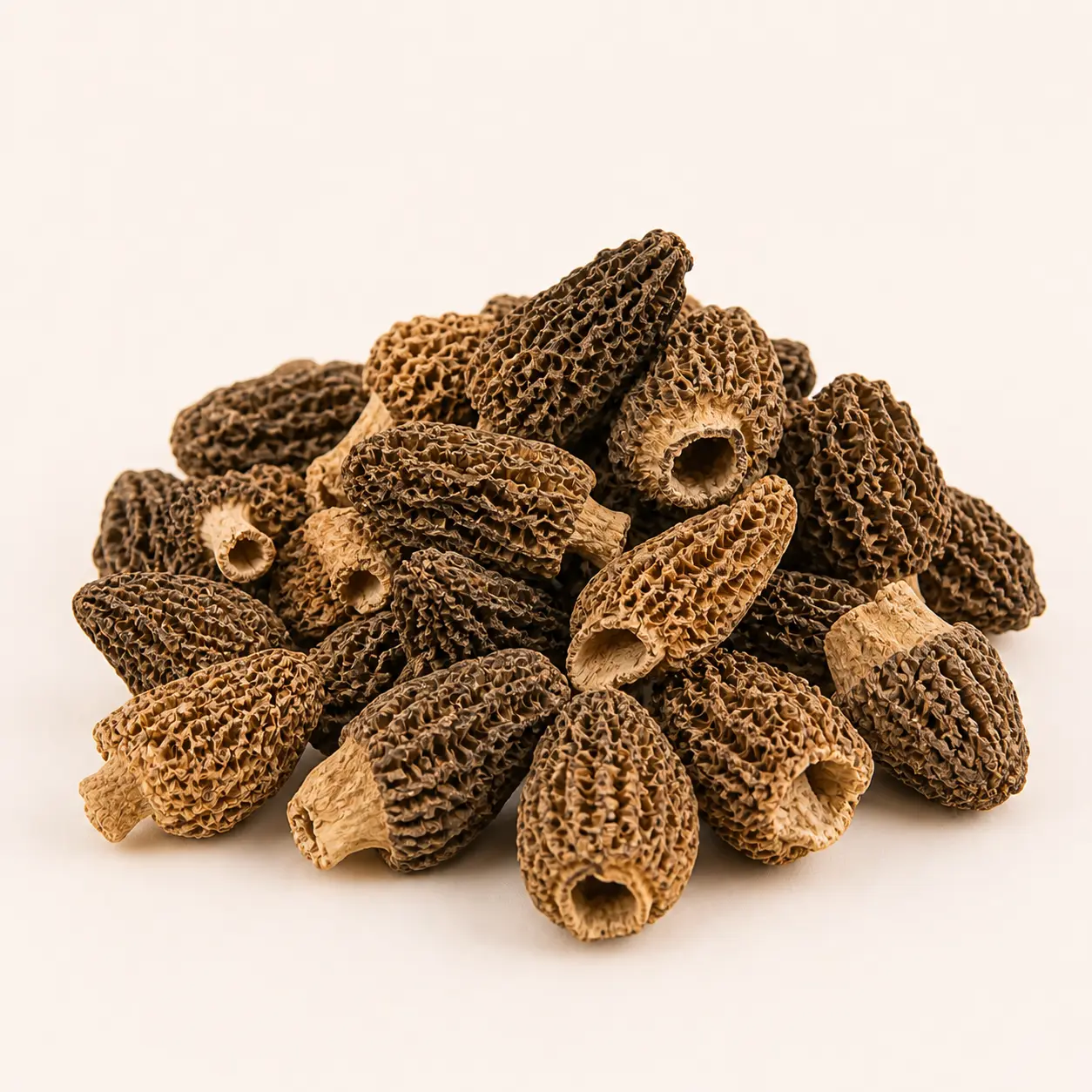
Morel Mushroom Small
Small-grade dried morel mushrooms with excellent wholesale value.
Wholesale price
$85.02/lb
$187.43/kg
Market reference
Approx. $419/kg
Need wholesale support?
Contact Fungi Origin for pricing, product inspection, pickup, GTA delivery, or courier shipping across Canada and the US for bulk dried mushroom orders.
Contact Us