Oyster mushroom
Why Dried Oyster Mushrooms Stay Tough—and How to Fix It
Diagnose tough rehydrated oyster mushrooms by checking cut, water temperature, soaking time, hard stem tissue, cooking method, and supplier specification.
By Editorial Team
Food sourcing and kitchen operations specialists covering ingredient procurement, storage science, and commercial kitchen efficiency across Canada.
Dried oyster mushrooms can stay tough after soaking when the pieces are thick, the dense stem base is included, the water is too cool, the soak is stopped before the centre hydrates, or the cooking method is too short for the selected cut. Older or poorly stored product can also rehydrate unevenly. Soaking restores moisture, but it does not guarantee tenderness; cut, tissue, hydration, and cooking all have to match.
Before changing a whole case or recipe, test a weighed sample. Record the product cut, dry weight, water temperature, soak time, drained weight, trimming loss, cooking method, and final texture. That simple record separates a preparation problem from a product-specification problem.
First identify what “hard” means in the finished dish
A firm mushroom is not always underhydrated, and a fully hydrated mushroom is not always tender. Oyster mushroom caps and stems have different structures. Thin cap pieces may become flexible quickly, while a thick stem base can remain fibrous even after it absorbs water. A pleasant chew in a stir-fry may feel unacceptably hard in a soft dumpling filling.
Cut one soaked piece through its thickest point. A pale, dry-looking or rigid centre suggests incomplete hydration. If the piece is evenly moist but stringy when chewed, the issue is more likely dense stem tissue, orientation of the cut, or insufficient cooking. If it is rubbery rather than fibrous, excessive heat, prolonged holding, or repeated reheating may be contributing.
Compare several pieces, not just one. Natural mushrooms vary, and a bag can contain caps, stems, thin fragments, and thick clusters. If only the stem bases are hard, trimming or a different cut specification may solve the problem. If almost every piece has a dry centre, the hydration process deserves attention.
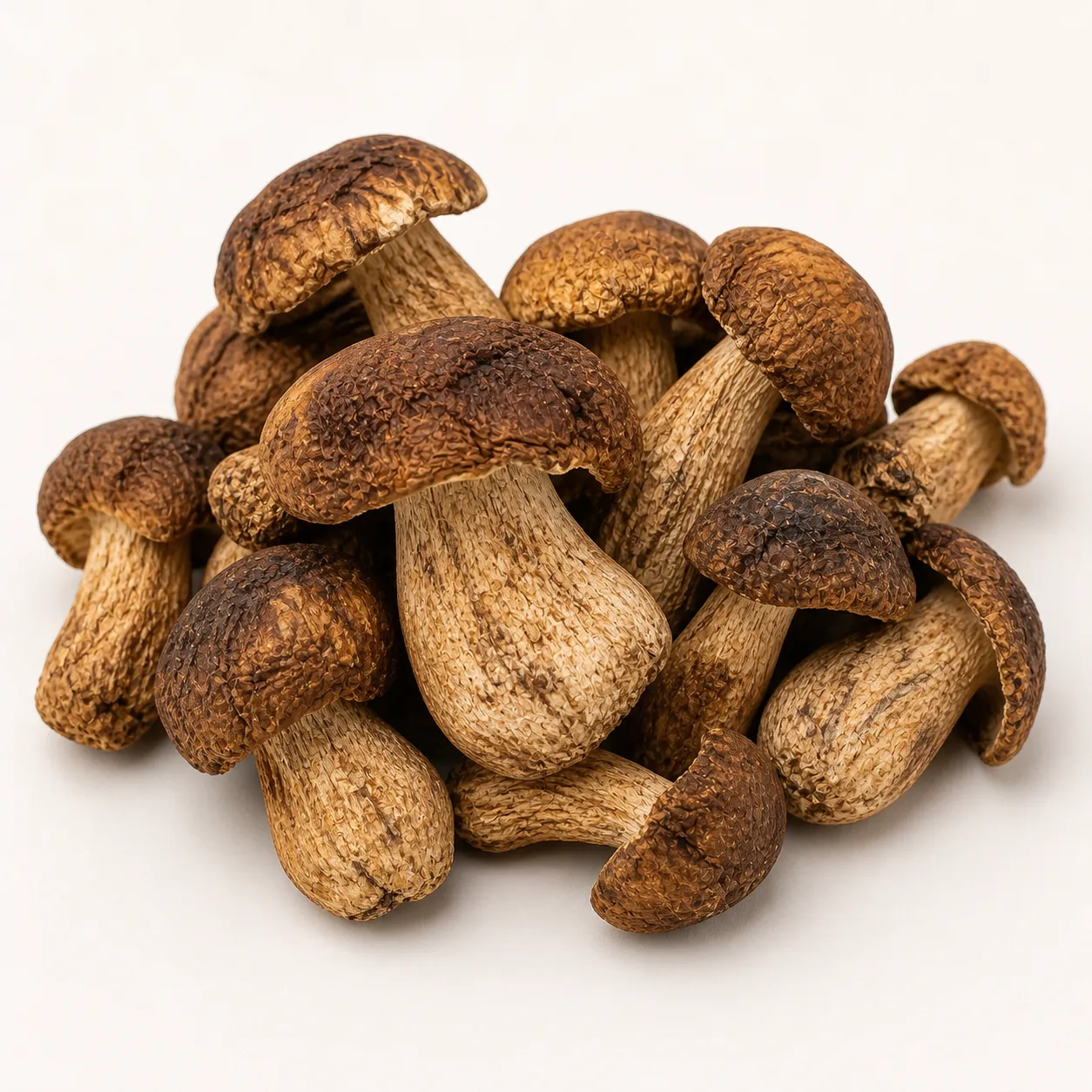
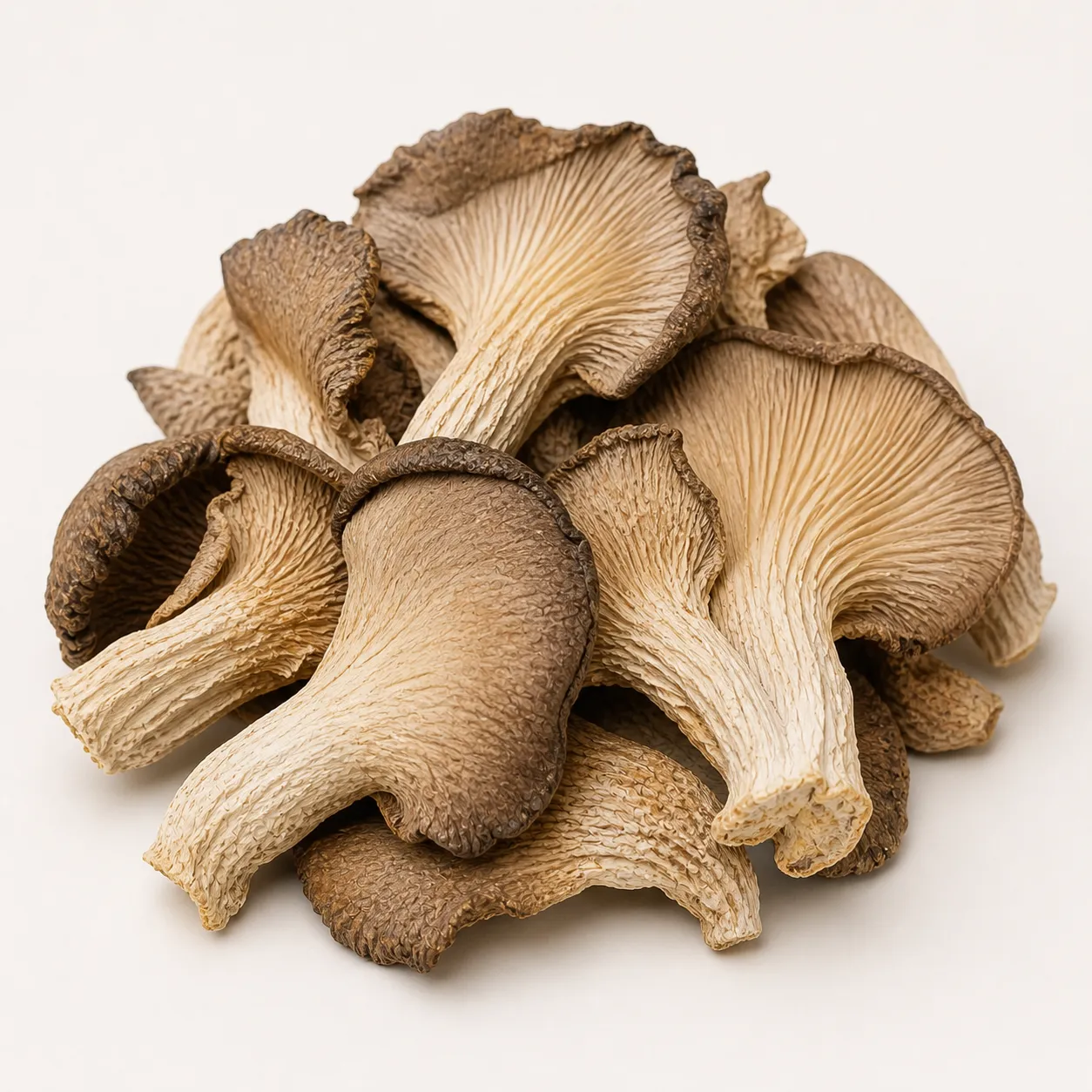
The Fungi Origin dried oyster mushroom page shows the current commercial product. Confirm the sold cut and specification instead of assuming every supplier’s “dried oyster mushroom” behaves the same way.
Correct the soaking water, time, and piece size
Use enough clean water for every piece to stay submerged and expand freely. A crowded bowl creates dry pockets, especially when floating mushrooms rise above the surface. Place a clean food-safe plate or suitable weight on top if needed. Do not compress the mushrooms so tightly that water cannot circulate.
Follow the package instructions first. In their absence, use warm—not merely cool—water for a controlled test and check the thickest pieces periodically. Water that is too cool can make hydration unnecessarily slow. Extremely hot water may extract more aroma or alter texture before the centre is evenly hydrated, so do not improvise with a violent boil unless the product instructions call for it.
Time is determined by thickness, not by one universal number. Thin slices hydrate sooner than whole clusters or dense stems. If the outside bends but the centre remains rigid, continue the controlled soak and retest rather than moving immediately to the pan. The detailed oyster mushroom rehydration guide provides a step-by-step baseline.
Large mixed pieces can be sorted before soaking or cut after they become flexible enough to handle safely. Keeping similar thicknesses together improves consistency. For restaurant production, test a full representative bag, because a perfect handful from the top may not reflect the case.
Trim dense stems and cut across the fibre
The hard base where an oyster mushroom cluster joined is often the most persistent part. Drying does not create that structure; it concentrates an existing difference between tender cap tissue and dense attachment tissue. Inspect each hydrated piece and remove woody or excessively firm bases when the menu requires tenderness.
Do not discard every stem automatically. Many stems become pleasant when fully hydrated, sliced thinly across the fibre, and cooked in moisture. Pulling or cutting lengthwise can leave long fibres intact, while cross-cutting shortens them. Dice firmer pieces for sauces, fillings, fried rice, or soup instead of asking a thick strip to eat like a cap.
Track trimming loss. If a 1-kilogram dry case repeatedly creates an unacceptable amount of unusable hard base, that is a purchasing issue as well as a prep issue. Ask the supplier how the cut is defined, whether cluster bases are included, and what variation is allowed. A lower dry price may not be economical after labour and trim are counted.
Match the cooking method to the hydrated cut
A short, dry stir-fry cannot always tenderize a thick rehydrated stem. After draining and trimming, use a moist cooking stage for firmer pieces: simmer them in broth or sauce, braise gently, or cover the pan briefly with measured liquid. Once the texture is right, uncover and finish the flavour. Thin caps can go directly into faster cooking.
High heat is useful for browning, but browning and tenderizing are different jobs. If the pan is overcrowded, mushrooms release water and steam unevenly. If it is too dry, the exterior can tighten before a thick centre softens. Work in suitable batches and add sauce at the stage the recipe requires.
Salt is rarely the only explanation for a tough batch. Do not expect changing the moment of salting to correct a dry centre or woody base. Fix hydration, cut, and cooking first, then adjust seasoning for flavour. The guide to cooking dried oyster mushrooms offers methods for stir-fries, soups, and sauces.
For holding, avoid leaving cooked mushrooms exposed in a dry hot pan or under intense heat. Use the operation’s validated hot-holding method and sauce level, and test texture at the actual service time rather than only when the first batch leaves the stove.
Check storage, age, and lot consistency
A sound dried mushroom should be dry and characteristic in aroma, without visible mould, insects, water damage, or a musty off-odour. Health Canada advises buying mushrooms from reputable retailers and discarding spoiled or rotten mushrooms; its mushroom safety guidance also emphasizes proper handling and cooking.
An opened bag exposed to humidity may become leathery, and repeated moisture exchange can produce uneven performance. Keep the product sealed, cool, dry, dark, and away from strong odours. Preserve the lot code and opening date. Do not mix new and old lots in one working bin.
If a previously successful recipe turns tough with a new lot, run a side-by-side test using the same dry weight, water, soak, trimming, and cooking method. Photograph the dry and hydrated cuts and record the proportion of hard pieces. This evidence gives the supplier something specific to investigate.
Product identity matters too. Pearl oyster, king oyster, and other oyster-type mushrooms have different stem-to-cap structures. The comparison of oyster and shiitake mushrooms can help clarify menu expectations, but the actual SKU specification remains decisive.
Create a repeatable kitchen test
Use a small controlled trial before rewriting the recipe. Weigh 50 grams of representative dry product. Hydrate it according to the current directions, keeping water volume, temperature, and time recorded. Drain for a fixed period, weigh again, trim and weigh the trim, then cook one portion by the existing method and another with a short moist-cooking stage.
Score each portion for centre hydration, cap tenderness, stem fibre, flavour, appearance, and usable yield. If extra soaking fixes the centre, revise hydration. If cross-cutting and moist cooking fix the stem, revise prep. If a high proportion remains woody under both methods, discuss the cut or lot with the supplier.
Do not taste mushrooms that show spoilage, contamination, or an unknown condition. Testing is for product that has passed receiving and storage checks. Maintain clean utensils, controlled time and temperature, and the operation’s approved food-safety process throughout.
Frequently asked questions
Why are oyster mushroom stems tougher than the caps?
Stems contain denser, more fibrous supporting tissue, especially near the cluster base. They may require longer hydration, trimming, thin cross-cutting, and moist cooking. The difference is normal, but the acceptable amount depends on the purchased cut and menu.
Can I soak dried oyster mushrooms overnight?
Only when the package method supports it and the mushrooms remain under safe refrigerated control. Do not leave a long soak at room temperature. Thickness determines the necessary time, so test the centre rather than extending every batch automatically.
Will boiling make tough oyster mushrooms soft?
A gentle simmer or braise can help fully hydrated dense pieces, but boiling cannot repair spoiled product or guarantee that a woody base becomes tender. Check hydration first, trim hard attachment tissue, cut across the fibre, and then use moist heat.
Solve the exact texture problem
Identify whether the centre is dry, the stem is fibrous, or the cooked piece has become rubbery. Then adjust only the relevant step and document the result. For a current cut specification, case format, or representative sample discussion, contact Fungi Origin with photos and your tested preparation method.
Shop this product
Buy oyster mushroom wholesale
Stocked in Ontario. Free GTA delivery over $350 CAD; courier shipping across Canada and to the US.
Wholesale
Dried Mushrooms
Oyster Mushroom
Dried oyster mushrooms suitable for bulk supply, restaurants, and distributors.
Wholesale price
$15.62/lb
$34.43/kg
Market reference
Approx. $35–60/kg
Need wholesale support?
Contact Fungi Origin for pricing, product inspection, pickup, GTA delivery, or courier shipping across Canada and the US for bulk dried mushroom orders.
Contact Us