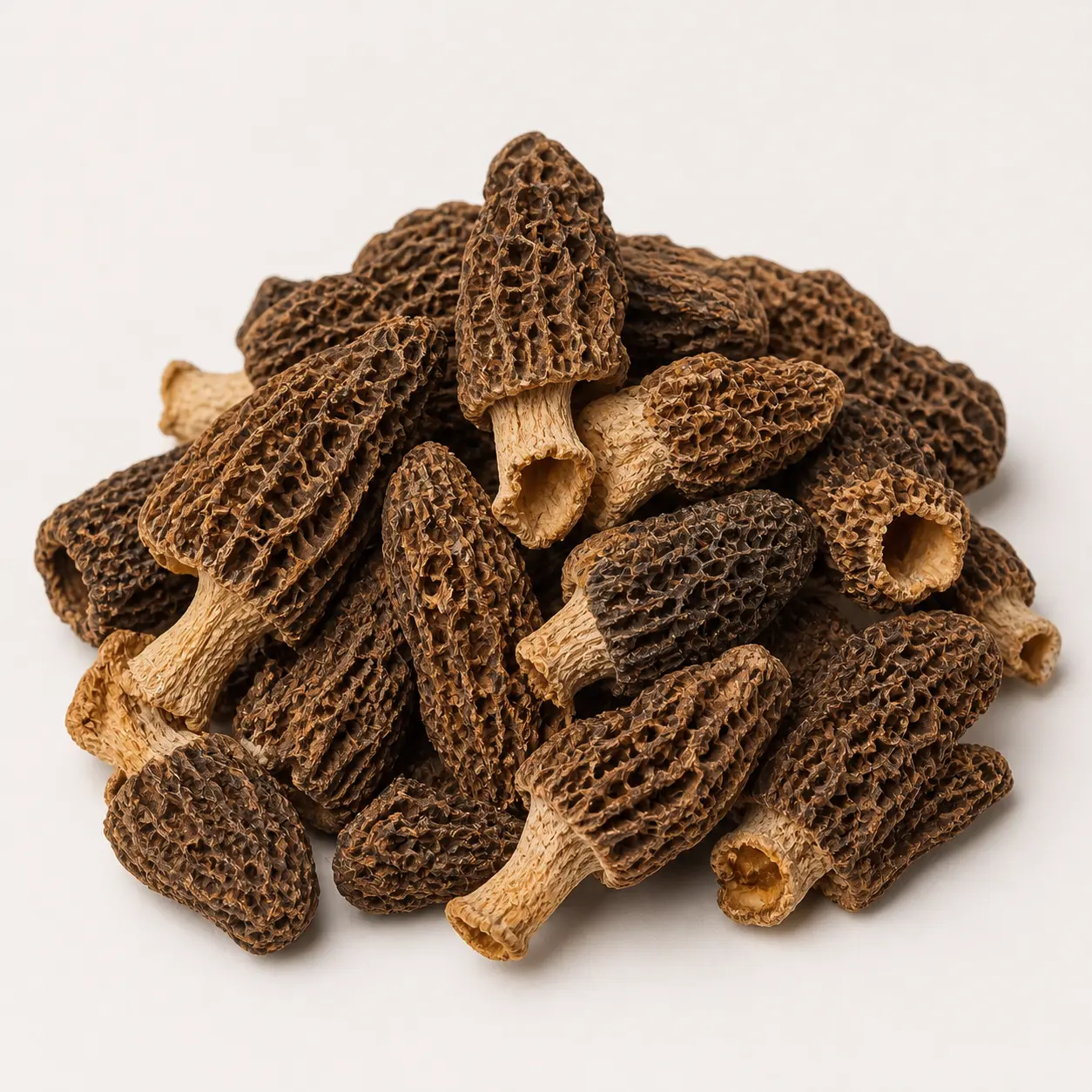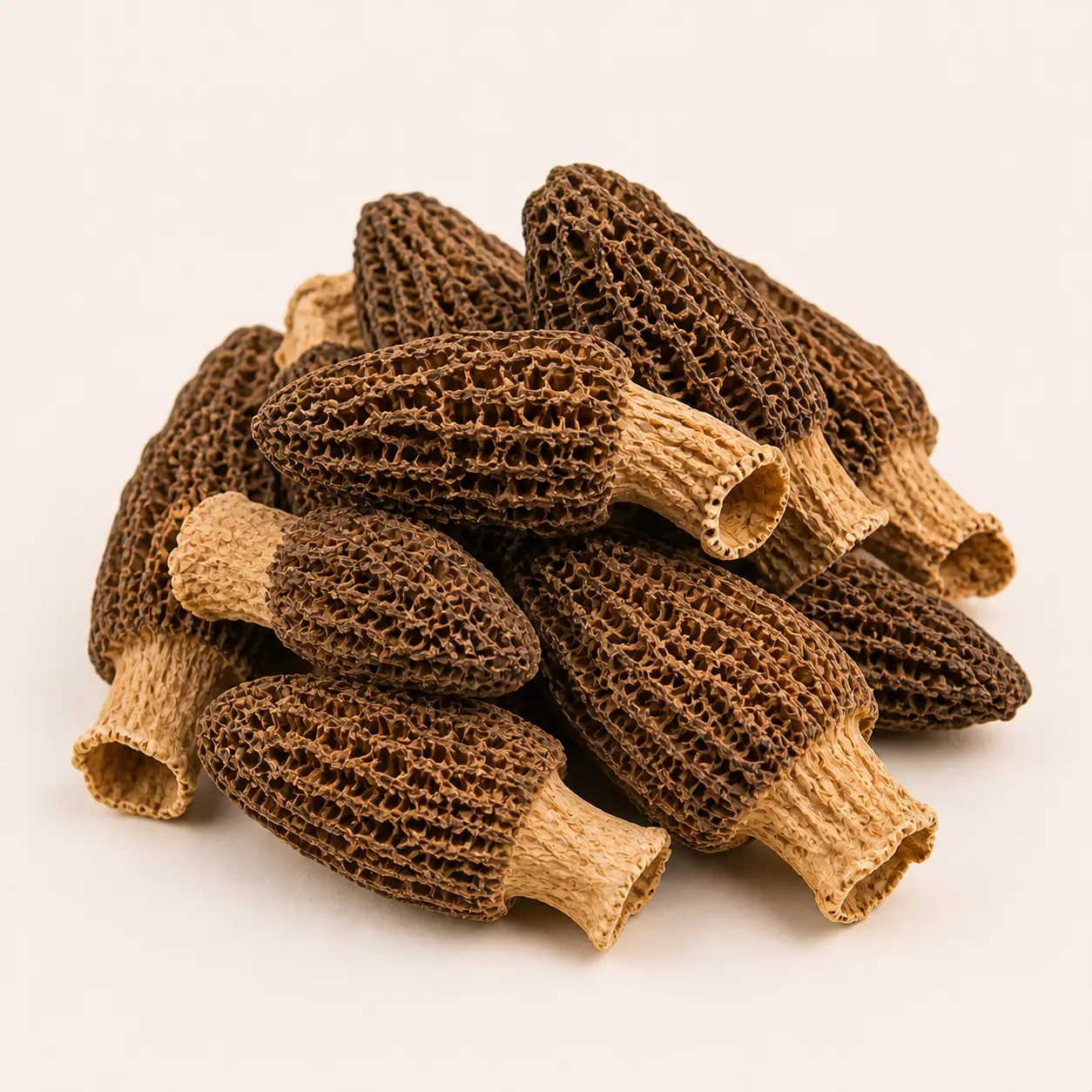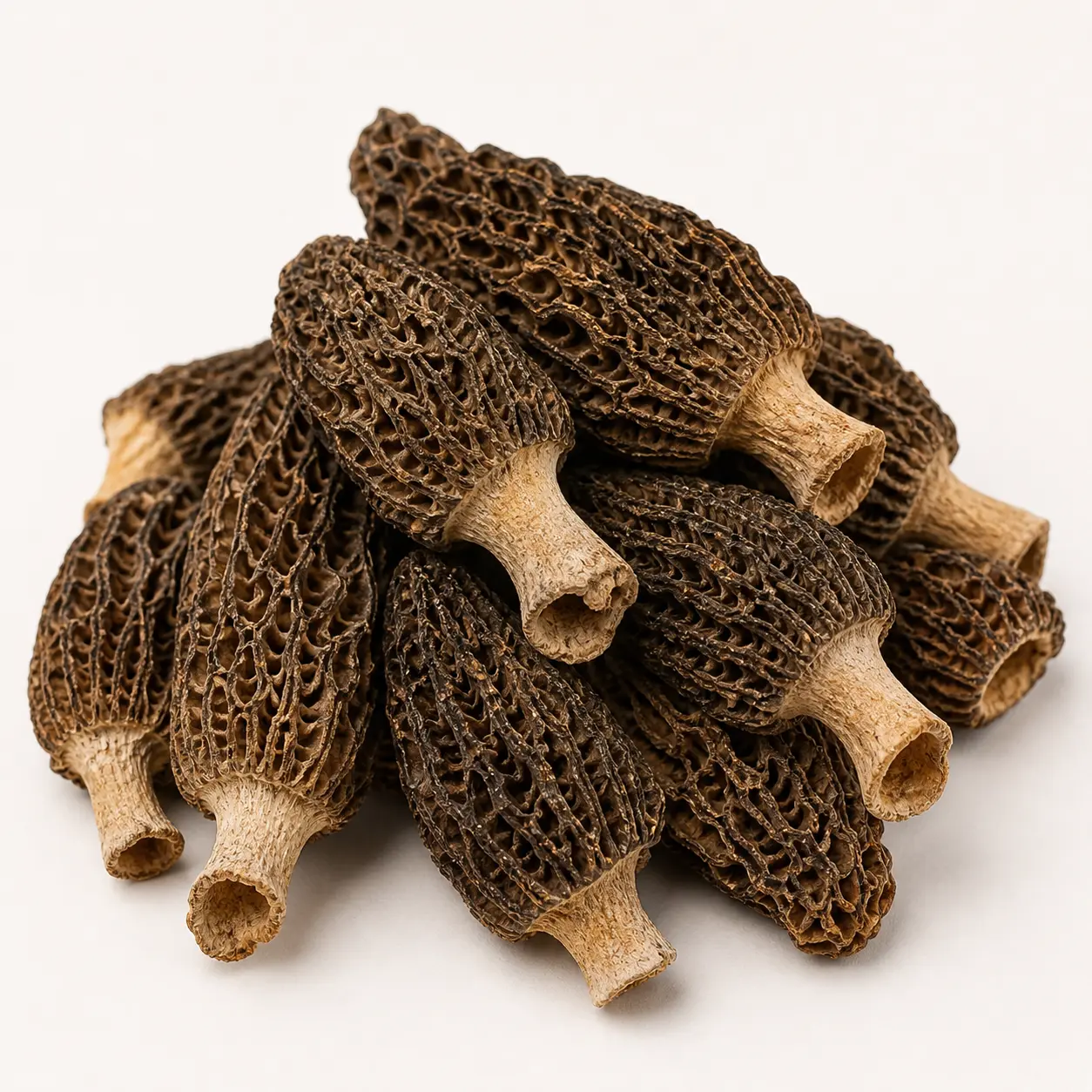
Morel Mushroom
How to Rehydrate Dried Morel Mushrooms Properly
Rehydrate dried morel mushrooms in 20–30 minutes for full flavor. Learn correct water temperature, soaking time, and how to save the broth.
By Editorial Team
Food sourcing and kitchen operations specialists covering ingredient procurement, storage science, and commercial kitchen efficiency across Canada.
Most home cooks ruin their first dried morel by treating it like a fresh mushroom — tossing it straight into a pan or boiling it too aggressively. The result is rubbery texture and lost aroma, and a wasted premium ingredient. Dried morels can cost CAD $200+ per kilogram, so getting rehydration right is not optional. According to Canadian specialty foods data from 2024, nearly 30% of first-time dried-morel buyers don't reorder, and improper preparation is the most cited reason. Rehydrating dried morel mushrooms is the process of soaking them in warm water for 20–30 minutes to restore moisture, soften texture, and unlock the concentrated flavor compounds developed during drying.
Choose the Right Water Temperature
Warm water — not boiling — is the single most important rule. Boiling water destroys the volatile aromatic compounds (1-octen-3-ol and related ketones) that give morels their signature flavor. Cold water works but takes 60+ minutes and risks under-extracting flavor.
The ideal range is 38°C–43°C (100°F–110°F) — about the temperature of a comfortable bath. At this range:
- Cell walls rehydrate evenly without rupturing
- Aromatic compounds release into the soaking liquid (now a usable broth)
- Soaking completes in 20–30 minutes
- Texture restores to firm but tender
Use 4 cups of warm water per 30g of dried morels. The morels float at first; weigh them down with a small plate to keep them submerged. Fungi Origin's grade-A morels typically reach full hydration at the 25-minute mark.
Strain Carefully and Save the Liquid
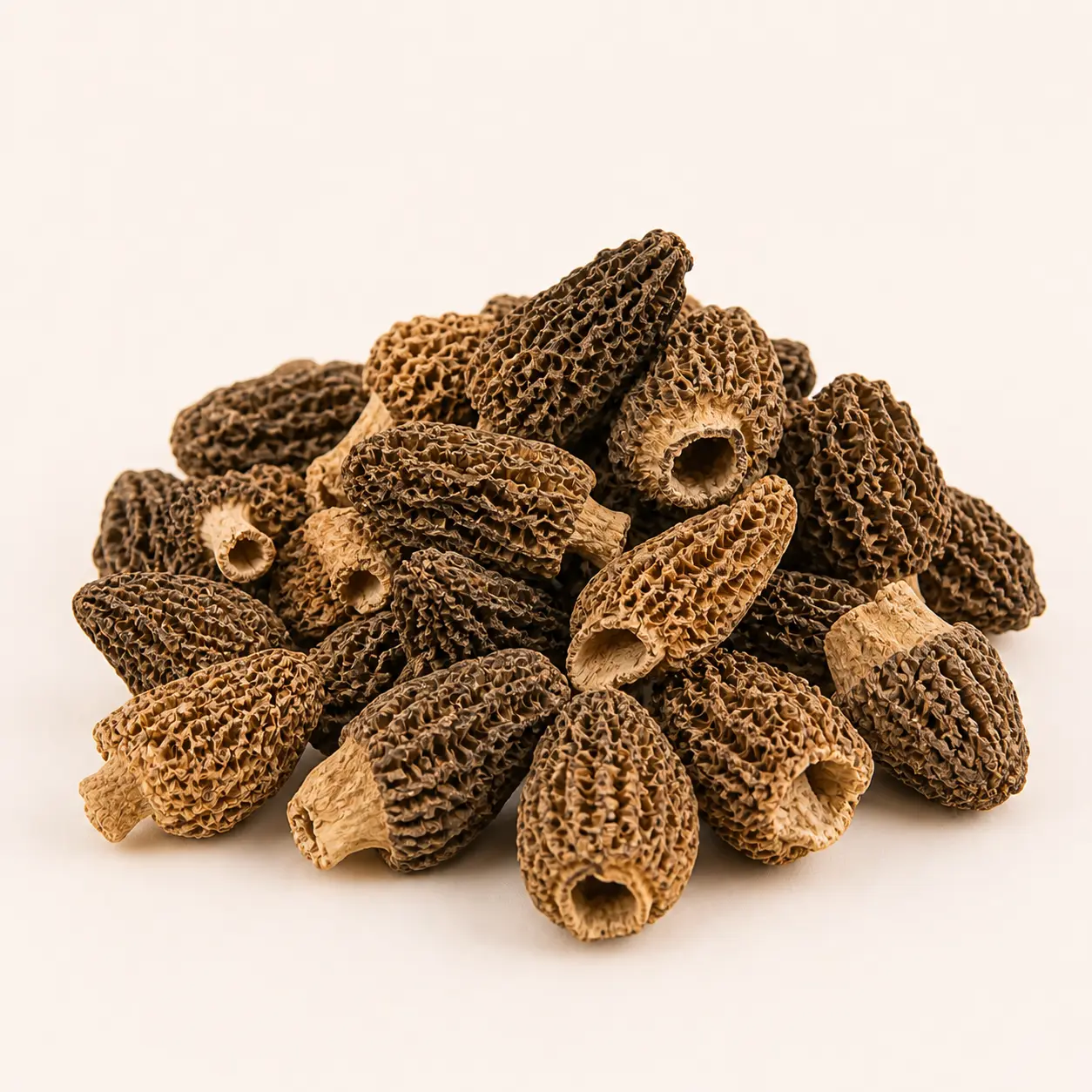
Morels have hollow stems and intricate honeycomb caps that trap forest debris during foraging. Even premium graded lots benefit from a careful strain step. Lift the rehydrated morels out of the soaking water with a slotted spoon — never pour the whole bowl into a strainer, which dumps the settled grit back over the mushrooms.
Then strain the soaking liquid through:
- A fine-mesh strainer first
- Followed by a coffee filter or doubled cheesecloth
The clear strained liquid is one of the most valuable byproducts in the kitchen. Save the morel broth. It carries 60–70% of the mushroom's flavor and replaces water or stock in risottos, sauces, soups, and grain dishes. Discarding it is the most expensive mistake amateur cooks make with morels.
Rinse Only If Necessary
A common myth says all rehydrated morels need a second rinse under running water. This is wrong for graded product. Quality dried morels from a reputable supplier have been cleaned during processing, and a second rinse washes out flavor without meaningfully reducing grit.
Rinse only if:
- You see visible grit or sand on the rehydrated caps
- The soaking water is heavily clouded
- You bought commodity-grade or unbranded morels
For Fungi Origin Grade A whole morels, the slotted-spoon lift method is enough. If you do rinse, use a quick 5-second pass under cool running water and pat dry immediately with a paper towel. According to a 2023 culinary lab test, over-rinsed rehydrated morels lost up to 40% of their volatile aroma compounds.
Cook Thoroughly Before Serving
Morels — fresh or rehydrated — must always be cooked. Raw morels contain hydrazine compounds that cause nausea and stomach upset, and rehydration alone does not deactivate them. Always cook for at least 5 minutes once they hit the heat. Sautéing in butter or olive oil over medium heat for 6–8 minutes is the standard restaurant prep.
Quick post-rehydration cooking checklist:
- Pat dry before sautéing — wet morels steam instead of browning
- Don't crowd the pan — give each cap room to develop a crust
- Salt at the end — early salting draws out moisture and prevents browning
- Pair with butter, garlic, shallots, cream — classic morel companions
- Reserve the broth for finishing the dish
A standard 30g dried portion (rehydrated) serves 2–3 people as a side or sauce component, or 1 person as a main course feature.
Frequently Asked Questions
How long do you soak dried morel mushrooms?
Soak dried morel mushrooms in warm water (38°C–43°C) for 20–30 minutes until fully softened. Smaller morels rehydrate in 20 minutes; larger whole caps may need 30. Avoid soaking longer than 45 minutes — extended soaking turns the texture mushy and dilutes flavor into the soaking water.
Can I rehydrate morels in the microwave?
Microwave rehydration works in a pinch but is not recommended for premium morels. Place morels in a microwave-safe bowl with warm water, cover loosely, and heat in 1-minute intervals at 50% power for 4–5 minutes total. The result is acceptable but loses some aromatic complexity compared to passive warm-water soaking.
What can I do with leftover morel soaking liquid?
Use the strained morel soaking liquid as a flavor base for risotto, pasta sauces, gravies, French onion-style soups, and braised dishes. The liquid concentrates the morel's earthy, nutty profile and replaces stock or water 1:1. Refrigerate up to 5 days or freeze in ice cube trays for portioned future use.
Use Quality Morels for Best Results
Rehydration technique only matters if your morels are worth rehydrating. Lower-grade product full of stem fragments and grit produces a poor result no matter how carefully you soak it. Start with whole, graded, well-stored caps and the technique above will reward you with the full nutty, earthy flavor that makes morels the most coveted spring mushroom in Canadian kitchens.
Browse Fungi Origin's graded dried morel selection for whole-cap, low-debris lots that respond beautifully to the rehydration technique above.
Shop this product
Buy morel mushroom small wholesale
Stocked in Ontario. Free GTA delivery over $350 CAD; courier shipping across Canada and to the US.
Wholesale
Dried Wild Mushrooms
Morel Mushroom Small
Small-grade dried morel mushrooms with excellent wholesale value.
Wholesale price
$85.02/lb
$187.43/kg
Market reference
Approx. $419/kg
Need wholesale support?
Contact Fungi Origin for pricing, product inspection, pickup, GTA delivery, or courier shipping across Canada and the US for bulk dried mushroom orders.
Contact Us