Morel Mushroom
Morel Mushroom Grades: Small vs Large Sizes Explained
Small morels vs large morels — flavor, price, and best uses compared. Learn which grade your menu or recipe actually needs and avoid overpaying.
By Editorial Team
Food sourcing and kitchen operations specialists covering ingredient procurement, storage science, and commercial kitchen efficiency across Canada.
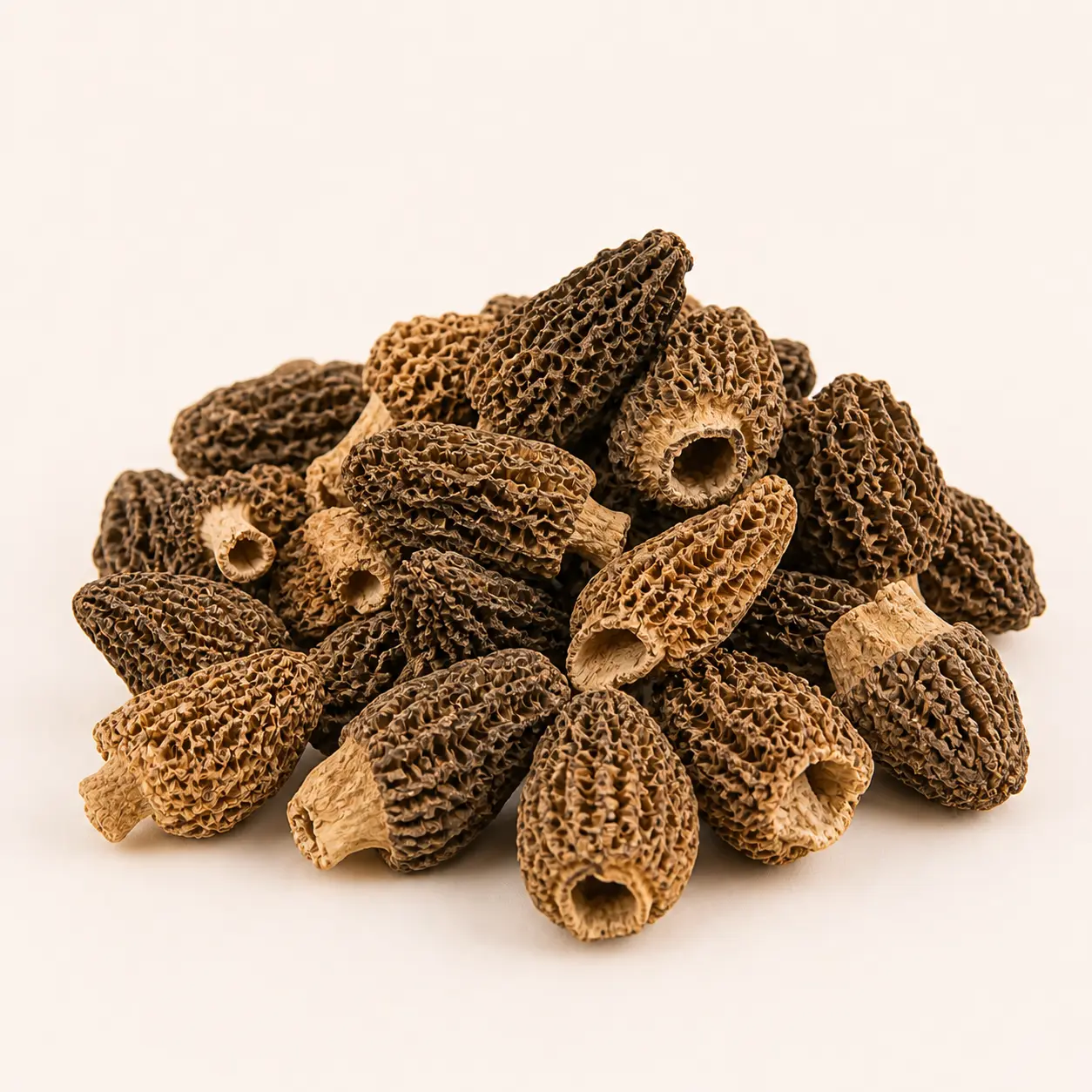
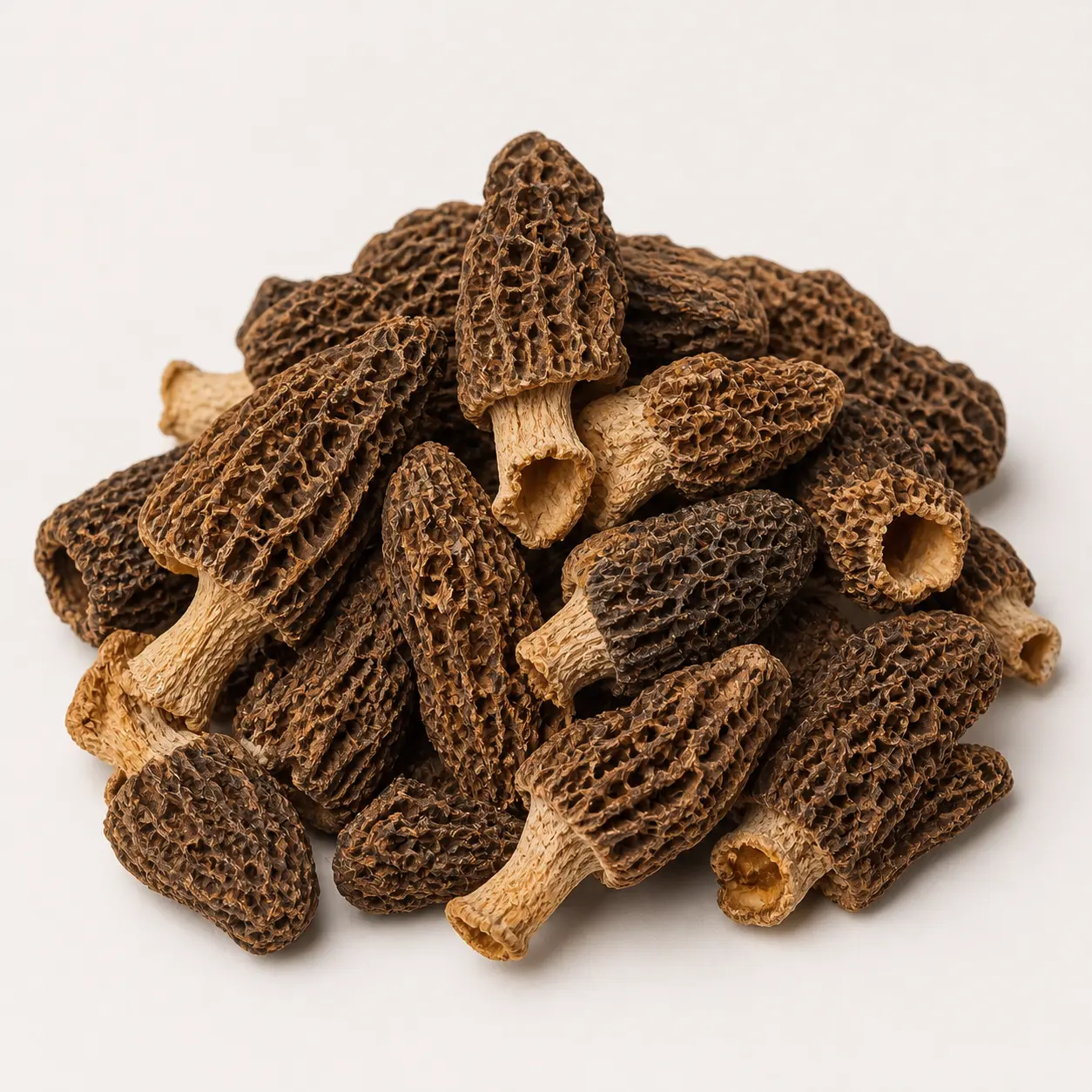
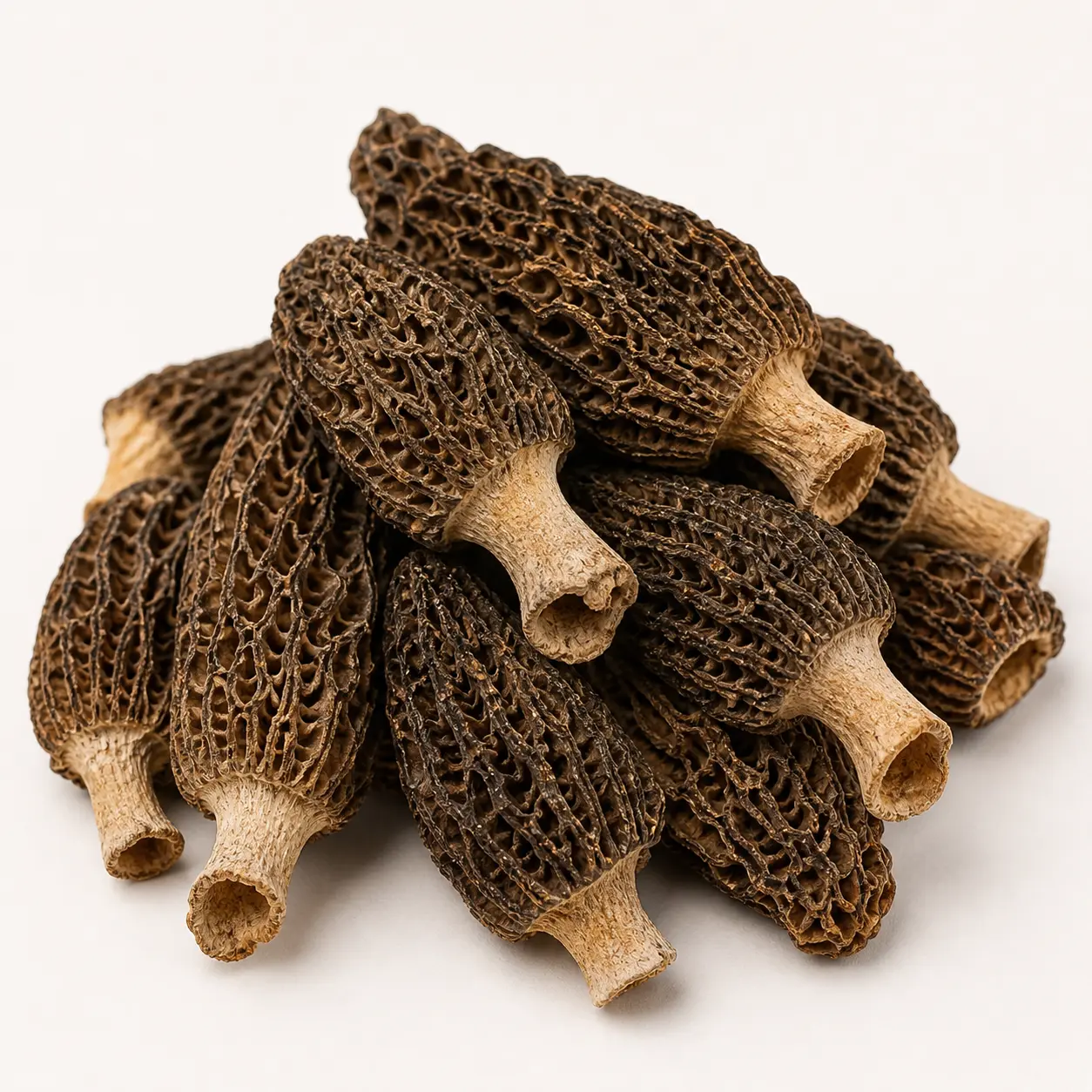
Most Canadian buyers assume bigger morels are always better — and most of them overpay because of that assumption. Size grading drives pricing more than any other variable in the dried morel market, with large premium caps commanding up to a 60% markup over small caps from the same harvest. But for many menu applications, large morels offer no flavor advantage, and small morels actually perform better. Morel mushroom grades classify dried morels by cap size and quality, ranging from petite (under 3cm) to extra-large (over 7cm), with each grade suited to different culinary applications and price points.
Defining the Standard Size Categories
The international dried-morel trade uses four general size grades, though terminology varies between suppliers. Fungi Origin and most Canadian importers follow this convention:
- Petite / Small — caps under 3cm tall
- Medium — caps 3cm to 5cm tall
- Large — caps 5cm to 7cm tall
- Extra Large / Jumbo — caps over 7cm tall
Cap height is measured along the longest axis after drying. A morel that was 7cm fresh shrinks to roughly 4–5cm dried. The size grade describes the dried cap, which is the format Canadian foodservice operators receive.
A premium Grade-A lot also requires:
- Whole, intact caps with attached or naturally trimmed stems
- Uniform color (deep brown to near-black for black morels)
- Less than 12% moisture content
- Minimal cap damage or breakage
Comparing Flavor: Does Size Matter?
The honest answer surprises most buyers: size has minimal impact on flavor intensity in dried morels. The aromatic compounds responsible for morel flavor (1-octen-3-ol, various ketones) develop in the cap walls regardless of overall size. A small morel and a large morel from the same harvest contain similar concentrations of these compounds per gram.
What size does affect:
- Visual presentation — large whole morels are dramatic on a plate
- Stuffing capability — only large/jumbo caps can be stuffed
- Texture experience — large caps offer a meatier bite
- Cooking behavior — small caps integrate faster into sauces
The flavor difference between sizes is real but modest, typically 5–15% in trained-panel sensory tests. The price difference is often 30–60%. For most applications, that math favors smaller grades.
Matching Grades to Menu Applications
Different culinary uses reward different size grades. Choosing the right grade saves money without sacrificing the dish.
Best applications by grade:
- Petite/Small — cream sauces, stuffed pastas, risottos, scrambled eggs, terrines
- Medium — sautés, side dishes, vol-au-vents, grain bowls, pasta sauces
- Large — center-of-plate features, roasted whole, grilled, stuffed
- Extra Large/Jumbo — high-end stuffed presentations, banquet plating, photo-driven menu items
A useful rule for restaurant operators: if the morel will be visible whole on the plate, buy at least Medium. If it will be sliced, broken, or absorbed into a sauce, Petite/Small delivers the same flavor at a lower cost. According to a 2024 specialty foodservice purchasing report, restaurants that grade-match their morel orders save an average of 22% on annual morel spending without any guest-feedback decline.
Reading Pricing Across Grades
Morel pricing is volatile because supply depends on annual wild-foraging yields. But within a single season, the price relationships between grades remain relatively stable. Typical Canadian wholesale ranges in 2025:
- Petite/Small — CAD $160–$210/kg
- Medium — CAD $200–$260/kg
- Large — CAD $250–$320/kg
- Extra Large/Jumbo — CAD $300–$400+/kg
The premium for larger sizes reflects rarity, not flavor — wild morels naturally produce more small caps than large ones, so jumbo grades are scarce. Buyers paying for Jumbo are paying for visual impact and prestige.
Pricing tips for foodservice purchasing:
- Lock in pre-season contracts for predictable supply
- Mix grades — buy 70% Medium for everyday use and 30% Large for showcase dishes
- Consider pieces for sauce-only applications — half the price of whole caps
Fungi Origin offers transparent grade-by-grade pricing and case-pack options for restaurants that want to mix sizes within a single order.
Frequently Asked Questions
Are small morels lower quality than large morels?
No, small morels are not lower quality — they're just smaller. Small caps from a Grade-A lot have the same color, aroma, moisture content, and freshness standards as large caps. Quality and size are independent grading dimensions. A Grade-A small morel beats a Grade-B large morel on every measure except visual scale.
Which morel grade is best for restaurant cost control?
Medium-grade morels offer the best balance of cost, visual appeal, and culinary versatility for most restaurants. They cost 20–35% less than Large morels but still hold up as a visible plate component, and they handle every common preparation from sauté to risotto. Most fine-casual Canadian operators standardize on Medium for daily use.
Can I substitute different sizes in a recipe?
Yes, you can substitute morel sizes by weight, not by piece count. A recipe calling for "30g dried morels" delivers consistent flavor whether you use Petite or Large. Substituting by piece count fails because piece count varies dramatically across grades — 30g of Petite morels might be 25 caps, while 30g of Jumbo might be just 5.
Match the Grade to the Application — Don't Overpay for Visual Bulk
Smart morel buying means matching the grade to the dish. Buy Petite or Small for sauces and integrations, Medium for everyday menu items, and reserve Large or Jumbo for the dishes that earn the premium with visual impact. Flavor intensity is largely consistent across grades from a quality supplier, so the pricing premium for size buys presentation, not taste.
Browse Fungi Origin's full morel grade range for transparent size-graded lots, or contact our wholesale team to build a mixed-grade order for your operation.
Shop this product
Buy morel mushroom large wholesale
Stocked in Ontario. Free GTA delivery over $350 CAD; courier shipping across Canada and to the US.
Wholesale
Dried Wild Mushrooms
Morel Mushroom Large
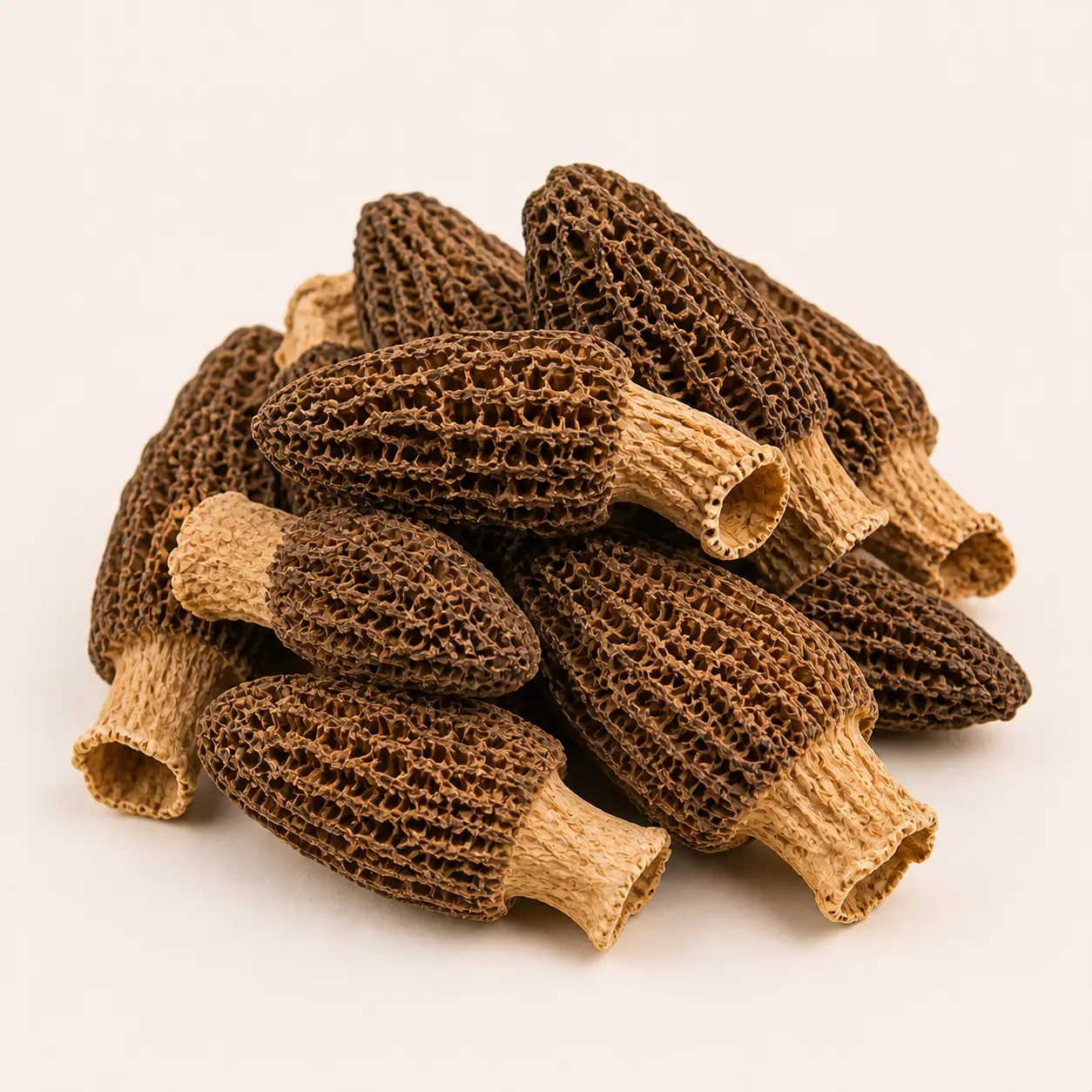
Large-grade dried morel mushrooms with premium appearance and quality.
Wholesale price
$114.51/lb
$252.45/kg
Market reference
Approx. $419/kg
Need wholesale support?
Contact Fungi Origin for pricing, product inspection, pickup, GTA delivery, or courier shipping across Canada and the US for bulk dried mushroom orders.
Contact Us