Cordyceps Flower
Bulk Cordyceps Flower for Tea Brands and Wellness Manufacturers
Sourcing bulk cordyceps flower for tea brands, supplement manufacturers, and functional beverage formulators. Specs, testing, regulatory compliance.
By Editorial Team
Food sourcing and kitchen operations specialists covering ingredient procurement, storage science, and commercial kitchen efficiency across Canada.
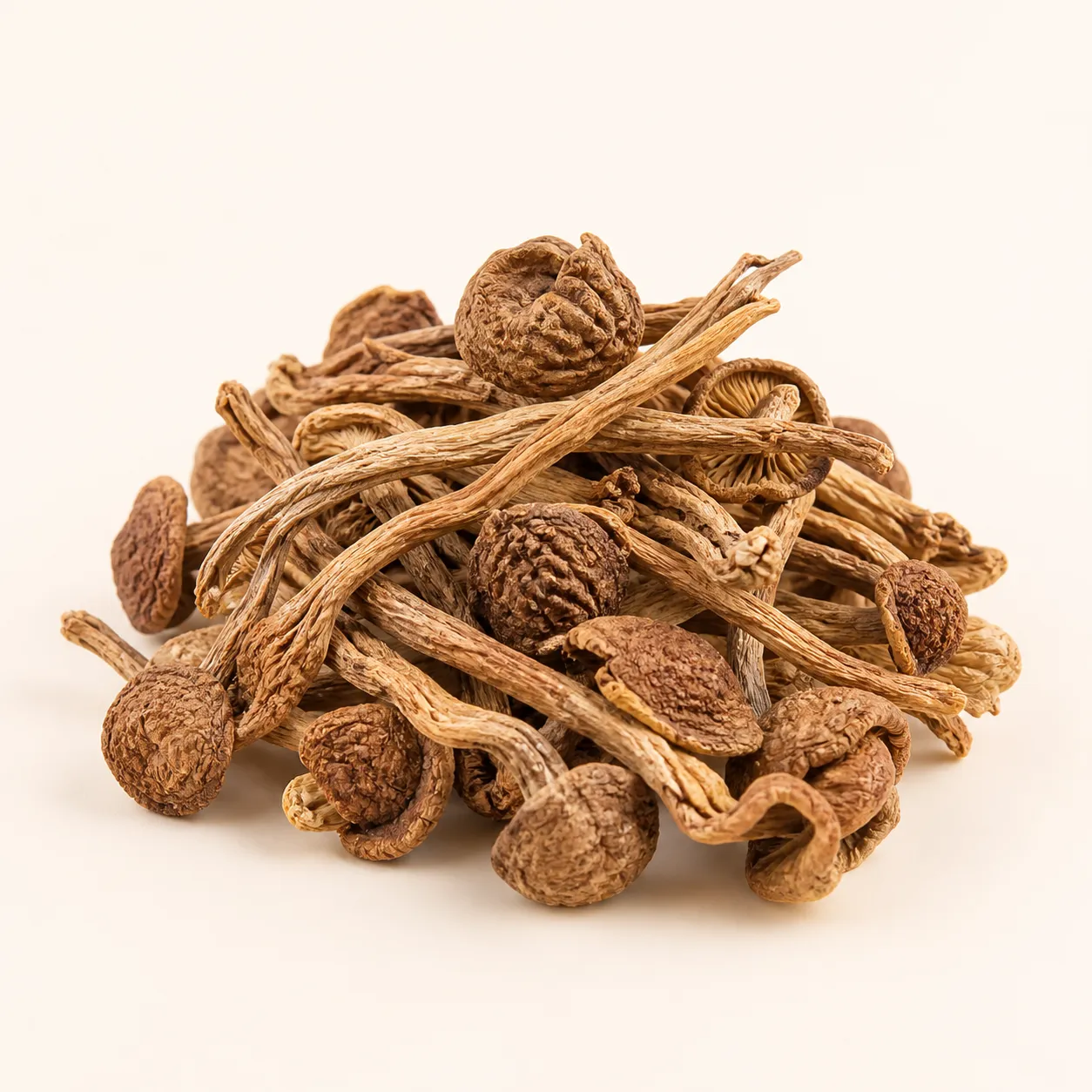
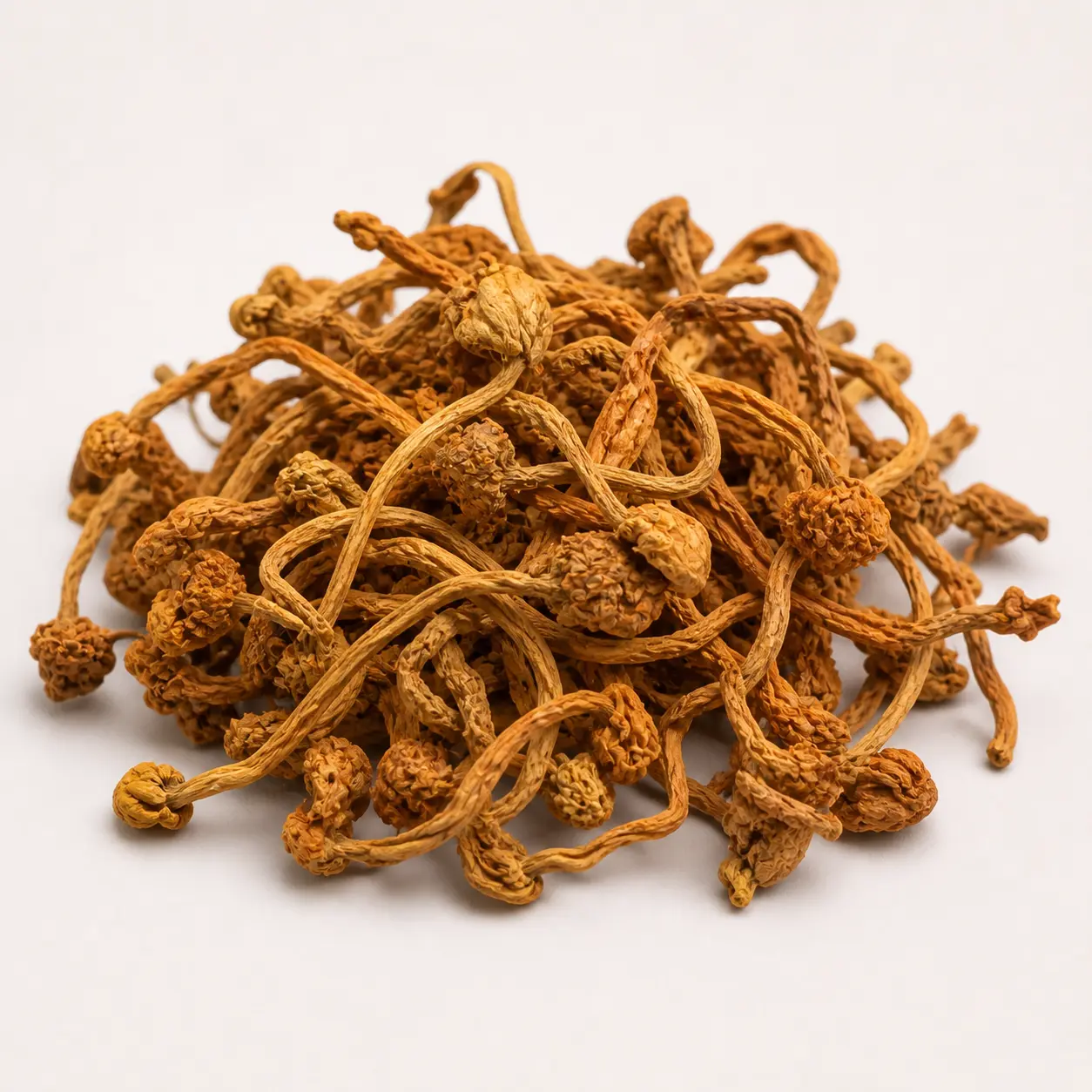
Tea brands, supplement manufacturers, and functional beverage formulators have fundamentally different cordyceps flower sourcing requirements than restaurant or grocery buyers. The same cordyceps flower that satisfies a Cantonese restaurant making tonic soup might fail specifications for a Health Canada Natural Health Product registration or a tea brand's beta-glucan target. Wellness-grade sourcing demands documentation, testing, and consistency that consumer-facing channels rarely provide. Bulk cordyceps flower for tea brands and wellness manufacturers is supplement-grade cultivated Cordyceps militaris sold with documented cultivation method, third-party testing for pesticides and heavy metals, cordycepin standardization options, and regulatory compliance documentation for Canadian and international natural health product, tea, and functional beverage programs.
Specify Cultivation Method and Lot Documentation
The first sourcing decision for any wellness brand is cultivation method. Different cultivation methods produce slightly different bioactive compound profiles and carry different marketing positioning. The supplier must support whichever method the brand chooses with documentation.
Cultivation method options:
- Grain-substrate cultivation — dominant commercial method; affordable, scalable, consistent
- Insect-pupae cultivation — traditional method; carries marketing premium; potentially higher cordycepin
- Pure fruiting body — premium positioning; documented absence of mycelium-grain content
- Mycelium-on-grain — more affordable but carries grain content; controversial in supplement formulation
- Wild-foraged Cordyceps militaris — extremely rare; not relevant for wild Cordyceps sinensis at this scale
Most supplement formulators specify either grain-substrate fruiting body or insect-pupae fruiting body, with explicit exclusion of mycelium-on-grain product. The mycelium-grain controversy is real — sophisticated wellness shoppers actively check for "fruiting body only" claims. Fungi Origin offers documented fruiting-body cordyceps flower with cultivation method specified per lot.
Demand Pesticide, Heavy-Metal, and Bioactive Compound Testing
Wellness products carry regulatory and reputational obligations that exceed culinary product requirements. Bulk cordyceps flower destined for capsules, tinctures, tea blends, or functional beverages should arrive with current third-party testing documentation.
Standard testing required for wellness-grade cordyceps flower:
- Pesticide residue panel — typically 50+ compound screen
- Heavy metals — lead, arsenic, cadmium, mercury below USP/Health Canada limits
- Microbiological — total plate count, yeast/mold, E. coli, Salmonella
- Cordycepin content — increasingly demanded for products marketed on this metric
- Adenosine content — for products positioned around cordyceps' nucleoside profile
- Identity verification — confirms species (DNA-tested or microscopic ID)
- Aflatoxin — particularly relevant for stored mushroom products
- Moisture content — confirms storage stability
Testing documentation should be lot-specific and current. Costs run CAD $400–$1,200 per full panel; serious wellness suppliers either include this testing in pricing for premium tiers or make it available at cost. According to a 2024 supplement industry survey, 82% of Canadian Natural Health Product registrants now require lot-specific testing as a baseline.
Plan for Health Canada Natural Health Product Compliance
Canadian wellness brands selling cordyceps products in finished form (capsules, tinctures, gummies, functional foods, beverages) typically require Natural Health Product Number (NPN) registration through Health Canada's NNHPD. This regulatory framework drives specific bulk-ingredient sourcing requirements.
NPN-relevant sourcing considerations:
- Master File (MF) compatibility — supplier must support customer's NPN application
- Product specifications — must match registered ingredient definitions
- Manufacturing site documentation — GMP-compliant cultivation and processing
- Identity verification — botanical/mycological identity confirmed
- Stability data — for shelf-life claims on finished products
- Allergen declarations — including cross-contamination disclosures
- Quality agreements — formal supplier-customer compliance commitments
Suppliers without NPN-compatible documentation force the customer to do this work themselves — slow, expensive, and risky. Fungi Origin maintains documentation packages compatible with most NNHPD applications and supports customer regulatory work as part of established wellness-manufacturer relationships.
Negotiate Volume Pricing and Multi-Year Terms
Wellness brand and supplement manufacturer purchasing typically scales rapidly — a brand launching with a 10kg quarterly commitment may scale to 50kg quarterly within 18 months. Pricing structures should support this growth trajectory.
Standard wellness-grade volume pricing for whole-strand cordyceps flower (Grade A, fruiting body, grain-substrate cultivation):
- 10–24 kg per order — CAD $90–$115/kg
- 25–49 kg per order — CAD $80–$100/kg
- 50–99 kg per order — CAD $72–$92/kg
- 100 kg+ per order — CAD $65–$85/kg
- 500 kg+ annual commitment — negotiated, often CAD $58–$75/kg
For insect-pupae cultivation specification, add 25–45% to each tier; for powder format, add 18–30%; for organic-certified product (where available), add 30–50%.
Multi-year supply agreements typically unlock additional pricing improvements, predictable inventory access during demand peaks, and right-of-first-refusal on premium-grade lots. Wellness brand growth depends on supply continuity, which makes contract structure as important as price-per-kilogram for category leaders.
Match Format to Finished Product Type
Different finished wellness products require different bulk-ingredient formats and quality specifications. Matching the bulk product to the finished product format saves processing cost and improves quality consistency.
Format-by-product-type guide:
- Capsules and tablets — fine powder, low moisture, standardized particle size
- Tinctures and liquid extracts — coarse-cut whole strands for extraction
- Tea blends — whole strands or chunks, aromatic priority
- Functional beverages — fine powder or pre-extracted concentrate
- Gummies and chews — concentrated extract or fine powder
- Mushroom coffees and lattes — fine powder, neutral color when blended
- Pre-blended Chinese soup tonic packs — whole strands with paired herbs
- Standardized extracts — typically purchased as finished extract, not raw
Suppliers serving the wellness category should offer multiple formats with documentation supporting each one. Fungi Origin maintains separate inventory streams for capsule-grade powder, tincture-grade whole strands, tea-grade whole strands, and finished-extract concentrate — with appropriate testing and documentation per format.
Frequently Asked Questions
Do tea brands need different cordyceps flower than supplement manufacturers?
Yes, in important ways. Tea brands prioritize whole-strand format with strong color, aromatic intensity, and visual appeal — the cordyceps flower will be visible in tea blends and customers will associate appearance with quality. Supplement manufacturers prioritize bioactive compound concentration, particle size consistency for capsule fill, and certified testing documentation. The same supplier may offer both grades, but they're separate inventory streams with different quality assurance protocols.
Can a wellness brand source cordyceps and other functional mushrooms from one supplier?
Yes, single-source supplier relationships across multiple functional mushroom categories typically unlock 8–15% multi-cluster pricing improvements versus single-cluster contracting. Fungi Origin offers wellness-brand multi-cluster contracts covering cordyceps flower, lion's mane, reishi, shiitake, and other medicinal mushroom species under a single annual agreement with consolidated documentation.
What's the typical lead time for wellness-grade cordyceps flower orders?
Standard wellness-grade cordyceps flower (with current testing documentation) ships within 5–10 business days for in-stock formats. Custom specifications — insect-pupae cultivation, organic-certified, third-party-verified cordycepin content above specific thresholds — typically run 4–10 weeks for first orders, then settle into 2–4 week reorder cycles once a lot specification is established.
Build a Wellness-Grade Cordyceps Flower Supply Program
The right wellness-brand and supplement-manufacturer relationship for dried cordyceps flower combines documented cultivation, lot-specific third-party testing, NPN-compatible regulatory documentation, format-by-product-type matching, and contract structure that supports brand growth. This isn't a higher-volume restaurant supplier — it's a structurally different commercial relationship designed for finished-product economics and regulatory environments.
Contact the Fungi Origin wellness-brand desk for wellness-grade pricing, NPN documentation packages, third-party testing options, and multi-cluster supply contracts structured for Canadian and international wellness markets.
Shop this product
Buy cordyceps flower wholesale
Stocked in Ontario. Free GTA delivery over $350 CAD; courier shipping across Canada and to the US.
Wholesale
Dried Specialty Goods
Cordyceps Flower
Quality dried cordyceps flower suitable for soups, restaurants, and bulk resale.
Wholesale price
$15.62/lb
$34.43/kg
Market reference
Approx. $57–108/kg
Need wholesale support?
Contact Fungi Origin for pricing, product inspection, pickup, GTA delivery, or courier shipping across Canada and the US for bulk dried mushroom orders.
Contact Us