Cordyceps Flower
Cordyceps Flower vs Cordyceps Mushroom: Key Differences
Cordyceps flower vs the famous Cordyceps sinensis — species, cultivation, price, and use cases compared. The clarity Canadian buyers need.
By Editorial Team
Food sourcing and kitchen operations specialists covering ingredient procurement, storage science, and commercial kitchen efficiency across Canada.
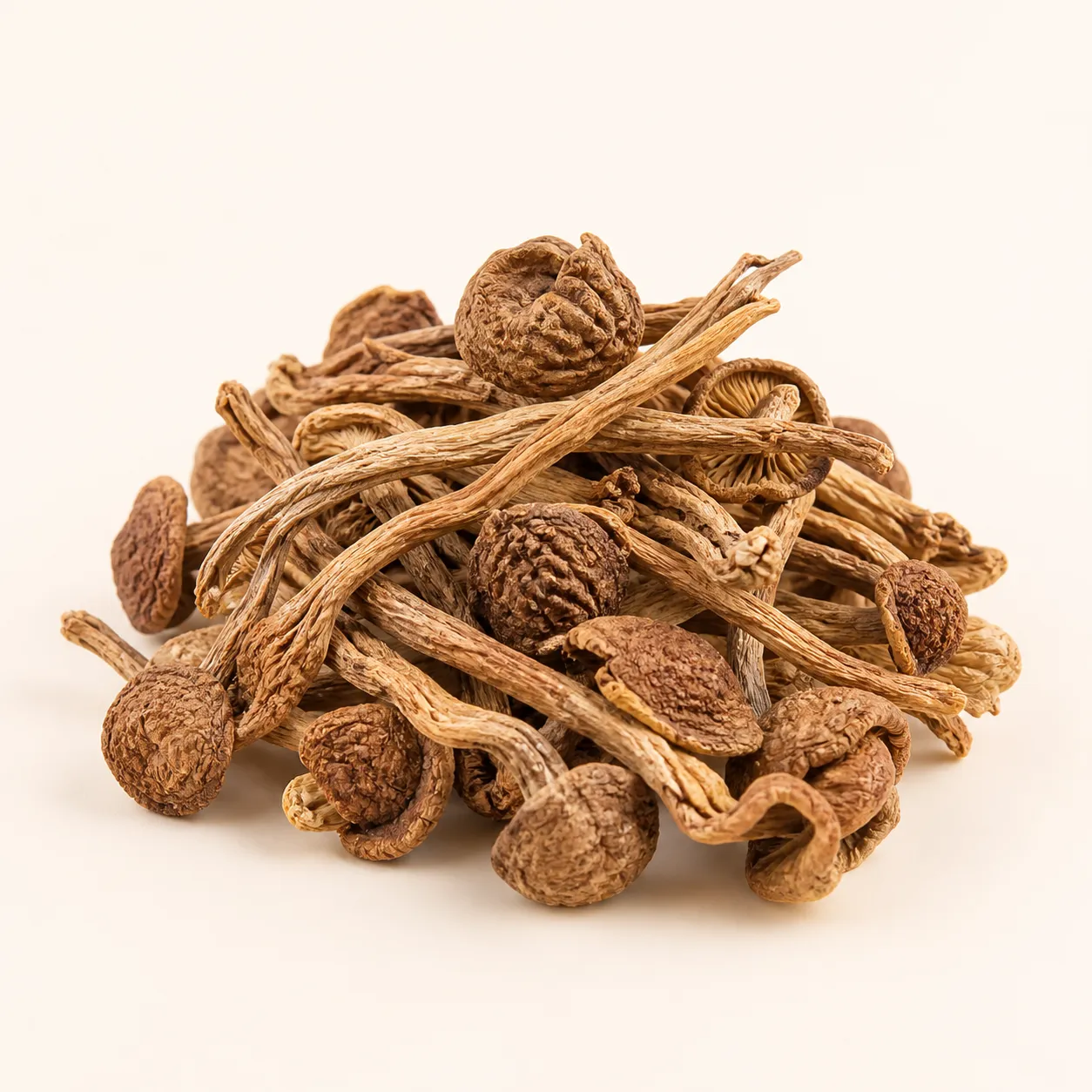
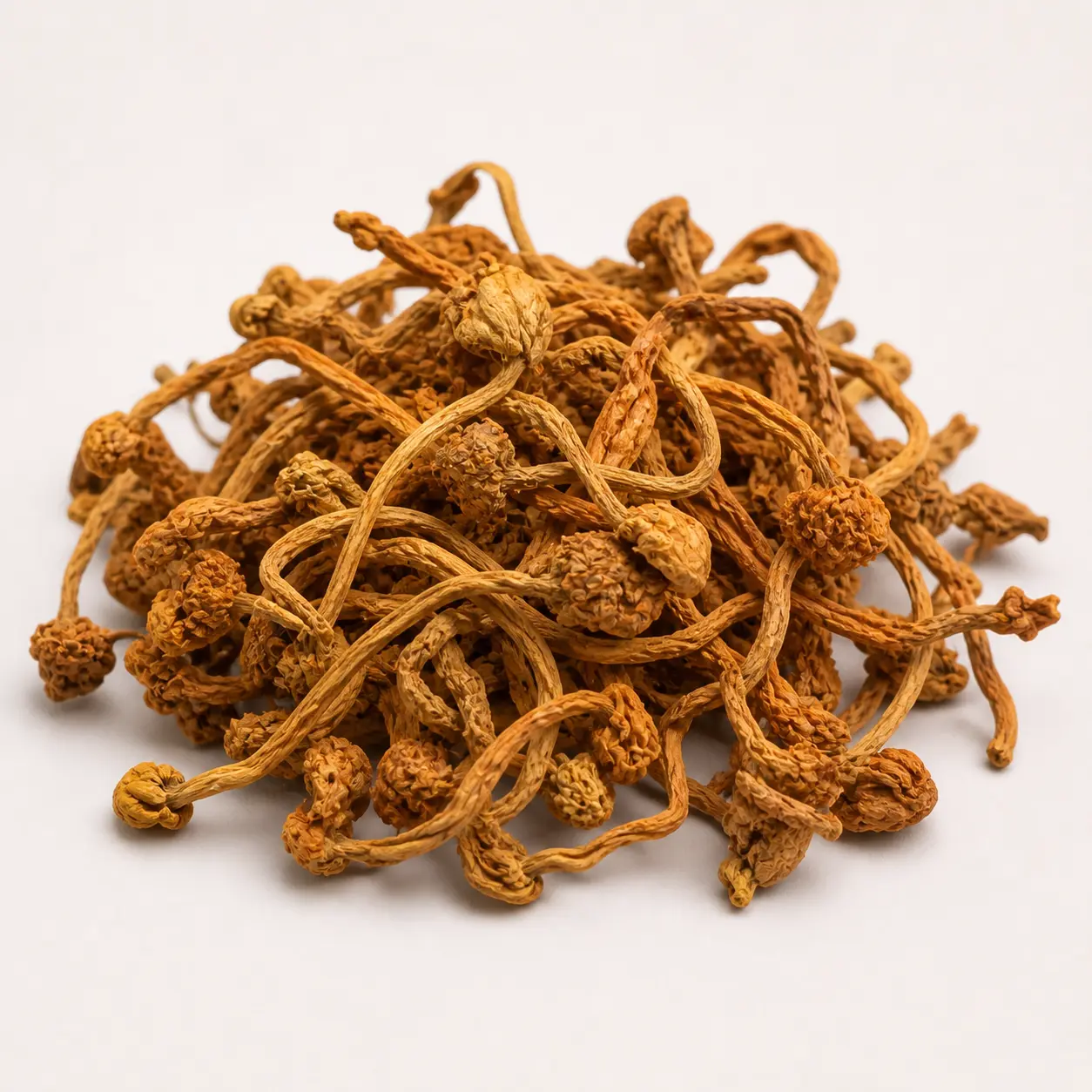
Cordyceps flower and "cordyceps mushroom" sound interchangeable but represent dramatically different products in the global specialty market. Confusion between the two creates real buying problems — paying premium-product prices for accessible-product quality, or assuming cultivated cordyceps equals wild caterpillar fungus when the products differ across nearly every commercial dimension. Clarity here saves money and protects buyer expectations. Cordyceps flower is cultivated Cordyceps militaris sold at CAD $90–$160/kg, while wild "cordyceps mushroom" typically refers to Cordyceps sinensis foraged from Tibetan Plateau caterpillar hosts and sold at CAD $20,000–$60,000+/kg — they're related species in the same genus but represent fundamentally different commercial products with different price points, availability, and traditional positioning.
Compare the Botanical Species
The first foundational difference is botanical species. Both products belong to the genus Cordyceps, but they're distinct species with different growth biology, host requirements, and commercial accessibility.
The two primary species in commerce:
- Cordyceps militaris — cultivated; grows on grain or insect-pupae substrates
- Cordyceps sinensis (recently reclassified as Ophiocordyceps sinensis) — wild-foraged; parasitizes ghost moth larvae on the Tibetan Plateau
Both species share some bioactive compounds, but they're not the same product. The naming conventions in commercial markets reflect this: "cordyceps flower" specifically refers to cultivated Cordyceps militaris fruiting bodies; "cordyceps mushroom" can refer to either species but typically implies wild Cordyceps sinensis in traditional Chinese medicine and premium specialty contexts.
For practical Canadian commerce, cordyceps flower (Cordyceps militaris) represents virtually all accessible cordyceps supply. Wild Cordyceps sinensis is essentially unavailable except through specialty TCM channels at extraordinary pricing.
Compare Cultivation vs. Wild-Foraging
The cultivation-versus-wild distinction is the second foundational difference. Cordyceps flower is cultivated; "cordyceps mushroom" (Cordyceps sinensis) is wild-foraged exclusively.
Cordyceps flower (cultivated):
- Substrate cultivation on grain or insect pupae
- Controlled growing conditions in cultivation facilities
- Year-round availability
- Consistent quality across batches
- Stable pricing with modest cultivation-cost-driven variance
- Scalable supply to meet growing demand
Cordyceps sinensis (wild-foraged):
- Wild parasitism of ghost moth larvae
- Tibetan Plateau exclusively — cannot grow elsewhere
- Extremely seasonal — short spring foraging window
- Variable quality depending on harvest conditions
- Volatile pricing with extreme year-to-year swings
- Constrained supply — sustainability concerns growing
Cultivation reliability is one of the main reasons cordyceps flower has expanded as a commercial product. Wild Cordyceps sinensis remains rarely available, prohibitively expensive for most applications, and increasingly subject to sustainability concerns about Tibetan Plateau over-foraging.
Compare Pricing Dramatically
The pricing difference between cordyceps flower and Cordyceps sinensis is the most dramatic in the entire specialty mushroom category. The two products operate in different commercial universes.
2025 Canadian pricing comparison:
- Cordyceps flower (cultivated) — CAD $90–$160/kg wholesale; CAD $200–$500/kg-equivalent at retail
- Wild Cordyceps sinensis — CAD $20,000–$60,000+/kg, depending on grade and origin
- Premium-grade Cordyceps sinensis — CAD $80,000–$150,000+/kg for top-grade Tibetan-Plateau lots
- Cordyceps flower powder — CAD $130–$220/kg
- Cordyceps flower extracts — varies widely; standardized extracts CAD $300–$1,500/kg
For practical buying decisions in Canada, the Cordyceps sinensis market doesn't really exist outside specialized TCM channels. Cordyceps flower is the relevant commercial product for restaurants, retailers, supplement makers, and home consumers. The pricing difference reflects supply realities, not necessarily a 200x quality difference — both species deliver bioactive compounds with documented research interest.
Compare Bioactive Compound Profiles
Both species deliver similar categories of bioactive compounds, but with different concentration profiles. The differences matter for some research applications and have less practical importance for typical wellness and culinary use.
Compound comparison:
- Cordycepin — typically higher in cultivated Cordyceps militaris; lower in wild Cordyceps sinensis
- Adenosine — present in both at similar concentrations
- Polysaccharides — both species contain immune-supporting polysaccharides
- Beta-glucans — present in both
- D-mannitol (cordycepic acid) — present in both
- Trace compounds — Cordyceps sinensis contains some unique trace compounds related to its insect-host biology
Notably, Cordyceps militaris (cordyceps flower) typically contains higher cordycepin concentrations than wild Cordyceps sinensis — sometimes 5–10x higher in trained-laboratory analysis. This compound is one of the most-researched in the cordyceps category. So the cultivated, more-affordable product often delivers comparable or superior cordycepin content versus the wild premium product.
According to a 2024 phytochemical analysis published in Molecules, cultivated Cordyceps militaris is increasingly preferred in pharmaceutical and supplement formulation specifically because of its higher cordycepin content combined with reliable supply.
Match Each to Its Practical Use Cases
The two products serve different practical use cases despite their related identities. Most Canadian buyers should focus on cordyceps flower for typical applications.
Best uses for cordyceps flower (Cordyceps militaris):
- Cantonese soup tonic dishes
- Herbal tea blends
- Wellness supplement formulation
- Modern Asian fine dining tasting menus
- Functional beverage applications
- Daily wellness routines for retail consumers
Best uses for wild Cordyceps sinensis:
- Premium TCM treatments under practitioner supervision
- Ultra-luxury dining or gift-giving contexts
- Investment-grade specialty ingredient collection
- Specific traditional uses where Cordyceps sinensis is required by tradition
For 95% of Canadian commercial applications, cordyceps flower is the right choice. The remaining 5% — premium TCM, ultra-luxury contexts, traditional-use authenticity — represent the small but premium-priced segment where wild Cordyceps sinensis maintains its position.
Frequently Asked Questions
Is cordyceps flower as effective as wild cordyceps?
Research suggests cultivated cordyceps flower (Cordyceps militaris) delivers similar or potentially superior bioactive compound profiles compared to wild Cordyceps sinensis — particularly for cordycepin content. For most modern wellness and supplement applications, cultivated cordyceps flower is the rational choice. Wild Cordyceps sinensis maintains traditional and prestige positioning that doesn't necessarily translate to superior measured efficacy.
Why is wild cordyceps so expensive?
Wild Cordyceps sinensis is expensive because supply is genuinely constrained. The fungus only grows on the Tibetan Plateau by parasitizing ghost moth caterpillars, with foraging windows of weeks per year and increasing sustainability concerns. Combined with strong demand from traditional Chinese medicine markets, the supply-demand imbalance produces pricing of CAD $20,000+/kg. Cordyceps flower's cultivability eliminates this scarcity dynamic.
Can cordyceps flower replace wild cordyceps in traditional Chinese medicine recipes?
Many TCM practitioners increasingly accept cordyceps flower as a substitute for wild Cordyceps sinensis in modern formulations, particularly given the supply and sustainability issues with the wild species. However, traditional purist practitioners may insist on wild Cordyceps sinensis for specific historical preparations. For most contemporary applications, cordyceps flower is acceptable; for traditional purist applications, wild Cordyceps sinensis remains the specified ingredient.
Choose Cordyceps Flower for Practical Applications
For 95% of Canadian buyers — restaurants, retailers, supplement makers, home consumers — cordyceps flower (Cordyceps militaris) is the right product. It delivers credible bioactive compounds, reliable supply, accessible pricing, and broad application range. Wild Cordyceps sinensis remains a rarefied specialty product for premium TCM and ultra-luxury contexts where traditional positioning matters.
Browse Fungi Origin's cordyceps flower selection — cultivated Cordyceps militaris in whole strand, cut, and powder formats with documented bioactive-compound transparency.
Shop this product
Buy cordyceps flower wholesale
Stocked in Ontario. Free GTA delivery over $350 CAD; courier shipping across Canada and to the US.
Wholesale
Dried Specialty Goods
Cordyceps Flower
Quality dried cordyceps flower suitable for soups, restaurants, and bulk resale.
Wholesale price
$15.62/lb
$34.43/kg
Market reference
Approx. $57–108/kg
Need wholesale support?
Contact Fungi Origin for pricing, product inspection, pickup, GTA delivery, or courier shipping across Canada and the US for bulk dried mushroom orders.
Contact Us