Cordyceps Flower
Dried Cordyceps Flower Buying Guide (Quality Checklist)
A practical 6-point checklist for evaluating dried cordyceps flower — color, strand integrity, aroma, moisture, cultivation method, and documentation.
By Editorial Team
Food sourcing and kitchen operations specialists covering ingredient procurement, storage science, and commercial kitchen efficiency across Canada.
Cordyceps flower quality varies dramatically across Canadian suppliers. The category is younger in Western commercial markets than shiitake or wood ear, the buyer base is less educated, and quality verification is harder than for more familiar mushroom categories. The good news: six specific quality checkpoints separate premium product from commodity-grade lots, and most can be verified within minutes of receiving a shipment. Choosing high-quality dried cordyceps flower means evaluating six criteria — color uniformity and intensity, strand integrity, aroma quality, moisture content, cultivation method documentation, and origin transparency — before paying for a wholesale lot or accepting a retail purchase.
Inspect Color Uniformity and Intensity
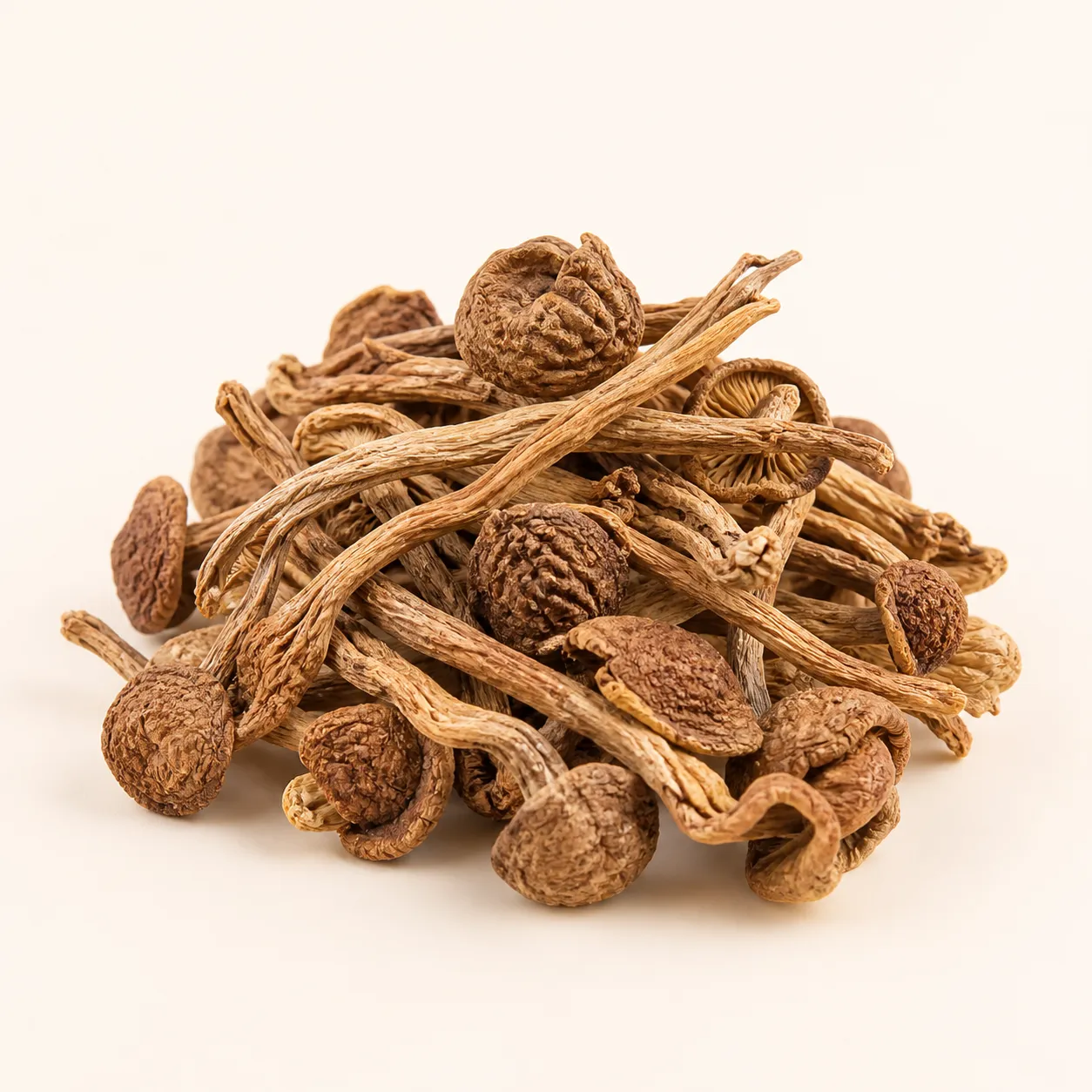
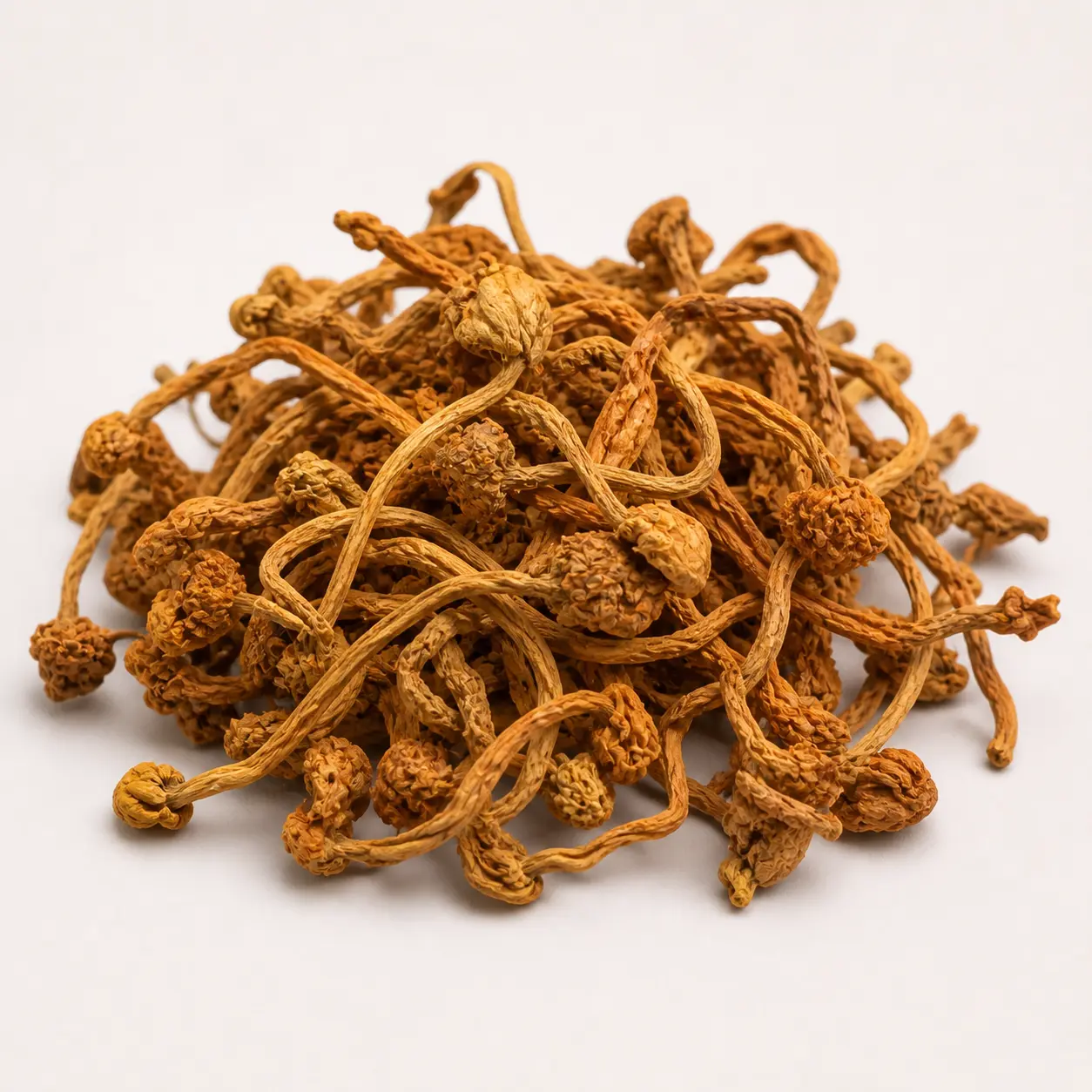
Color is the single most reliable visual quality indicator for cordyceps flower. Premium dried lots show consistent bright orange to deep orange-yellow color across the entire sample, with no significant variation in tone.
What to look for in color:
- Deep, consistent orange to orange-yellow throughout the lot
- No pale or washed-out sections — these indicate either poor cultivation or storage issues
- No brown or gray discoloration — signs of age or moisture damage
- No significant color variation between strands within the lot
- Minimal off-color flecks or specks on the strand surfaces
Premium grade cordyceps flower at premium pricing should show essentially uniform deep orange color. Commodity-grade lots often show wider color variation. If a supplier sells "Grade A" cordyceps flower with significant color variation, you're paying premium pricing for mid-grade product.
According to a 2024 specialty mushroom quality survey, color uniformity in cordyceps flower is the single best predictor of overall lot quality — strongly correlated with cultivation conditions, harvest timing, drying technique, and storage conditions.
Examine Strand Integrity and Length
Quality cordyceps flower has long, intact strands that demonstrate proper cultivation and gentle post-harvest handling. Lots with significant strand breakage indicate handling issues that often correlate with broader quality problems.
Strand integrity standards:
- Whole strands dominate the lot (>85% of total)
- Strand length varies but premium grades typically 3–8cm
- Minimal broken pieces or strand fragments
- Limited stem-substrate residue at strand bases
- No fluffy or pulverized fragments suggesting damaged drying or handling
- Visible strand structure — not crushed or flattened
Strand length premium pricing tiers exist. Long-strand lots (5–8cm dominant) command premium pricing as visual showcase product for soup, hot pot, and tasting menu applications. Shorter-strand lots (2–4cm) are perfectly usable for tea, supplement, and integrated culinary applications at lower pricing.
For Canadian foodservice buyers, the strand-length grading matters less than aroma and color — the cooked product visual difference is modest. For retail and gift programs, longer strands carry premium positioning that justifies the higher pricing.
Smell-Test for Aroma Quality
Aroma is the most reliable single quality indicator for many dried mushrooms, but for cordyceps flower it plays a more subtle role. The mushroom has a delicate, mild aroma rather than the dramatic profile of porcini or shiitake.
Aroma evaluation:
- Mild, slightly sweet, earthy aroma — the correct profile
- Gentle herbal undertones acceptable
- Strong "mushroomy" or umami aroma — actually a yellow flag (suggests oxidation or aging)
- Musty or mildew notes — reject the lot
- Chemical or harsh aromas — reject; possible processing issues
- Fishy or ammonia-like notes — bacterial breakdown; reject immediately
Premium cordyceps flower's aroma is gentle and clean — not absent, but not assertive either. A lot that smells dramatic (either intensely mushroomy or distinctly off) is a quality problem regardless of which direction.
For first-time wholesale orders, request aroma samples before committing to volume. Established direct importers including Fungi Origin send pre-purchase samples for buyers evaluating new account relationships.
Check Moisture Content and Texture
Properly dried cordyceps flower is brittle, lightweight, and snaps cleanly rather than bending. The target moisture content is under 12% — the threshold for microbiologically stable storage and 18+ month shelf life.
Practical moisture tests:
- Snap test — strand should snap or crackle when bent, not bend
- Weight test — a properly dried bag feels lighter than expected
- Surface test — strands should not feel sticky or tacky
- Shake test — properly dried strands rattle audibly inside the bag
Beyond moisture, check for any signs of insect activity (webbing, larvae casings, holes) or visible mold growth. Quality dried cordyceps flower from documented suppliers shows none of these issues.
Suppliers should provide moisture documentation on the packing list. A reputable lot certificate states measured moisture percentage, harvest origin, and cultivation method. If a supplier won't provide this, treat the quote as commodity-grade regardless of marketing language.
Verify Cultivation Method Documentation
Cordyceps flower cultivation method matters more for some applications than others. For wellness-brand and supplement formulations, cultivation method affects compound profile, regulatory positioning, and consumer-facing marketing claims. For culinary applications, cultivation method matters less but still factors into pricing.
Cultivation method documentation:
- Grain-substrate cultivation — dominant commercial method; specify rice, oats, or other grain
- Insect-pupae cultivation — traditional method; commands premium pricing
- Pure fruiting body — documented absence of mycelium-grain content
- Wild-foraged specification — rare; should command significant premium if claimed
The grain-substrate vs. insect-pupae distinction can affect the bioactive compound profile slightly, with some research suggesting traditional insect-pupae cultivation produces marginally higher cordycepin concentrations. For most Canadian commercial applications, grain-substrate cordyceps flower is the right choice given pricing and supply consistency.
Wellness-brand and supplement-formulation customers should specifically confirm "fruiting body only" specifications without mycelium-grain content, which is a quality differentiator increasingly demanded by sophisticated wellness consumers.
Demand Origin and Testing Documentation
Quality verification extends beyond visual and aromatic checks to formal documentation. Premium cordyceps flower ships with origin documentation and ideally with bioactive compound testing for premium grades.
Documentation that should accompany a wholesale shipment:
- Country and region of origin (China provinces, South Korea, etc.)
- Cultivation operation identification (when disclosed)
- Harvest year — current-year preferred
- Cultivation method specification
- Moisture content measurement
- Lot or batch number for traceability
- Pesticide and heavy-metal testing — increasingly demanded for wellness applications
- Bioactive compound testing (premium grades) — cordycepin content disclosure
- Importer of record for Canadian regulatory compliance
For wellness-brand and supplement-formulation customers, lot-specific bioactive compound testing — particularly cordycepin content — is increasingly demanded. Premium suppliers including Fungi Origin offer this testing on premium grades, with consumer-facing disclosure of cordycepin concentrations on premium SKUs.
Frequently Asked Questions
How can I tell if cordyceps flower has gone bad?
Aged or damaged cordyceps flower shows three signs: faded color (orange becoming pale or brown-tinged), reduced aroma when bag is opened, and rubbery or soft texture instead of crisp snap. Premium cordyceps flower lasts 18–24 months in proper storage but loses aromatic intensity progressively past 12 months. If color, aroma, and texture all show degradation, the lot has aged out of premium category regardless of paperwork date.
What's the difference between Grade A and Grade B cordyceps flower?
Grade A cordyceps flower features whole long strands (5–8cm dominant), uniform deep orange color, intense aroma, and under 4% debris. Grade B includes more broken strands, mixed lengths, slightly faded color, and 6–10% debris. Grade B cordyceps is acceptable for tea blends, soup integrations, and supplement applications at 25–40% lower pricing than Grade A. For visible plate features and retail premium packs, Grade A is preferred.
Should I prefer Chinese or South Korean cordyceps flower?
Both regions produce excellent cordyceps flower. South Korean cultivation is often positioned as premium with corresponding pricing premium, while Chinese cultivation dominates global volume at competitive pricing. Quality at premium grades is comparable across origins; the choice often comes down to specific supplier quality control and documentation rather than country of origin alone. Fungi Origin sources from multiple regions and grades each lot independently.
Buy Confidently With a Six-Point Quality Check
Quality dried cordyceps flower rewards the buyer who runs a quick six-point check on every shipment — color uniformity, strand integrity, aroma quality, moisture content, cultivation method documentation, and origin transparency. Suppliers who consistently pass these checks earn long-term wholesale relationships; those who don't reveal themselves on the first or second order.
Browse Fungi Origin's graded cordyceps flower selection — where every wholesale shipment ships with full lot documentation including cultivation method, origin, and moisture content. Premium grades include bioactive-compound testing.
Shop this product
Buy cordyceps flower wholesale
Stocked in Ontario. Free GTA delivery over $350 CAD; courier shipping across Canada and to the US.
Wholesale
Dried Specialty Goods
Cordyceps Flower
Quality dried cordyceps flower suitable for soups, restaurants, and bulk resale.
Wholesale price
$15.62/lb
$34.43/kg
Market reference
Approx. $57–108/kg
Need wholesale support?
Contact Fungi Origin for pricing, product inspection, pickup, GTA delivery, or courier shipping across Canada and the US for bulk dried mushroom orders.
Contact Us