Cordyceps Flower
How to Brew Cordyceps Flower Tea (Step-by-Step)
Brew cordyceps flower tea correctly — water temperature, steep time, ratio, and traditional Chinese pairings. Plus modern variations for wellness routines.
By Editorial Team
Food sourcing and kitchen operations specialists covering ingredient procurement, storage science, and commercial kitchen efficiency across Canada.
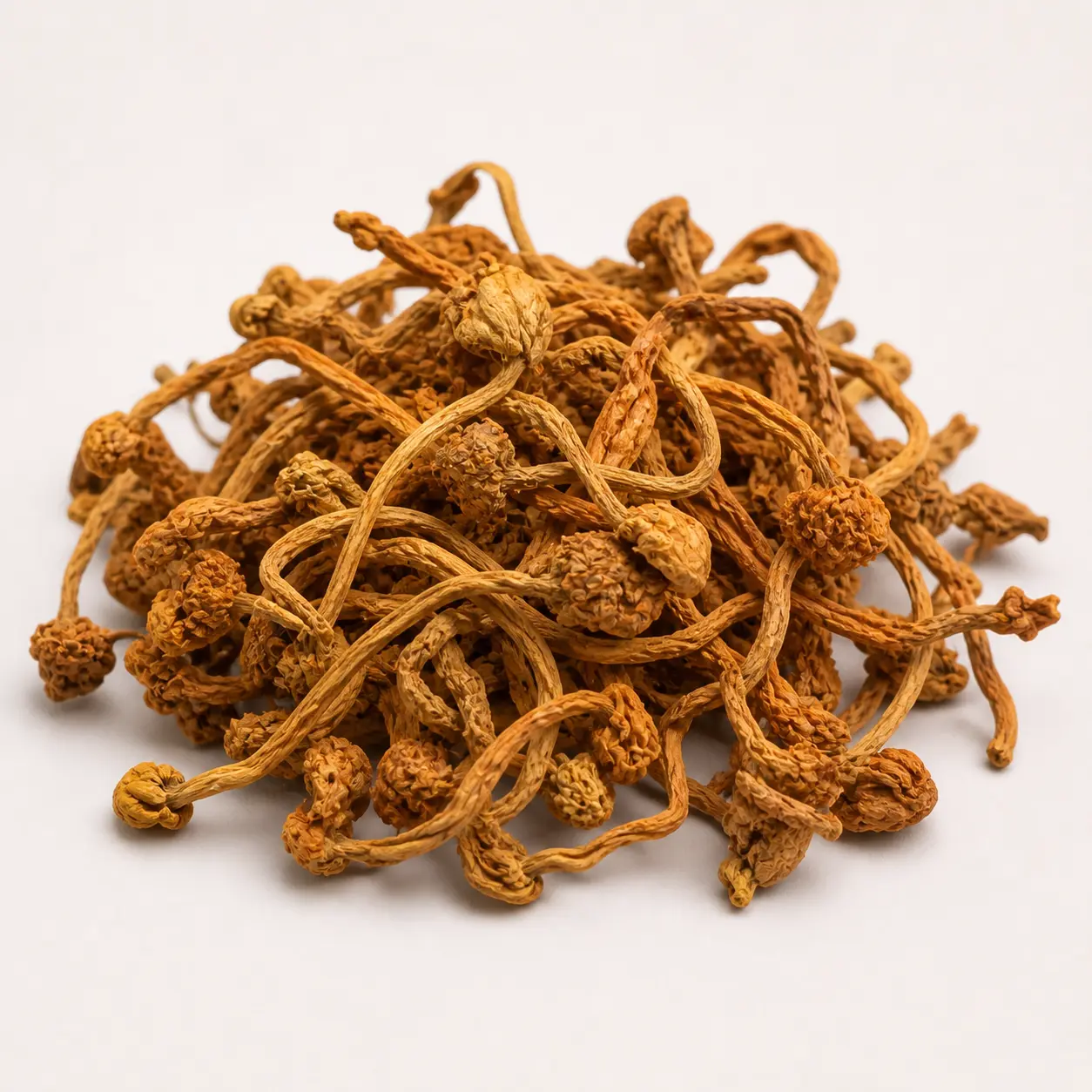
Cordyceps flower tea is one of the simplest and most-popular wellness applications for the mushroom. The brewing technique is forgiving, the visual is striking (golden-orange brewed liquid), and the wellness positioning resonates with consumers seeking functional beverages. Done well, cordyceps tea fits comfortably into daily wellness routines and traditional Chinese family-tonic practices alike. Brewing cordyceps flower tea is the process of steeping 3–5g dried Cordyceps militaris strands in 90°C water for 8–12 minutes for the first infusion, then re-steeping the same strands 2–3 times with progressively longer steeps, often paired with goji berries, ginger, jujubes, or honey for traditional Chinese wellness positioning.
Use the Right Water Temperature and Ratio
Water temperature and ingredient ratio are the two most-important variables for cordyceps tea brewing. Get them right and the tea delivers consistent, satisfying results across infusions.
The standard preparation:
- Water temperature — 90°C (just below boiling); avoid full boil
- Cordyceps flower ratio — 3–5g dried per 250ml water
- Brewing vessel — clear glass teapot or porcelain teapot; visible color is part of the experience
- Strainer — fine mesh tea strainer to retain strands during pouring
- Optional warming — pre-warm the teapot with hot water before adding cordyceps
The 90°C target temperature matters. Boiling water (100°C) destroys some volatile aromatic compounds and produces slightly harsher flavor. Below 85°C, extraction is incomplete and the tea tastes thin. The sweet spot is just-below-boiling.
For batch tea-making (Asian restaurant tea service, retail tea program), scale the ratio: 30g dried cordyceps in 2.5L water produces 8–10 servings of consistent tea quality. Use a thermos-style pot to maintain temperature during service.
Steep Multiple Times for Maximum Value
Cordyceps flower's strand structure releases compounds gradually across multiple infusions. The first infusion is mild; subsequent infusions deepen progressively. Most Canadian tea drinkers stop at one infusion and waste the remaining flavor potential.
Standard multi-infusion brewing:
- First infusion — 8–12 minutes; mild and aromatic
- Second infusion — 12–15 minutes; slightly deeper
- Third infusion — 15–20 minutes; richest character
- Optional fourth infusion — 20–25 minutes; subtle final extraction
The same 3–5g portion of dried cordyceps flower delivers 3–4 cups of tea across multiple infusions, dramatically improving the per-cup economics. According to a 2024 specialty tea brewing analysis, cordyceps flower retains approximately 60% of its bioactive compound release across the second and third infusions combined — meaning multi-steep brewing nearly doubles the value extracted from each portion.
For consumer-facing retail tea programs (cafes, bubble tea shops with wellness positioning, hotel breakfast service), the multi-infusion potential supports both quality and food cost — the same input delivers multiple servings.
Add Traditional Chinese Pairings
Cordyceps flower tea works beautifully alone, but traditional Chinese herbal pairings add complexity, balance, and traditional wellness positioning. Most established cordyceps tea programs use multi-ingredient blends rather than single-ingredient brewing.
Common pairings and what they add:
- Goji berries (枸杞) — sweetness, deep red color, traditional wellness association
- Red dates / jujubes (红枣) — natural sweetness, body, traditional tonic role
- Dried longan (龙眼) — sweet floral notes, traditional medicinal use
- Fresh ginger — warming character, digestive support
- Honey — sweetness; add after steeping (don't add to boiling water)
- Chrysanthemum flowers — floral character, cooling balance
- Fresh lemon — bright acidity for modern Western palates
Standard wellness blend for 4 servings:
- 15g dried cordyceps flower
- 15g goji berries
- 6 dried red dates, halved
- 2 slices fresh ginger (optional)
- 1L water at 90°C
- Honey to taste at end
This blend produces a richer, sweeter, more visually beautiful tea than cordyceps alone — and aligns with Chinese family-tonic traditions that have used these ingredient combinations for centuries.
Choose the Right Brewing Vessel
Vessel choice affects both the brewing experience and the visual presentation of cordyceps tea. Three options work well for different contexts.
Vessel options:
- Clear glass teapot — best for showcasing the orange color; visual impact part of the experience
- Porcelain teapot — traditional Chinese tea aesthetic
- Thermos pot for service — for restaurants and tea programs maintaining temperature
- Individual tea infuser — for single-cup brewing
- Yixing clay teapot — traditional but masks visual color; works for purist applications
For home use, a clear glass teapot is the most popular choice — the orange color development across the steeping process is part of why people enjoy cordyceps tea. For restaurant tea service, thermos-style pots maintain temperature across service while delivering tea on demand. Yixing clay teapots are aesthetically traditional but hide the visual color development that makes cordyceps tea distinctive.
Plan Tea Programs for Restaurants and Tea Shops
Several Canadian businesses have built tea programs featuring cordyceps flower as a wellness-positioned premium offering. The economics work well at the right pricing structure.
Restaurant and tea-shop cordyceps program economics:
- Cordyceps flower wholesale cost — CAD $90–$140/kg
- Per-cup cost (ingredient only) — CAD $0.45–$0.70 per 5g dried serving
- Multi-infusion economics — CAD $0.15–$0.30 per cup across 3 infusions
- Typical retail pricing — CAD $5–$10 per cup or pot
- Gross margin — 85–95% on wellness-positioned cordyceps tea
These margins support meaningful tea program development. A Canadian café or wellness tea shop running cordyceps tea as a featured wellness beverage generates strong gross margins while delivering a premium guest experience. Bubble tea shops have begun incorporating cordyceps tea into their wellness-positioned drink menus, with cordyceps milk teas and cordyceps fruit teas appearing on Canadian menus.
Frequently Asked Questions
Can I drink cordyceps tea every day?
Daily cordyceps tea at standard concentrations (3–5g per cup) is well-tolerated in available research. Many traditional Chinese family wellness routines include daily cordyceps tea consumption. Most Canadian consumers using cordyceps for wellness purposes drink 1–2 cups daily without reported issues. People on anticoagulant or immunosuppressant medications should consult healthcare providers before substantial daily use.
Is cordyceps tea bitter?
No, cordyceps flower tea is mild, subtly sweet, and slightly earthy — not bitter. The flavor profile is much milder than green or black tea, with no astringency. People expecting strong tea flavor are sometimes surprised by cordyceps tea's gentleness. Pairings with goji berries, jujubes, or honey add sweetness without masking the cordyceps' delicate character.
How much cordyceps tea should I drink for wellness benefits?
Most clinical research on cordyceps benefits used dosages of 1–3g daily of dried cordyceps flower or extract equivalent. Standard tea preparation (3–5g per cup, 1–2 cups daily) falls within this research range. Effects in clinical studies typically emerge after 4–12 weeks of consistent daily use rather than immediately. For wellness purposes, daily consistency matters more than per-cup concentration.
Build a Cordyceps Tea Routine That Works
Right water temperature (90°C), proper ratio (3–5g per cup), multi-infusion brewing for value, traditional Chinese pairings for complexity, and the right vessel for the context — together these elements deliver consistent, satisfying cordyceps tea experiences. Whether for daily home wellness or restaurant tea programs, getting these basics right elevates cordyceps tea from curiosity to staple.
Browse Fungi Origin's cordyceps flower selection — whole strands graded for tea-quality color and aroma, with full origin documentation on every wholesale shipment.
Shop this product
Buy cordyceps flower wholesale
Stocked in Ontario. Free GTA delivery over $350 CAD; courier shipping across Canada and to the US.
Wholesale
Dried Specialty Goods
Cordyceps Flower
Quality dried cordyceps flower suitable for soups, restaurants, and bulk resale.
Wholesale price
$15.62/lb
$34.43/kg
Market reference
Approx. $57–108/kg
Need wholesale support?
Contact Fungi Origin for pricing, product inspection, pickup, GTA delivery, or courier shipping across Canada and the US for bulk dried mushroom orders.
Contact Us