Black Fungus / Wood Ear
How to Use Black Fungus in Hot Pot (Complete Guide)
Black fungus is a hot pot essential — preparation technique, broth pairings, table-side cooking timing, and quantity-per-person guide for Canadian operators and home hosts.
By Editorial Team
Food sourcing and kitchen operations specialists covering ingredient procurement, storage science, and commercial kitchen efficiency across Canada.
Hot pot is the application that drives the largest single share of Canadian black fungus consumption. Sichuan hot pot, Chongqing hot pot, Cantonese hot pot, Korean hot pot, and Japanese shabu-shabu all use black fungus as a core textural ingredient — the crunchy bite contrasts beautifully with tender meats, soft tofus, and leafy vegetables in the shared boiling broth. Knowing how to prepare and serve black fungus in hot pot service separates good from great execution. Black fungus in hot pot is rehydrated, drained, and added to the simmering broth where it cooks for 3–5 minutes to soften slightly while retaining its signature crunch — typically portioned at 25–40g of dried black fungus per 4-person hot pot, paired most successfully with spicy Sichuan-style and clear Cantonese-style broths.
Prepare the Black Fungus for Hot Pot Service
Hot pot preparation of black fungus begins with proper rehydration before service. The mushroom can't go from dry to broth in real-time at the table — the rehydration must happen in advance during prep.
The standard hot-pot prep flow:
- Rehydrate dried black fungus using the standard short-soak method (30 minutes to 2 hours room-temperature, or refrigerated overnight)
- Drain in a colander and rinse under cool running water
- Trim tough attachment points at the base
- Cut large pieces into bite-sized portions if needed
- Pat dry slightly if water is excessive
- Arrange on serving platters alongside other hot pot ingredients
For restaurant hot pot service, prep typically runs 1–2 hours before service opens. Pre-rehydrated black fungus holds well at refrigeration for 3–4 days, allowing batch-prep across multiple service days. Home preparation typically does morning-of or day-before prep, depending on convenience.
Match Black Fungus to the Right Broth Style
Black fungus pairs particularly well with certain hot pot broth styles and works less effectively with others. Understanding the pairing helps prioritize black fungus on the table for matching broth selections.
Broth pairings:
- Sichuan spicy broth (麻辣火锅) — black fungus is essential; the crunch contrasts with the bold heat
- Chongqing hot pot — similar to Sichuan; black fungus is a core ingredient
- Cantonese clear broth (清汤火锅) — black fungus pairs well with delicate fish/seafood ingredients
- Mushroom broth hot pot — works well; black fungus adds textural variety to other mushrooms
- Japanese shabu-shabu — less common but works; pairs with wagyu and delicate vegetables
- Korean budae jjigae and similar — black fungus appears occasionally
- Sukiyaki — less traditional but acceptable
The Sichuan-style spicy broth pairing is the most-recognized — Canadian Sichuan hot pot restaurants use black fungus heavily, with most operations dedicating substantial menu and platter real estate to wood ear at every table.
Time the Cook Properly During Service
Hot pot is table-side cooking, so guests control the actual cook timing of black fungus. But the menu and host can guide proper timing for best texture results.
Cook timing guidance:
- 3–5 minutes in actively simmering broth is the typical sweet spot
- Below 3 minutes — black fungus can be slightly stiff/papery
- Above 7–8 minutes — texture starts becoming overly soft, losing the signature crunch
- Add-and-leave technique — drop into broth, retrieve when ready
- Don't return repeatedly — multiple cooking cycles can cause texture issues
For Canadian hot pot restaurants, server education matters. Servers explaining "leave the wood ear in broth for 4–5 minutes" results in better guest texture experience than allowing guests to randomly retrieve when convenient. Some restaurants print suggested cook times on hot pot menu inserts.
According to a 2024 Canadian hot pot restaurant operations survey, restaurants with server education programs around proper hot pot ingredient cooking saw 22% higher customer satisfaction scores than restaurants without such programs.
Calculate Quantities for Service Planning
Black fungus consumption in hot pot is more standardized than many other ingredients. The textural role means most diners eat similar quantities regardless of personal preferences.
Standard portion guidelines:
- 25–40g dried black fungus per 4-person hot pot session
- 6–10g per person as the mushroom's share of total ingredient mix
- Rehydrated yield — 150–250g cooked black fungus from a 4-person portion
- Restaurant à la carte plate — typically 80–120g rehydrated for individual ordering
- All-you-can-eat hot pot — typically 8–15g dried per cover used
For a Canadian Sichuan hot pot restaurant serving 80 covers per day, daily black fungus consumption typically runs 1.0–1.5kg dried — translating to monthly purchasing of 30–45kg. At 2025 wholesale pricing of CAD $25–$45/kg for Grade A wood ear, that's a CAD $900–$2,000 monthly ingredient line, modest against the menu revenue it supports.
Stock Multiple Wood Ear Formats for Different Hot Pot Contexts
Some Canadian hot pot operators stock multiple wood ear formats to differentiate menu offerings or match specific service contexts.
Format-by-context guide:
- Standard whole wood ear — workhorse for daily hot pot service
- Cloud ear (smaller, frillier) — premium positioning at higher-end hot pot restaurants
- Sliced/cut wood ear — quick-cook format for fast-casual hot pot concepts
- Hairy wood ear (Auricularia polytricha) — specialty for Sichuan-themed restaurants offering authentic regional preparations
The standard whole wood ear handles 80%+ of hot pot demand across Canadian operations. Premium and specialty formats serve menu differentiation and authentic regional positioning at higher-end concepts.
Frequently Asked Questions
How much black fungus should I prepare for a 4-person hot pot at home?
Prepare 25–40g of dried black fungus for a 4-person home hot pot. This rehydrates to roughly 150–250g of usable mushroom — generous but not overwhelming alongside other ingredients. Adjust upward if your guests particularly enjoy the textural contrast or downward if you're stocking many other mushroom varieties for the table.
Can I add dried black fungus directly to hot pot broth without rehydrating?
No, dried black fungus must always be rehydrated before adding to hot pot broth. Direct dry-to-broth attempts produce inconsistent texture, leave debris in the shared broth, and can take 15+ minutes to soften — far too long for table-side cooking. Pre-rehydrate during prep, drain and rinse, then add to the broth at the table.
What's the difference between hot pot wood ear and stir-fry wood ear?
The same dried wood ear works for both applications. The difference is in cut and presentation rather than product. For hot pot, larger whole pieces work well because guests cook and eat them off chopsticks; for stir-fry, smaller bite-sized pieces integrate better into the dish. Most Canadian hot pot restaurants buy whole wood ear and let guests handle pieces directly.
Make Black Fungus Central to Your Hot Pot Program
Proper rehydration before service, broth-style pairing matched to wood ear's textural role, server education around cooking timing, accurate quantity planning per cover, and format selection that matches your concept — together these factors elevate hot pot wood ear from "default ingredient" to a genuine textural showcase. The crunch contrast that wood ear provides is irreplaceable in great hot pot.
Browse Fungi Origin's wood ear and black fungus selection — sized and graded for Canadian hot pot service, with wholesale pricing and same-week shipping for restaurant accounts.
Shop this product
Buy black fungus wholesale
Stocked in Ontario. Free GTA delivery over $350 CAD; courier shipping across Canada and to the US.
Wholesale
Dried Fungus
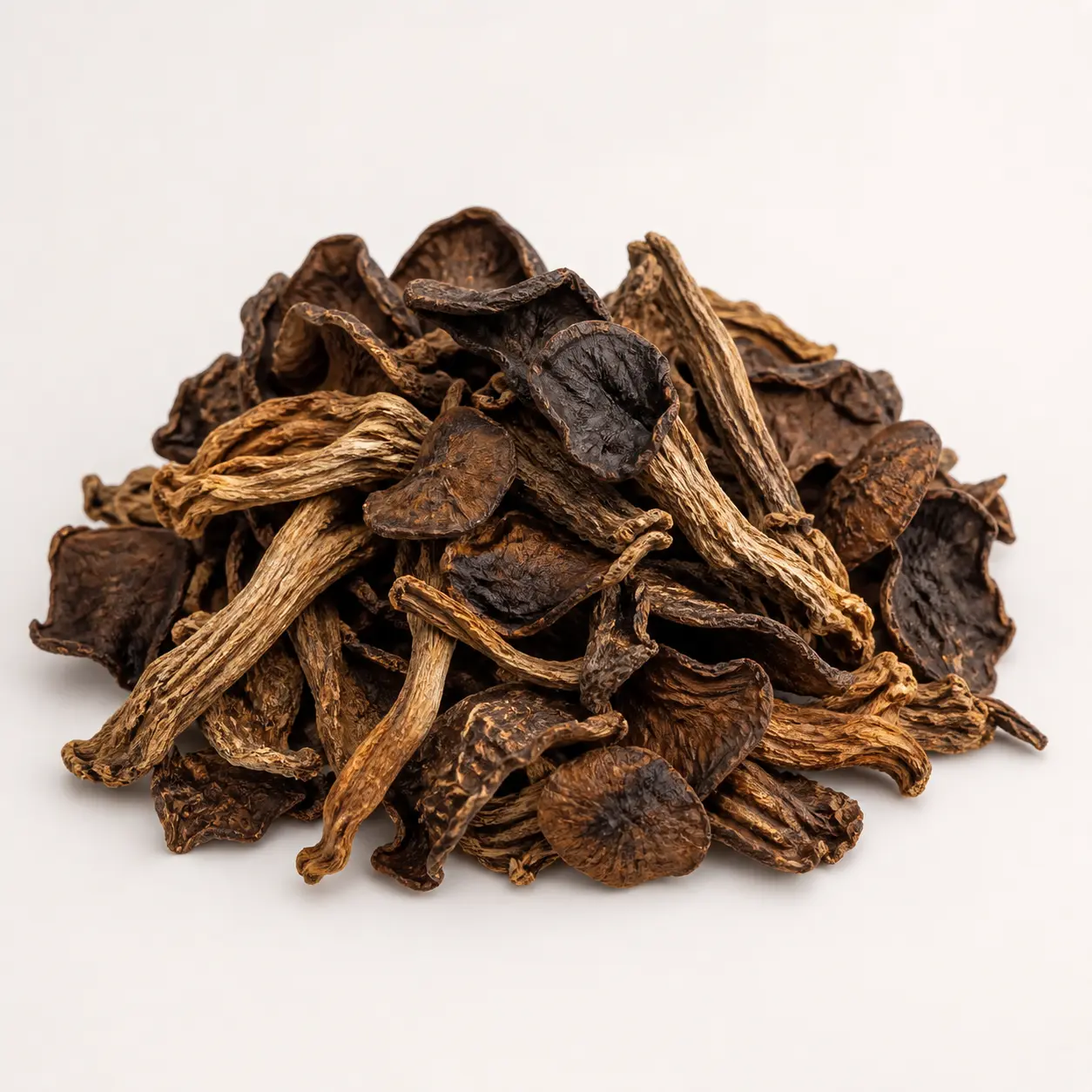
Black Fungus
Clean and well-selected dried black fungus suitable for food service and retail resale.
Wholesale price
$15.62/lb
$34.43/kg
Market reference
Approx. $59–80/kg
Need wholesale support?
Contact Fungi Origin for pricing, product inspection, pickup, GTA delivery, or courier shipping across Canada and the US for bulk dried mushroom orders.
Contact Us