Black Fungus / Wood Ear
How Restaurants Use Black Fungus in Stir-Fry, Soup, and Salads
Five restaurant applications for black fungus beyond hot pot — stir-fries, soups, cold salads, mu shu pork, and Korean banchan. Technique and food cost.
By Editorial Team
Food sourcing and kitchen operations specialists covering ingredient procurement, storage science, and commercial kitchen efficiency across Canada.
Hot pot drives the largest single share of black fungus consumption in Canadian Asian-cuisine restaurants — but it's far from the only use. Five additional application categories together account for the majority of black fungus volume across Chinese, Korean, Vietnamese, and pan-Asian restaurants. Understanding the application range helps both chefs planning menus and operators forecasting demand. Restaurants use black fungus in five core applications beyond hot pot — stir-fries, hot-and-sour soups, cold salads with chili oil, mu shu and traditional Chinese dishes, and Korean banchan side dishes — with the textural crunch contributing distinctive bite that no other commercial mushroom replicates.
Build Stir-Fry Applications Around Wood Ear's Crunch
Stir-fry is the most-common non-hot-pot application for black fungus in Canadian Chinese restaurants. The mushroom's crunchy texture survives high-heat wok-cooking remarkably well, contributing visual contrast (dark color among lighter ingredients) and textural variety to virtually any stir-fry composition.
Common stir-fry applications:
- Mu shu pork — wood ear is a defining ingredient
- Stir-fried wood ear with celery and lily bulb — classic Chinese vegetable stir-fry
- Hunan-style stir-fries — wood ear with chili and aromatic ingredients
- Cantonese mixed-vegetable stir-fries — wood ear as one of several mushroom varieties
- Sichuan dry-fried preparations — wood ear with bold seasonings
- Korean stir-fries — wood ear in beef bulgogi sides and similar dishes
Restaurant technique: rehydrate wood ear during morning prep, hold in refrigeration, then add to wok-fired stir-fries with 2–3 minutes of cooking time. The 2–3 minute window is critical — longer cooking erodes the textural crunch that makes wood ear valuable. Wholesale cost on stir-fry-format wood ear runs CAD $25–$45/kg, which translates to per-portion cost under CAD $0.40 for typical 12g portions.
Anchor Hot-and-Sour Soup Recipes
Hot-and-sour soup is one of the most-recognized Chinese-cuisine soups in Canada, and wood ear is a structural ingredient — the soup isn't authentic without it. The textural contrast between the silky tofu, the chewy mushroom, and the broth-driven sour-and-spicy flavor profile defines the dish.
Hot-and-sour soup wood ear applications:
- Standard Chinese-restaurant hot-and-sour soup — wood ear core ingredient
- Korean hot-and-sour variations — wood ear adds textural variety
- Modern Chinese-fusion hot-and-sour ramen — wood ear as topping element
- Vegetarian hot-and-sour soup — wood ear plays larger role replacing meat textures
The soup format showcases wood ear differently than stir-fries. In soup, the mushroom contributes a chewy/crunchy bite that contrasts with the smooth liquid texture; in stir-fry, the contrast is against firmer vegetables and proteins. Both work, but the textural role differs subtly. According to a 2024 Canadian Chinese-restaurant menu analysis, hot-and-sour soup remains among the top 10 most-ordered Chinese dishes, with wood ear inclusion essentially universal.
Develop Cold Salad Applications
Cold wood ear salads — particularly Sichuan-style cold dishes with chili oil and vinegar — are gaining popularity in Canadian Chinese restaurants. The format showcases wood ear's textural quality without competing flavors masking the crunch.
Cold salad applications:
- Sichuan cold wood ear salad — chili oil, vinegar, garlic, sesame, scallion
- Korean cold wood ear banchan — sesame oil, garlic, soy
- Pan-Asian seaweed-and-wood-ear salad — combines two crunchy textures
- Modern fusion cold wood ear — with citrus, fresh herbs, modern dressings
Restaurant technique: rehydrate wood ear, blanch in boiling water 1–2 minutes for safety and texture, plunge into ice water, drain thoroughly, dress with sauce just before service. The blanch step is non-negotiable for cold preparations — it ensures food safety and produces the firm crisp texture that defines high-quality cold wood ear.
These dishes carry attractive food cost economics. A Sichuan cold wood ear salad uses approximately 30–50g rehydrated wood ear per portion (5–8g dried), with food cost of CAD $0.30–$0.50 against menu pricing of CAD $11–$16. The high gross margin makes cold wood ear salads strong menu items even at moderate sales velocity.
Use Wood Ear in Mu Shu and Traditional Chinese Dishes
Mu shu (木须) dishes are among the most-traditional applications for wood ear in Chinese cuisine. Mu shu pork, mu shu chicken, mu shu vegetables, and similar dishes traditionally include wood ear as a defining ingredient, often paired with day lily flowers and scrambled egg.
Mu shu and traditional applications:
- Mu shu pork (木須肉) — pork strips, wood ear, day lily, egg, scallion, served with thin pancakes
- Mu shu chicken — chicken variation of the same template
- Mu shu vegetables — vegetarian variant
- Eight Treasures (八宝)-style preparations — wood ear among multiple ingredients
- Buddhist vegetarian preparations — wood ear in classical vegetarian Chinese cuisine
- Lunar New Year banquet dishes — wood ear in symbolic preparations
These dishes often appear on Canadian Chinese restaurant menus year-round, with Lunar New Year and special-occasion programming driving spikes. Wood ear consumption in this category typically runs 0.5–2kg monthly per restaurant, supplementing the larger volumes used in hot pot and routine stir-fries.
Add Wood Ear to Korean Banchan Programs
Korean restaurants in Canada use wood ear in their banchan (side dish) programs, particularly for cold sesame-dressed wood ear preparations served alongside main courses. The mushroom's neutral flavor accepts Korean seasoning beautifully.
Korean wood ear banchan applications:
- Sesame-dressed wood ear — toasted sesame oil, garlic, soy, scallion
- Spicy wood ear banchan — gochujang, vinegar, sesame
- Cold wood ear with bean sprouts — combination crunchy banchan
- Wood ear in japchae — although less traditional, growing in popularity
Korean restaurants typically use 1–4kg of wood ear monthly, depending on banchan rotation and customer volumes. The format is small but valuable for menu differentiation versus competing Korean concepts. Some Korean BBQ restaurants in major Canadian cities have adopted wood ear sesame banchan as a signature element.
Frequently Asked Questions
What's the standard restaurant portion size for black fungus?
Standard restaurant portion sizes vary by application: 8–15g of dried wood ear per serving for stir-fries and soups (rehydrating to 50–90g), 5–10g per serving for cold salad applications, 25–40g per 4-person hot pot session. A 1kg bag of dried wood ear yields approximately 80–150 servings depending on application.
How do restaurants store rehydrated wood ear during service?
Restaurants pre-rehydrate wood ear during morning prep using the standard short-soak method, drain thoroughly, and store in airtight containers in refrigeration for the day's service. Rehydrated wood ear keeps 3–4 days refrigerated. Many operations rehydrate in batches every 2–3 days to balance prep efficiency with freshness. Always rinse rehydrated wood ear before final cooking to remove any residual debris.
Can wood ear work in non-Asian restaurant menus?
Yes, although applications are less common, wood ear works in fusion concepts and modern non-Asian menus that value textural variety. Modern American, Mediterranean, and creative-fusion restaurants occasionally feature wood ear in unexpected applications — vegan crab cake textures, modern grain bowls, fusion salads. The mushroom's neutral flavor and distinctive crunch translate across cuisines for chefs willing to experiment.
Build a Multi-Application Wood Ear Program
Five application categories beyond hot pot — stir-fries, hot-and-sour soups, cold salads, mu shu and traditional dishes, Korean banchan — together cover the breadth of restaurant wood ear use in Canadian Asian and fusion concepts. Operators who understand the application range buy strategically and recover food cost across multiple menu touchpoints.
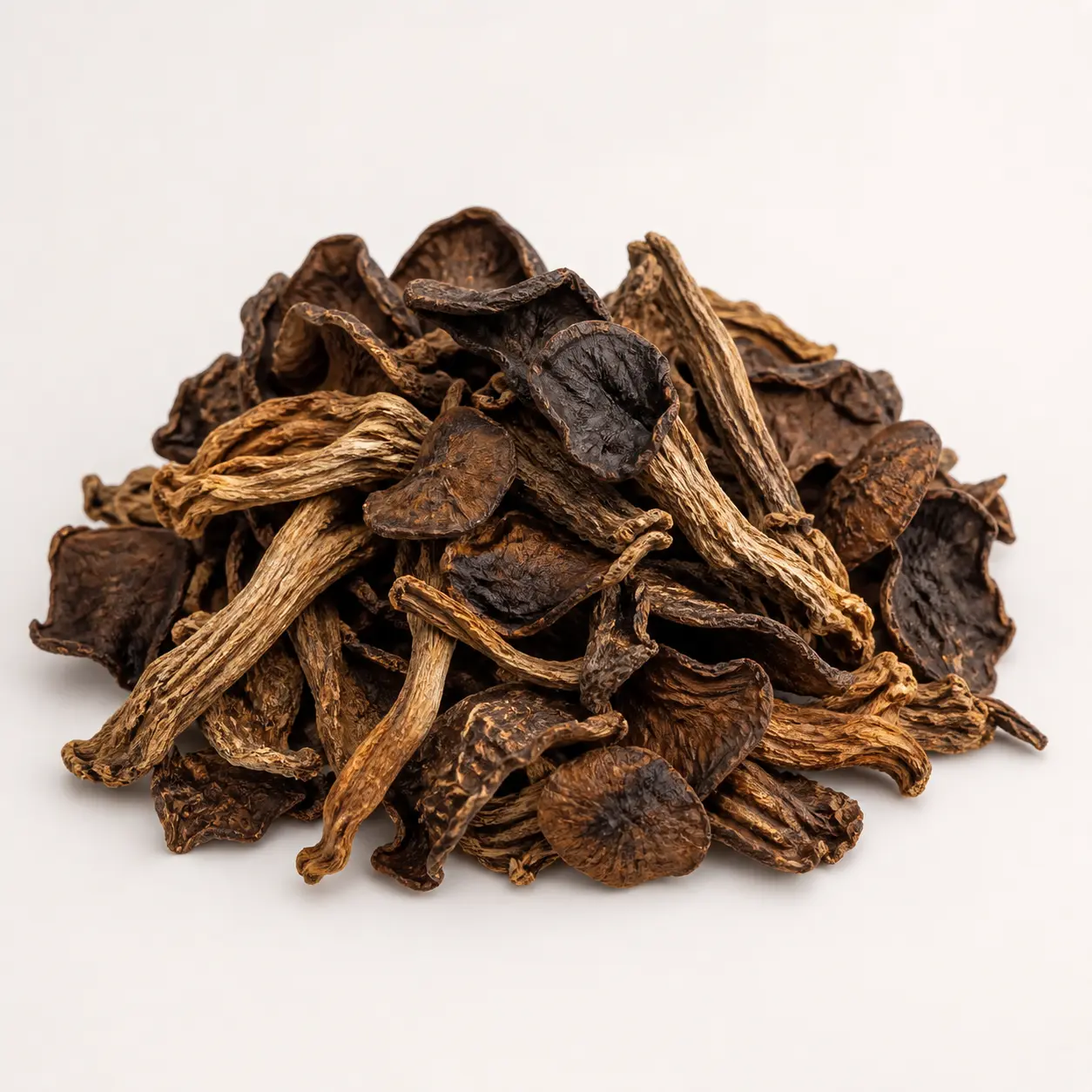
Browse Fungi Origin's restaurant-grade wood ear range — whole, sliced, and pieces formats with same-week shipping for Canadian Asian restaurant accounts, and competitive wholesale pricing for committed monthly volume.
Shop this product
Buy black fungus wholesale
Stocked in Ontario. Free GTA delivery over $350 CAD; courier shipping across Canada and to the US.
Wholesale
Dried Fungus
Black Fungus
Clean and well-selected dried black fungus suitable for food service and retail resale.
Wholesale price
$15.62/lb
$34.43/kg
Market reference
Approx. $59–80/kg
Need wholesale support?
Contact Fungi Origin for pricing, product inspection, pickup, GTA delivery, or courier shipping across Canada and the US for bulk dried mushroom orders.
Contact Us