Black Fungus / Wood Ear
What Is Black Fungus (Wood Ear)? A Complete Guide
Black fungus, wood ear, cloud ear, mu er — the same dried mushroom under different names. Learn identification, varieties, and Canadian market basics.
By Editorial Team
Food sourcing and kitchen operations specialists covering ingredient procurement, storage science, and commercial kitchen efficiency across Canada.
Black fungus is the most-named dried mushroom in the global market — sold under at least seven different names depending on cuisine and region. Black fungus, wood ear, cloud ear, mu er, kikurage, jelly ear — they all refer to the same mushroom species or its close relatives, and the naming confusion creates real problems for buyers searching for, sourcing, or comparing the ingredient. Black fungus, also known as wood ear, cloud ear, mu er, or kikurage, is the dried fruiting body of Auricularia auricula-judae and closely related Auricularia species — a wood-decay mushroom prized in Chinese, Korean, Japanese, and Vietnamese cuisines for its distinctive crunchy texture and visual contrast in cooked dishes.
Sort Out the Naming Confusion
The first task for any black fungus buyer is sorting out the naming. The same mushroom appears under multiple names across cuisines, suppliers, and grocery stores — and the names often imply slight quality or appearance distinctions that aren't always real.
The naming hierarchy:
- Black fungus — generic English commercial name; most common in Canadian wholesale
- Wood ear — English translation of Chinese 木耳 (mu er); same product
- Cloud ear — English translation of Chinese 云耳 (yun er); typically a smaller, paler variety
- Mu er (木耳) — Mandarin Chinese name; widely used in Canadian Asian groceries
- Kikurage (木耳) — Japanese name; same characters as Chinese
- Mok yi (木耳) — Cantonese pronunciation
- Jelly ear — older British botanical name; rarely used commercially today
In commercial Canadian supply, "wood ear" and "black fungus" are the same product 95% of the time. "Cloud ear" specifically may indicate a smaller, paler, more delicate variety (sometimes called Auricularia polytricha or "white wood ear") at slightly higher pricing. Buyers should ask suppliers to clarify which species and which size grade they're quoting.
Recognize the Distinctive Visual Identity
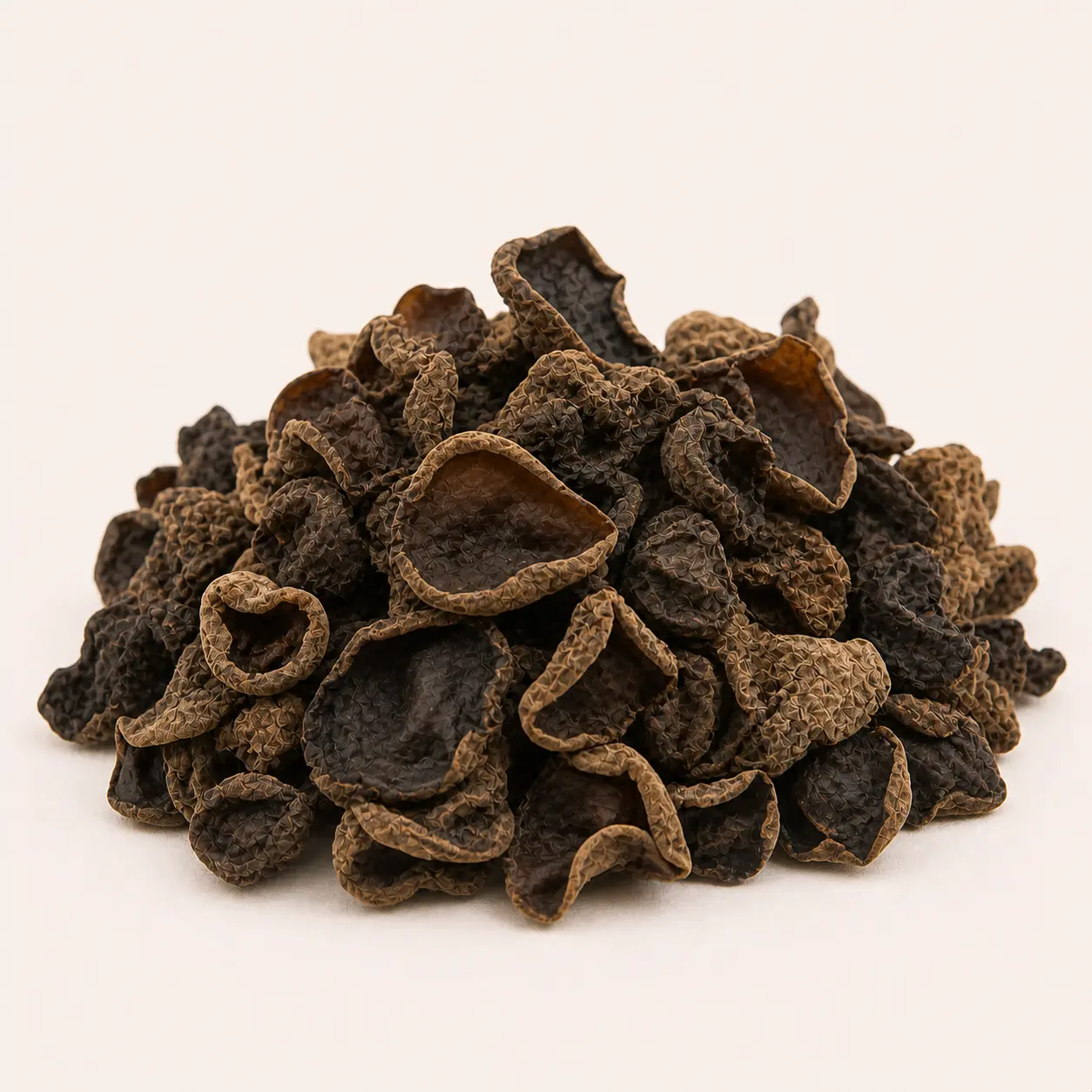
Black fungus has one of the most distinctive visual identities in the dried mushroom category. Unlike capped mushrooms (shiitake, porcini, button), black fungus grows as flat, ear-shaped or shell-shaped fruiting bodies that resemble dark gelatinous folds on host tree branches.
Visual identification features:
- Color (dried) — deep brown to near-black, sometimes with grayish overtones
- Color (fresh and rehydrated) — translucent dark brown to nearly black, jelly-like
- Shape — ear-shaped, shell-shaped, or wavy-folded
- Size — varies dramatically by variety (1cm to 15cm across)
- Texture (dried) — papery, leathery, brittle when fully dried
- Texture (rehydrated) — gelatinous, soft, with characteristic crunchy snap when bitten
- Surface — outer side typically smooth; inner side velvety or fuzzy
The crunchy texture when rehydrated is the defining commercial property — no other commercial mushroom produces this specific texture, which is why black fungus has a permanent place in Asian cuisines that value textural variety.
Trace the Botanical Identity and Wild-vs-Cultivated Status
Black fungus belongs to the genus Auricularia in the family Auriculariaceae. Multiple closely related species are sold under the same commercial names, and most commercial black fungus is cultivated rather than wild-foraged.
Key species in Canadian commercial trade:
- Auricularia auricula-judae — European species; less common in Asian-cuisine commercial supply
- Auricularia heimuer (formerly A. auricula) — primary Asian cultivated species
- Auricularia polytricha — "hairy" variety; sometimes sold as "cloud ear" or "white wood ear"
Cultivation has been refined over centuries in China, where black fungus was one of the first edible fungi cultivated commercially. Modern cultivation uses inoculated logs or sawdust substrates, with peak production in Heilongjiang, Yunnan, Sichuan, and other Chinese regions. Cultivation reliability is high — supply is more stable than wild-foraged species like chanterelles or morels.
According to a 2024 specialty mushroom industry analysis, China produces over 80% of global commercial black fungus, with some commercial cultivation also in Korea, Japan, Vietnam, and increasingly the U.S.
Understand the Crunchy Texture That Defines It
Black fungus's commercial role across Asian cuisines is built on its texture. The mushroom delivers a unique crunchy-gelatinous mouthfeel when properly rehydrated and cooked — a texture that no other commercial mushroom replicates.
Texture characteristics:
- Distinctive crunchy snap when bitten through
- Gelatinous quality that's not slimy
- Holds shape under most cooking methods
- Absorbs surrounding flavors without imposing strong identity
- Visual contrast in stir-fries, salads, hot pot — the dark color and ruffled shape stand out
- No strong flavor — black fungus is a textural ingredient, not a flavor ingredient
The textural role is why black fungus appears on tables alongside more flavor-driven ingredients like shiitake, dried scallops, and aromatic seasonings. The mushroom contributes texture while other ingredients carry flavor — a complementary role that makes black fungus pair with virtually any savory cuisine application.
Frequently Asked Questions
Is black fungus healthy?
Yes, black fungus delivers meaningful nutrition: significant fiber content, B vitamins, iron, and several bioactive compounds linked to cardiovascular health in research. Traditional Chinese medicine has used black fungus for centuries to support circulation and "blood health." Modern research suggests black fungus may help reduce cholesterol and support cardiovascular function. A standard 30g portion provides roughly 8g of fiber and significant iron.
Is black fungus the same as wood ear mushroom?
Yes, black fungus and wood ear are the same mushroom — different commercial names for Auricularia auricula-judae and closely related Asian Auricularia species. "Cloud ear" sometimes refers specifically to smaller, paler varieties. In Canadian wholesale, "black fungus" and "wood ear" are typically interchangeable; cloud ear may indicate a slightly different product. Always confirm with the supplier for clarity.
Where does black fungus come from?
Most commercial black fungus comes from cultivation operations in China — primarily Heilongjiang, Yunnan, Sichuan, and other regions with long traditions of Auricularia cultivation. Smaller commercial production exists in Korea, Japan, Vietnam, and the U.S. Wild-foraged black fungus does occur in temperate forests worldwide but represents a tiny fraction of commercial supply. Cultivation reliability keeps supply stable year-round.
Stock Black Fungus for Asian Cuisine and Beyond
Black fungus delivers irreplaceable textural variety to Asian-cuisine cooking — and increasingly to fusion menus that value crunch and visual contrast. Whether you're a chef stocking a hot pot menu, a grocer serving Asian-Canadian customers, or a home cook expanding your dried-pantry textures, black fungus deserves a permanent place alongside shiitake and other Asian-staple dried mushrooms.
Browse the Fungi Origin black fungus collection for whole, sliced, and pieces formats with full origin documentation, or contact our wholesale team for bulk pricing and case-pack options.
Shop this product
Buy black fungus wholesale
Stocked in Ontario. Free GTA delivery over $350 CAD; courier shipping across Canada and to the US.
Wholesale
Dried Fungus
Black Fungus
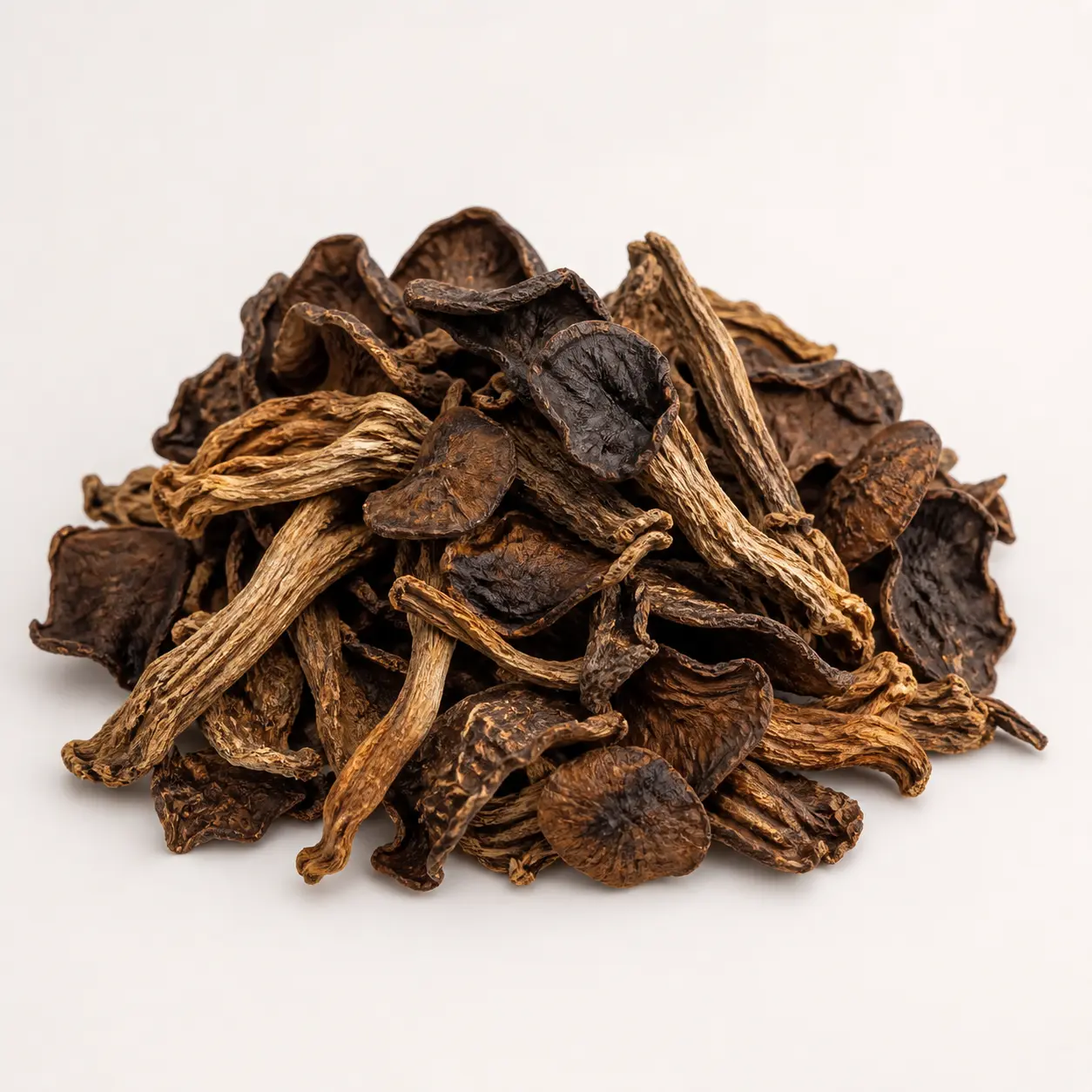
Clean and well-selected dried black fungus suitable for food service and retail resale.
Wholesale price
$15.62/lb
$34.43/kg
Market reference
Approx. $59–80/kg
Need wholesale support?
Contact Fungi Origin for pricing, product inspection, pickup, GTA delivery, or courier shipping across Canada and the US for bulk dried mushroom orders.
Contact Us