Cordyceps Flower
What Is Cordyceps Flower? Origin, Cultivation, and Uses
Cordyceps flower is cultivated Cordyceps militaris — a wellness-supportive functional mushroom. Learn how it differs from wild cordyceps and how Canadian buyers use it.
By Editorial Team
Food sourcing and kitchen operations specialists covering ingredient procurement, storage science, and commercial kitchen efficiency across Canada.
Cordyceps flower confuses most North American buyers. The name suggests something exotic, traditional Chinese medicine sources cite it alongside the famous wild cordyceps that sells for thousands of dollars per kilogram, and bright orange dried strands look unlike any standard culinary mushroom. The reality: cordyceps flower is a cultivated, accessible, increasingly mainstream functional mushroom — distinct from the famous wild caterpillar-fungus and far more practical for both wellness and culinary use. Cordyceps flower is the cultivated fruiting body of Cordyceps militaris, a bright orange-yellow mushroom grown commercially on grain or insect-pupae substrates, prized for documented adenosine and cordycepin compounds and used in Chinese soup-tonic dishes, herbal tea blends, wellness supplements, and increasingly modern Asian culinary applications.
Distinguish Cordyceps Flower From Wild Cordyceps
The first task for any buyer is understanding the difference between cordyceps flower and the famous wild cordyceps. They're related but distinct, and the price difference is dramatic.
The two cordyceps types in commercial markets:
- Wild Cordyceps sinensis (冬虫夏草) — wild-foraged caterpillar fungus from the Tibetan Plateau; prices CAD $20,000–$60,000+ per kilogram; rarely available outside specialty TCM channels
- Cultivated Cordyceps militaris (虫草花) — cultivated on grain or insect substrates; prices CAD $90–$160 per kilogram; widely available in Canadian wholesale and retail
The two species share some bioactive compounds (notably cordycepin and adenosine) but differ substantially in concentration profiles, traditional positioning, and commercial accessibility. For practical wellness and culinary applications in Canada, cordyceps flower (Cordyceps militaris) is the relevant product. Wild Cordyceps sinensis is essentially unavailable except through specialty TCM channels at extraordinary pricing.
The "flower" naming reflects the bright orange-yellow appearance of cultivated Cordyceps militaris fruiting bodies — they look like delicate orange filaments or strands rather than capped mushrooms.
Recognize the Distinctive Visual Identity
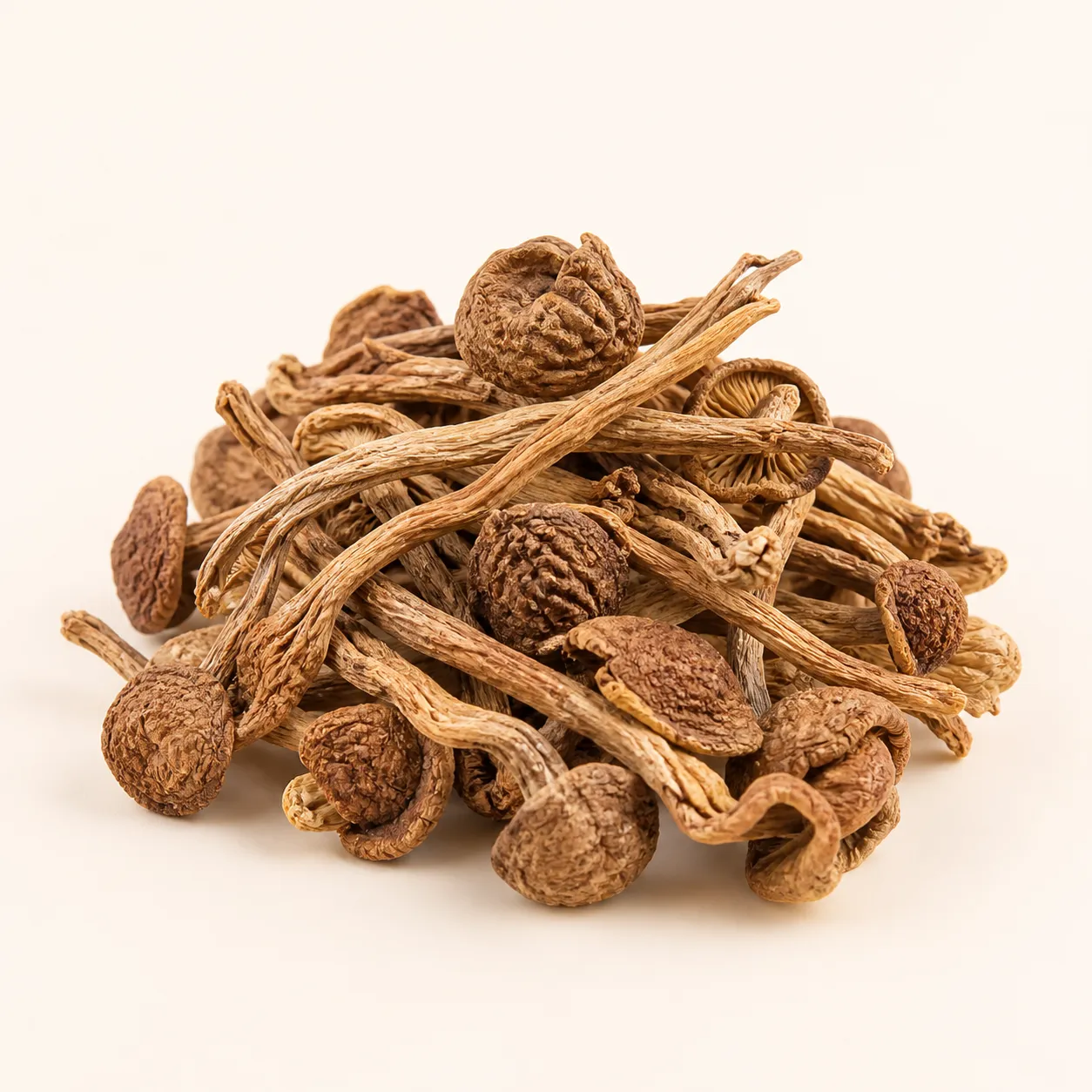
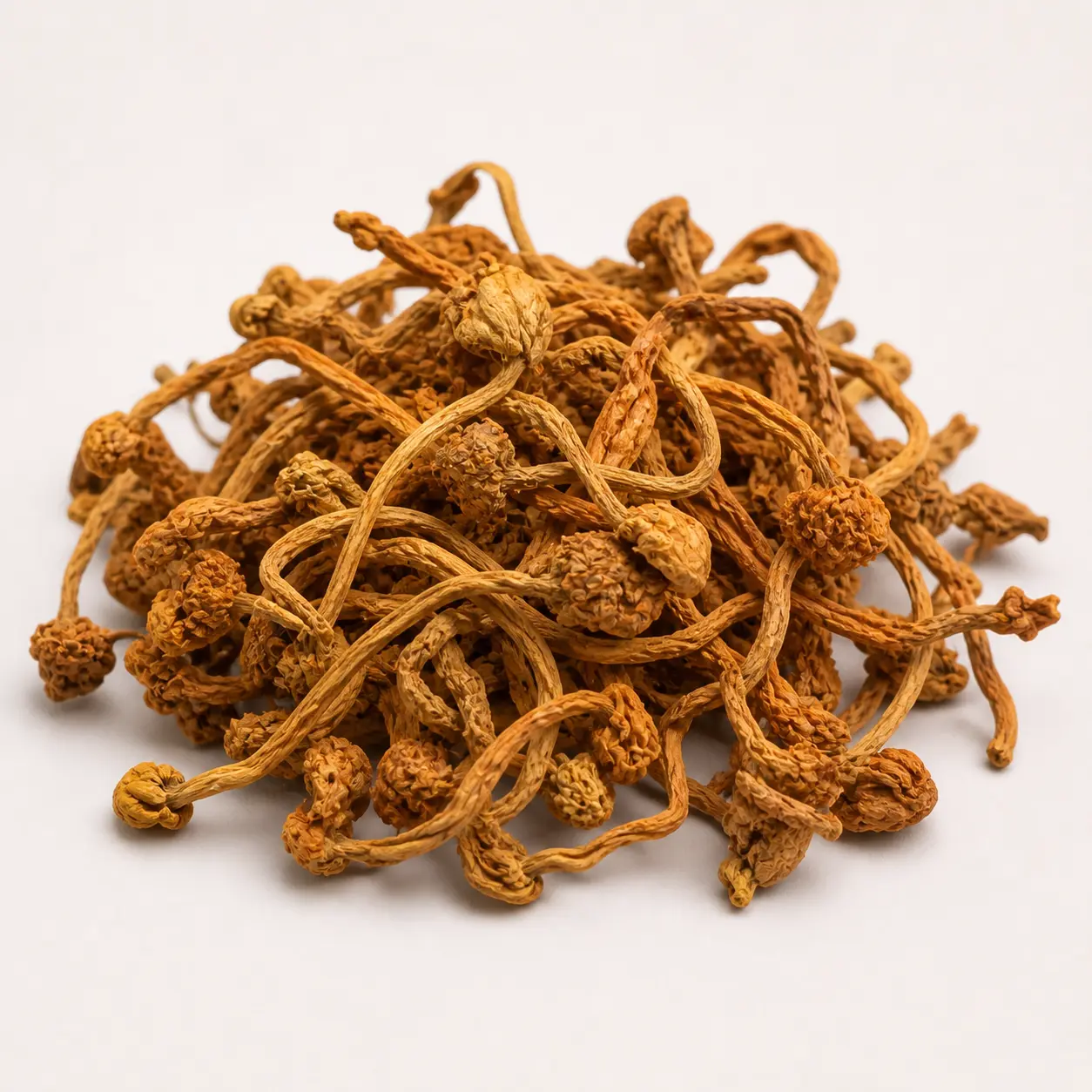
Cordyceps flower's appearance is unlike any other commercial mushroom. The cultivated fruiting bodies grow as thin orange-yellow strands or pegs, typically 3–8cm long when dried, with a slightly fibrous, almost "twig-like" appearance.
Visual identification features:
- Color — bright orange to deep orange-yellow throughout
- Shape — thin strands or pegs; sometimes described as "filament-like"
- Length — typically 3–8cm dried; longer strands command premium pricing
- Texture (dried) — slightly fibrous; brittle when fully dried
- Texture (rehydrated) — softer, slightly chewy, retains structure
- Aroma — earthy, slightly sweet, mushroom-like with herbal undertones
Quality cordyceps flower has uniform deep orange color across the lot. Pale yellow tints, brown discoloration, or significant color variation can indicate harvest issues or storage problems. Fungi Origin grades cordyceps flower lots specifically for color uniformity and strand integrity.
Trace the Cultivation Method and Origins
Unlike wild Cordyceps sinensis (foraged from caterpillar hosts in high-altitude Asia), cordyceps flower is cultivated commercially on substrate. Two primary cultivation methods exist, both producing legitimate Cordyceps militaris fruiting bodies.
The two cultivation methods:
- Grain-substrate cultivation — the dominant commercial method; cordyceps mycelium grown on rice, oats, or other grain substrates
- Insect-pupae cultivation — traditional method using silkworm pupae as substrate; smaller commercial scale
Both methods produce Cordyceps militaris fruiting bodies with similar bioactive compound profiles. Insect-pupae cultivation is closer to the traditional cultivation philosophy and sometimes commands premium pricing; grain-substrate cultivation is more efficient and represents the bulk of commercial supply.
Major commercial cultivation regions:
- China (multiple provinces) — global volume leader
- South Korea — significant cultivation, particularly for wellness markets
- Japan — small-scale premium cultivation
- United States — emerging cultivation operations
- Canada (limited) — small operations, primarily for wellness markets
According to a 2024 specialty mushroom industry analysis, China dominates global cordyceps flower production with approximately 75% of commercial supply, with South Korea representing the largest secondary source.
Examine the Bioactive Compound Profile
Cordyceps flower's commercial growth in North American wellness markets is built on its bioactive compound profile. The two most-discussed compounds are cordycepin and adenosine, both with significant research interest.
Bioactive compounds in cordyceps flower:
- Cordycepin (3'-deoxyadenosine) — distinctive nucleoside compound found primarily in Cordyceps species
- Adenosine — natural compound with cardiovascular and energy-metabolism roles
- D-mannitol (cordycepic acid) — sugar alcohol compound studied for various effects
- Beta-glucans — immune-supporting polysaccharides common in medicinal mushrooms
- Polysaccharide complexes — researched for immune-modulation effects
- Ergosterol and related compounds — vitamin D precursors
Cordycepin in particular has been the focus of substantial research. According to a 2024 review in Molecules, cordycepin shows interesting laboratory-scale activity in multiple research areas — though most evidence remains preliminary in human applications. The honest framing: cordyceps flower is a promising functional mushroom with credible research; specific medical claims should be supported by appropriate clinical evidence.
Recognize Common Commercial Forms
Dried cordyceps flower ships to Canadian buyers in three primary formats. The format choice meaningfully affects what you can do with the product.
The three commercial formats:
- Whole dried strands — ideal for soups, teas, and traditional culinary applications
- Cut/pieces format — convenient for tea blends and seasoning preparations
- Powder format — for capsules, smoothies, finishing dust, and wellness applications
Whole strands dominate Canadian retail and specialty channel sales because the visual appearance supports premium positioning and traditional use. Powder format serves wellness and supplement markets where consumer-facing appearance is less important. Cut format serves bridging applications between culinary and wellness use.
Frequently Asked Questions
Is cordyceps flower the same as cordyceps mushroom?
Cordyceps flower (Cordyceps militaris) and the famous wild cordyceps mushroom (Cordyceps sinensis) are related but distinct species. Cordyceps flower is cultivated and widely available at moderate pricing; wild Cordyceps sinensis is foraged from Tibetan Plateau caterpillar hosts and prices CAD $20,000+/kg. Both share some bioactive compounds; cordyceps flower is the practical commercial product for most wellness and culinary applications.
What does cordyceps flower taste like?
Cordyceps flower has a mild, slightly earthy, slightly sweet flavor with subtle herbal undertones. The flavor is much milder than shiitake or porcini; the role in dishes is more textural and supportive than flavor-defining. In soups and teas, cordyceps flower contributes color and a delicate aroma rather than dominant flavor. The mushroom is best understood as a functional and visual ingredient with culinary capability rather than a flavor-driven mushroom.
Where does cordyceps flower come from?
Most commercial cordyceps flower comes from cultivation operations in China and South Korea. Cultivation uses grain substrates (rice, oats) or traditional insect-pupae substrates to grow Cordyceps militaris fruiting bodies in controlled environments. Smaller cultivation operations exist in Japan, the U.S., and limited Canadian production. Wild Cordyceps militaris does occur but represents a tiny fraction of commercial supply.
Stock Cordyceps Flower for Wellness and Asian Culinary Markets
Cordyceps flower bridges two markets — wellness consumers seeking functional mushrooms and Asian-cuisine buyers using it in soup tonics, herbal teas, and traditional preparations. Few other dried mushrooms cross both segments as effectively. Whether you're a chef building Cantonese soup menus, a wellness retailer stocking the functional shelf, or a tea brand formulating premium blends, cordyceps flower in the right format and grade is increasingly central to the Canadian specialty mushroom landscape.
Browse Fungi Origin's cordyceps flower selection — whole strands, cut, and powder formats with full origin and quality documentation.
Shop this product
Buy cordyceps flower wholesale
Stocked in Ontario. Free GTA delivery over $350 CAD; courier shipping across Canada and to the US.
Wholesale
Dried Specialty Goods
Cordyceps Flower
Quality dried cordyceps flower suitable for soups, restaurants, and bulk resale.
Wholesale price
$15.62/lb
$34.43/kg
Market reference
Approx. $57–108/kg
Need wholesale support?
Contact Fungi Origin for pricing, product inspection, pickup, GTA delivery, or courier shipping across Canada and the US for bulk dried mushroom orders.
Contact Us