Truffle Slices
Black Truffle vs White Truffle Slices: Which to Buy
Black truffle vs white truffle slices — flavor, price, season, and best uses compared. The 5–10x pricing decision Canadian buyers actually need explained.
By Editorial Team
Food sourcing and kitchen operations specialists covering ingredient procurement, storage science, and commercial kitchen efficiency across Canada.
The black truffle vs. white truffle decision is the most expensive single buying decision in the truffle category. Pricing differs by 5–10x between equivalent grades; flavor profiles are dramatically different; ideal applications differ; and seasonality differs. Getting this decision wrong means either overpaying for a species the dish doesn't need, or underdelivering on a dish that depends on a specific species's character. Black truffle slices (typically Tuber melanosporum or Tuber aestivum) deliver earthy, deep, garlicky-mushroom aroma at moderate-to-high pricing, while white truffle slices (Tuber magnatum) deliver intense, almost cheesy, garlic-heavy aroma at premium-luxury pricing — they're complementary but not interchangeable, and the choice should follow specific dish requirements rather than default preference.
Compare the Flavor Profiles Directly
Black truffle and white truffle deliver fundamentally different aromatic and flavor profiles. The difference goes well beyond simple intensity — the chemistry of the aromatic compounds differs, producing distinct character notes.
Side-by-side flavor descriptors:
- Black truffle (Tuber melanosporum) — earthy, garlicky-mushroom, slightly chocolatey, complex, deep
- Summer truffle (Tuber aestivum) — milder version of black; lighter, more nutty
- White truffle (Tuber magnatum) — intense, almost cheesy, garlic-heavy, sulfurous, ethereal
- Burgundy truffle (Tuber uncinatum) — closer to black profile but with autumn-spice notes
- Chinese truffle (Tuber indicum) — mild, earthy, less complex than European species
White truffle's signature aroma is so distinctive that traditionalists often serve it raw — shaved over hot pasta or eggs at the table — to preserve the volatile aromatic compounds that heat would destroy. Black truffle is more commonly cooked into dishes, where the aromatic compounds integrate with surrounding ingredients.
For Canadian buyers, a useful mental model: black truffle is a "cooked-in" ingredient (sauces, butters, oils, integrated dishes), while white truffle is a "shaved-on" ingredient (finishing applications, raw or barely-warm uses).
Compare Pricing Dramatically
Pricing is the single largest difference between black and white truffle slices. The differential reflects supply scarcity, demand intensity, and centuries of culinary positioning.
2025 Canadian wholesale pricing comparison:
- Dried summer truffle slices — CAD $400–$800/kg
- Dried black winter truffle slices — CAD $1,500–$3,500/kg
- Dried white truffle slices — CAD $4,000–$12,000/kg (when available; often only fresh)
- Fresh black winter truffle — CAD $1,200–$2,500/kg (seasonal)
- Fresh white truffle — CAD $3,000–$7,000/kg (highly seasonal)
- Oil-preserved truffle slices — varies widely by species and processing
White truffle slices are the rarest commercial format. Most white truffle on the Canadian market is fresh-frozen rather than dried, because the aromatic compounds that define white truffle are particularly sensitive to drying. For practical Canadian buying, oil-preserved or fresh-frozen formats dominate the white truffle market.
For black truffle, dried slices represent a substantial commercial format that delivers usable truffle aroma at reasonable per-application cost — typically CAD $2.50–$8.00 in truffle ingredient cost per finished plate.
Compare Seasonality and Availability
Both species are wild-foraged and seasonal, but the seasons differ — providing complementary year-round access if a restaurant stocks both.
Seasonal patterns:
- Black winter truffle — November to March (peak December–January)
- Summer truffle — May to September (peak June–August)
- White truffle — September to December (peak October–November)
- Burgundy truffle — September to January
- Chinese truffle — variable; harvest seasons in China
- Dried slice availability — year-round through preserved inventory
The white truffle season is the shortest and most-coveted in fine-dining cuisine. Restaurants featuring white truffle typically run 4–8 week menu programming during peak season (October–November), with corresponding white truffle pricing premium. Black truffle's longer season (winter through summer with summer truffle bridging) supports more sustained menu programming.
According to a 2024 Canadian fine-dining menu analysis, white-truffle-featured menu items command an average 35% pricing premium over equivalent black-truffle-featured items — reflecting both the species cost difference and the seasonal scarcity.
Match Each Truffle to Its Best Applications
The most useful framework for choosing between black and white truffle is application matching. Each species shines in specific dishes that the other can't fully cover.
Best black truffle applications:
- Truffle butter (kneaded into compound butter)
- Truffle-finished risotto
- Pasta with truffle cream sauce
- Roast chicken with truffle stuffing
- Steak with truffle reduction
- Truffle-finished gnocchi
- Truffle-infused oils (real, not synthetic)
- Egg dishes (omelet, scrambles)
Best white truffle applications:
- Shaved over hot pasta at the table
- Shaved over scrambled eggs
- Truffle-finished risotto (tableside shaving)
- Carpaccio garnish
- Truffle pizza (white pizza preparations)
- Tasting menu showcase courses
- Premium fine-dining special-occasion programming
A practical rule: black truffle integrates into dishes through cooking; white truffle finishes dishes through tableside or last-moment shaving. Restaurants featuring both typically position black truffle on regular menus and white truffle on seasonal feature menus.
Build Strategic Truffle Slice Programs
Most Canadian fine-dining and fine-casual restaurants stock at least black truffle slices as a year-round staple, with white truffle reserved for seasonal feature programming.
Sample fine-dining truffle program:
- Dried black truffle slices — 200–500g monthly for sauces, butters, integrated applications
- Oil-preserved black truffle slices — 100–300g monthly for finishing
- Fresh white truffle (peak season) — 50–200g during October–November
- Truffle butter — house-made from truffle slices and butter
Annual truffle program spending for a Canadian fine-dining restaurant typically runs CAD $3,000–$15,000, supporting CAD $40,000–$200,000+ in truffle-featured menu revenue depending on menu prominence and pricing.
Frequently Asked Questions
Is white truffle worth the premium price?
For specific applications and contexts, yes. White truffle's unique aromatic profile cannot be replicated by black truffle, synthetic alternatives, or other ingredients. For tableside-shaved finishing on premium pasta and risotto courses, white truffle delivers a culinary experience that black truffle can't substitute for. For integrated cooked applications (sauces, butters, infused oils), black truffle works better and saves dramatic cost.
Can I substitute black truffle for white truffle in a recipe?
Substitute only when the dish doesn't depend on white truffle's specific aromatic profile. For tableside shaved finishes, white truffle is essentially irreplaceable — black truffle delivers a fundamentally different flavor experience. For integrated cooked applications (sauces, fillings, butters), black truffle works adequately and at much lower cost. The reverse substitution (white for black) is rare due to white truffle's premium pricing.
Which truffle is best for everyday restaurant use?
For everyday restaurant use, summer truffle (Tuber aestivum) and black winter truffle (Tuber melanosporum) deliver the best practical economics. Summer truffle prices at roughly 25–35% of black winter truffle while delivering related (milder) aromatic profile — strong food-cost economics. Black winter truffle commands the premium for signature dishes and fine-dining applications. White truffle is reserved for seasonal premium programming.
Choose Based on Application, Not Default Prestige
Black truffle and white truffle serve different culinary purposes despite their related identities. Black truffle delivers integrated cooked-application versatility at workable wholesale economics; white truffle delivers tableside finishing magic at premium pricing during a short seasonal window. Choose by the dish; stock both for complete truffle programming if your concept supports it.
Browse Fungi Origin's truffle slice range — dried and oil-preserved black and summer truffle in multiple formats, with seasonal access to fresh and frozen white truffle for fine-dining accounts.
Shop this product
Buy truffle slices wholesale
Stocked in Ontario. Free GTA delivery over $350 CAD; courier shipping across Canada and to the US.
Wholesale
Dried Specialty Goods
Truffle Slices
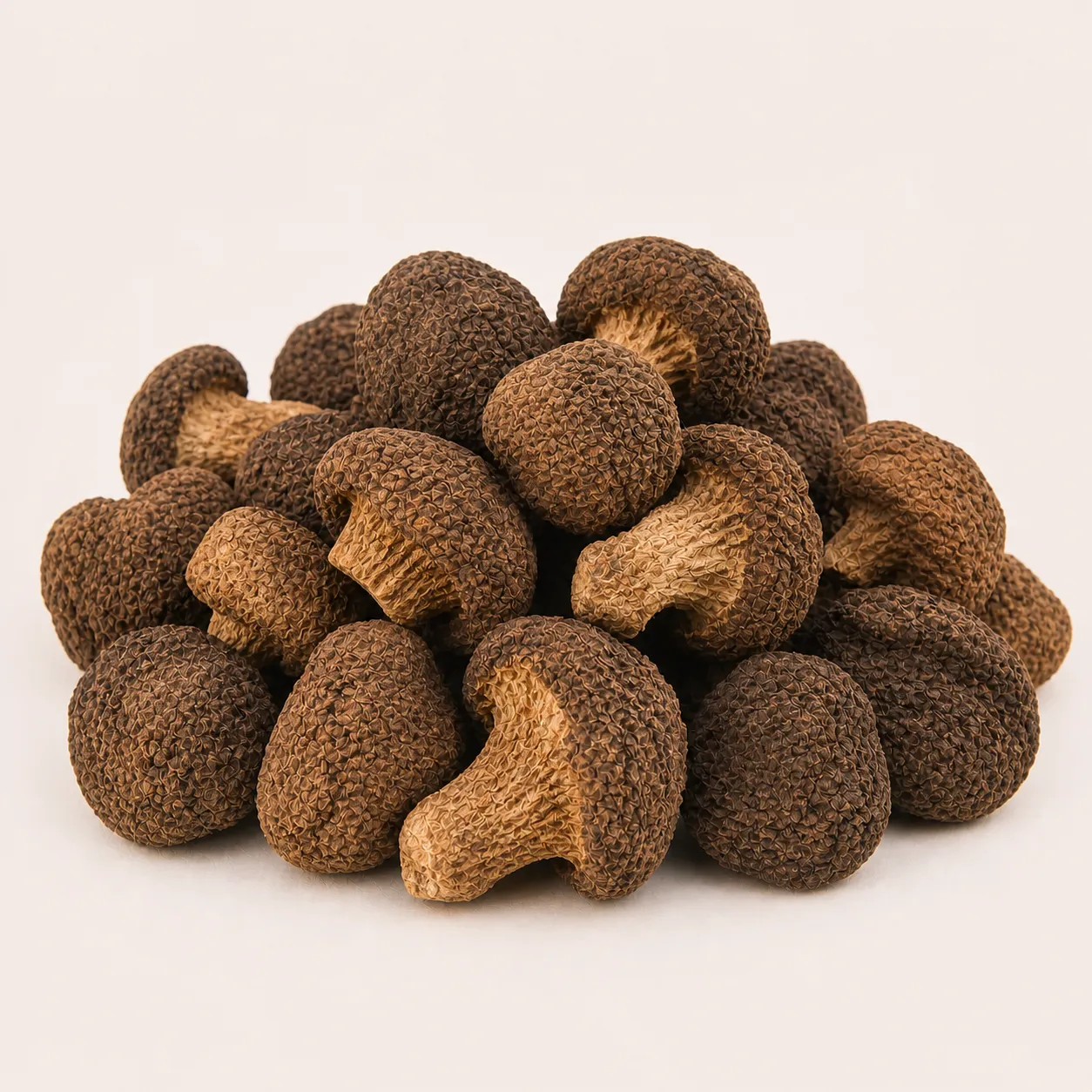
Premium dried truffle slices for specialty food buyers and wholesale supply.
Wholesale price
$111.04/lb
$244.80/kg
Market reference
Approx. $400+/kg
Need wholesale support?
Contact Fungi Origin for pricing, product inspection, pickup, GTA delivery, or courier shipping across Canada and the US for bulk dried mushroom orders.
Contact Us