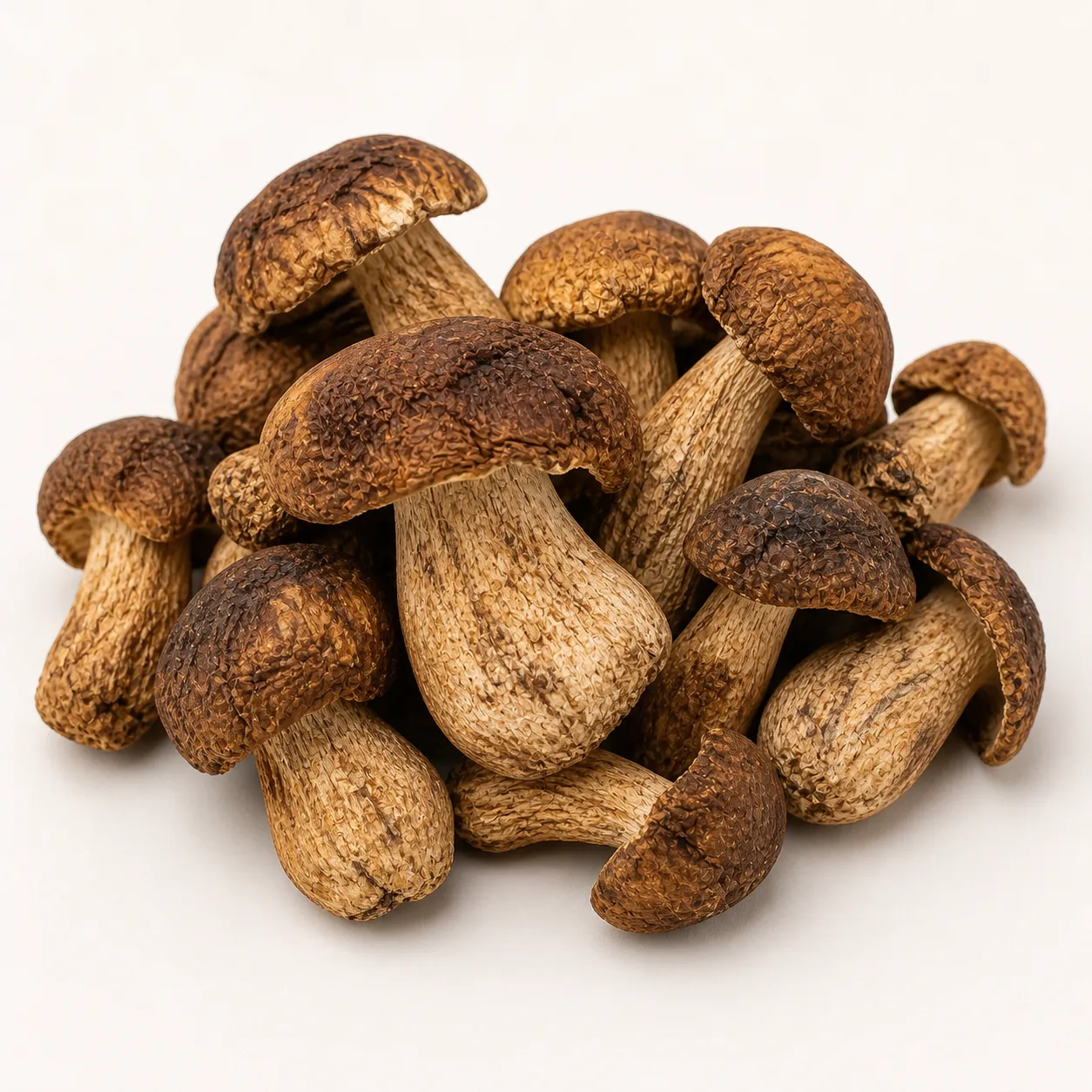
Shiitake Mushroom
How Restaurants Use Dried Shiitake Mushrooms (Chef's Guide)
From ramen broth to vegan bacon — six application categories restaurants use dried shiitake for, with technique and food cost guidance.
By Editorial Team
Food sourcing and kitchen operations specialists covering ingredient procurement, storage science, and commercial kitchen efficiency across Canada.
For restaurants, dried shiitake isn't an occasional ingredient — it's a foundational pantry item that shows up across multiple stations and dish types in a single service. Chinese, Japanese, Korean, Vietnamese, Thai, fusion, and increasingly Western kitchens all use shiitake heavily. Understanding the application range helps both chefs planning menus and operators forecasting demand. Restaurants use dried shiitake mushrooms across six core application categories — broth and stock construction, sauté and stir-fry components, braise and slow-cook protein elements, sauce and reduction enrichment, vegan meat substitutes, and rice-and-grain dish flavoring — with the soaking liquid serving as a foundational ingredient across multiple stations.
Build Foundational Broths and Stocks
Dashi-style shiitake broth is the most-used shiitake application in Canadian foodservice. Japanese, Chinese, Korean, and Vietnamese kitchens all rely on shiitake-based broths in different forms — sometimes alone, sometimes combined with kombu, dried fish, or other umami sources.
Common shiitake broth applications:
- Vegetarian dashi — shiitake + kombu, the foundation of vegan Japanese cuisine
- Ramen tare base — shiitake-soaked soy sauce concentrate
- Korean banchan stock — shiitake-anchovy hybrid for side dishes
- Chinese vegetarian master stock — shiitake-jujube-ginger base for Buddhist-cuisine dishes
- Vietnamese vegetarian pho — shiitake-mushroom-spice base
- Modern restaurant universal stock — shiitake foundation usable across cuisines
Restaurant technique: rehydrate dried shiitake overnight in cool water (gold-standard method), strain the resulting broth, and use across multiple dishes throughout service. Many restaurants run a standing pot of shiitake broth replenished daily, the way Western kitchens run a chicken stock pot. According to a 2024 Canadian Asian-cuisine cost analysis, kitchens using shiitake-based vegetarian dashi reduced commercial-stock spending by an average of 28%.
Develop Sauté and Stir-Fry Components
Sliced rehydrated shiitake serves as a sauté and stir-fry workhorse across cuisines. The texture holds up under high-heat cooking, the flavor integrates without overwhelming, and the per-portion cost is minimal at wholesale pricing.
Sauté and stir-fry techniques:
- Cantonese-style stir-fry — quick wok-toss with garlic, ginger, oyster sauce
- Sichuan stir-fry — paired with chili, peppercorn, soy
- Korean bulgogi accompaniment — sautéed alongside marinated beef
- Italian-Asian fusion pasta — shiitake with tagliatelle and butter
- Stir-fried rice noodle dishes — Pad See Ew, Chow Fun, Lo Mein
- Vegetarian protein swap — replacing meat in classic stir-fry recipes
Pre-sliced dried shiitake (vending grade) is the format most restaurants use for high-volume sauté work — saves prep labor versus whole caps. A 1kg bag of sliced shiitake yields roughly 100 sauté portions at 60g rehydrated each. Wholesale cost on this volume runs CAD $35–$65 per kilogram, which translates to per-portion cost under CAD $0.50.
Anchor Braises, Stews, and Slow-Cooked Dishes
Shiitake's resilience under long cooks makes it the right choice for braises and stews. Unlike many mushrooms that disintegrate after 30+ minutes in liquid, shiitake holds shape and continues releasing flavor for hours.
Braise and slow-cook applications:
- Beef and shiitake stew — Cantonese-style with rock sugar and rice wine
- Chicken and mushroom claypot — slow-simmered with rehydrated whole shiitake
- Korean galbi-jjim — braised short ribs with shiitake and Asian pear
- Japanese nimono — simmered shiitake with daikon, carrot, and konnyaku
- Vegetarian "red-cooked" preparations — soy-braised whole shiitake as a meat-substitute centerpiece
- Hot pot and stew sub-ingredients — shiitake at table-side hot pot service
Whole rehydrated shiitake holds up best for these applications. The cap remains intact through 60+ minutes of simmering, the flavor distributes through the cooking liquid, and the visual presentation supports the dish's premium positioning. Donko grade is sometimes specified for showcase preparations; standard koshin handles the bulk of volume use.
Enrich Sauces, Reductions, and Compound Flavors
Shiitake's umami concentration makes it valuable as a sauce-enrichment ingredient. Even a small amount of shiitake — used as broth, powder, or finely chopped rehydrated mushroom — can transform a sauce's flavor depth.
Sauce-enrichment applications:
- Mushroom soy sauce variants — house-made shiitake-infused soy
- Vegan Worcestershire-style sauce — shiitake replacing anchovy umami
- Pasta sauce depth booster — shiitake powder in tomato or cream-based sauces
- Demi-glace alternative — shiitake broth reduced to glaze consistency
- Mole and Mexican vegetarian sauce builds — adding mushroom umami to plant-based mole
- Vegan caesar dressing — shiitake powder replacing fish-anchovy umami
Powder format is particularly valuable for sauce work. A small amount of dried shiitake powder (typically 5–10g per liter of finished sauce) delivers measurable umami impact without visual or textural footprint. Several Canadian fine dining kitchens run house-made shiitake powder as a finishing dust on plant-based dishes — adding $0.15 in ingredient cost while transforming the dish's flavor depth.
Create Vegan Meat Substitutes and Plant-Based Proteins
Plant-based menu development has elevated shiitake's role from supporting ingredient to centerpiece protein in vegan dishes. The meaty texture and concentrated umami make shiitake the most credible meat-substitute mushroom for many cuisine applications.
Vegan and plant-based shiitake applications:
- Shiitake "bacon" — sliced shiitake roasted with soy, maple, and smoke for vegan breakfast
- Vegan Bolognese — finely chopped rehydrated shiitake replacing ground beef
- Vegan pho topping — rehydrated shiitake replacing beef brisket
- Shiitake jerky — dehydrated marinated shiitake for vegan snack bars
- Vegan dim sum fillings — chopped shiitake in dumplings, bao, and wontons
- Plant-based fried rice protein — shiitake taking a meat role in classic fried rice
For plant-based menu items, shiitake delivers credible flavor and texture at meaningfully lower food cost than branded plant-based meat substitutes. According to a 2024 Canadian plant-based menu analysis, shiitake-based vegan dishes carried average food cost of 24%, compared to 38% for dishes built around branded meat substitutes — a major margin advantage.
Frequently Asked Questions
What's the standard restaurant portion size for dried shiitake?
Standard restaurant portions vary by application: 6–10g of dried shiitake per serving for sauce or soup integration, 15–25g per serving for sauté or stir-fry side dishes, 25–40g per serving for centerpiece preparations like steamed donko or vegan Bolognese. A 1kg bag of dried koshin shiitake yields approximately 100–160 servings depending on application.
How do restaurants store dried shiitake for daily service?
Restaurants store dried shiitake in airtight food-grade containers in cool, dark dry-storage areas (under 21°C). Once opened, transfer the bag contents to labeled containers and use within 6–8 months for best flavor. Many Asian restaurants pre-rehydrate the next day's shiitake the previous evening (overnight cool-water method), holding the rehydrated mushrooms and broth in refrigeration for service the following day.
Can dried shiitake be used in non-Asian restaurants?
Yes, dried shiitake works across cuisines — Italian, French, modern American, Mediterranean, Mexican, and beyond. Its umami profile complements rather than imposes on most cooking traditions. Italian restaurants use shiitake in risottos and pastas; French kitchens use it in mushroom sauces and ragouts; modern American restaurants use it in vegan menu development. The Asian-cuisine origin doesn't limit its application range.
Build a Multi-Application Shiitake Program
Six application categories — broths and stocks, sautés and stir-fries, braises and slow-cooked dishes, sauces and reductions, vegan meat substitutes, rice-and-grain flavoring — cover the bulk of restaurant shiitake use. Operators who understand the application range buy strategically (mixed grades, mixed formats) and recover food cost through menu pricing and reduced waste.
Browse Fungi Origin's restaurant-grade dried shiitake range — koshin, donko, sliced, pieces, and powder formats. Contact our wholesale team for chef-tailored multi-format ordering.
Need wholesale support?
Contact Fungi Origin for pricing, product inspection, pickup, GTA delivery, or courier shipping across Canada and the US for bulk dried mushroom orders.
Contact Us