Truffle Slices
How Restaurants Use Truffle Slices (Chef's Guide)
Six restaurant truffle slice applications — pasta, risotto, eggs, butter, oils, and tableside shaving. Technique, food cost, and menu pricing power.
By Editorial Team
Food sourcing and kitchen operations specialists covering ingredient procurement, storage science, and commercial kitchen efficiency across Canada.
Truffle slices are among the highest pricing-power ingredients on a Canadian fine-dining menu. The right applications can drive CAD $20–$60 menu upcharges over equivalent dishes without truffle, while the wrong applications waste premium ingredient cost without delivering proportional menu impact. Six core application categories cover virtually every commercial truffle slice use across Canadian restaurants. Restaurants use dried truffle slices across six core applications — truffle pasta and risotto, truffle eggs, truffle butter and compound preparations, truffle-infused oils and finishing applications, tableside shaved presentation, and truffle-finished proteins — each suited to specific menu items and price points that justify the premium ingredient cost.
Build Truffle Pasta and Risotto Programs
Truffle pasta and truffle risotto are the two most-recognized truffle restaurant applications globally. Both pair perfectly with truffle's flavor profile and both support strong menu pricing.
Truffle pasta and risotto applications:
- Truffle tagliatelle with cream sauce — fine-dining staple
- Truffle pappardelle with butter and Parmigiano — Italian classical preparation
- Truffle risotto with shaved finish — premium showcase dish
- Truffle ravioli with truffle butter sauce — stuffed pasta application
- Truffle gnocchi with brown butter sage — autumn-winter feature
- Mixed-mushroom risotto with truffle finish — pairs truffle with porcini or chanterelle
These dishes carry CAD $34–$78 menu pricing at Canadian restaurants depending on truffle species and preparation premium. Food cost typically runs 20–32% — strong margin profile. Annual truffle slice usage for a fine-dining restaurant featuring pasta and risotto truffle items typically runs 200–800g of dried truffle slices.
Develop Truffle Egg Preparations
Egg-based truffle preparations are among the most-classical applications and offer some of the strongest food-cost economics. The mild creaminess of eggs creates an ideal canvas for truffle's distinctive aroma.
Truffle egg applications:
- Truffle scrambled eggs — French-style with low-heat technique
- Truffle omelet — classical French preparation
- Truffle frittata — Italian preparation
- Truffle Eggs Benedict — modern brunch staple
- Truffle deviled eggs — appetizer application
- Truffle eggs en cocotte — classical Continental preparation
Truffle scrambled eggs particularly deliver strong menu economics — small amount of dried truffle (CAD $0.80–$2.50 per portion) transforms basic preparation into CAD $24–$32 menu items at Canadian restaurants. The brunch and breakfast positioning is valuable because truffle adds distinctiveness to meal periods often dominated by routine ingredients.
Build Truffle Butter and Compound Applications
Truffle butter is one of the most-underused commercial truffle applications. House-made truffle butter using real truffle slices delivers signature ingredient differentiation at sustainable food cost.
Truffle butter applications:
- Compound butter for steak finishing — beef tenderloin or ribeye finished with truffle butter
- Truffle butter for fish and seafood — halibut, scallop, or lobster preparations
- Truffle butter for breads — premium bread service
- Truffle butter for pasta tossing — alternative to cream-based truffle sauces
- Truffle butter for vegetable finishing — roasted root vegetables, potato preparations
- House-made truffle butter retail program — packaged for take-home sales
The technique: combine softened high-quality butter with finely-chopped rehydrated truffle slices, salt, and reserved truffle soaking liquid. Mix thoroughly, roll into logs, refrigerate or freeze. A 250g batch of truffle butter uses 15–25g of dried truffle slices and supports 30–50 plate finishes at CAD $4–$8 menu upcharge each.
According to a 2024 Canadian fine-dining ingredient cost-of-quality survey, restaurants featuring house-made truffle butter reported 28% higher gross margin on truffle-finished dishes versus restaurants using purchased commercial truffle butter products.
Create Truffle-Infused Oils and Finishing Applications
Real-truffle-infused oils (made with truffle slices, not synthetic compounds) deliver finishing-application versatility that synthetic truffle oil approximates but doesn't match for ingredient credibility.
Real truffle-infused oil applications:
- Finishing pasta dishes — drizzle on plated pasta at service
- Finishing risotto — final aromatic accent
- Finishing soups — drizzle on cream-of-mushroom or vegetable soups
- Finishing carpaccio — beef or vegetable carpaccio plates
- Finishing eggs — drizzle on prepared eggs at service
- Bread service — premium dipping oil with crusty bread
The technique: warm neutral or olive oil to 60°C, add finely chopped truffle slices, infuse 12–24 hours, strain, refrigerate. House-made truffle oil with visible truffle inclusions delivers the credibility synthetic truffle oil lacks while maintaining sustainable food cost. Use within 4–6 weeks for peak aromatic intensity.
Develop Tableside Shaved Presentation
Tableside truffle shaving is the most-iconic and pricing-power restaurant truffle application. The visual theater of shaved truffle on hot pasta or risotto justifies premium menu pricing while delivering the freshest possible truffle aromatic experience.
Tableside shaved applications:
- Shaved truffle on hot pasta — al dente pasta with shaved truffle finish
- Shaved truffle on risotto — creamy risotto with shaved truffle on top
- Shaved truffle on carpaccio — beef or vegetable carpaccio
- Shaved truffle on scrambled eggs — luxury breakfast/brunch presentation
- Shaved truffle on white pizza — premium pizza preparations
- Shaved truffle on tasting-menu courses — fine-dining showcase
Tableside shaving typically uses fresh truffle (in season) or fresh-frozen truffle. Dried truffle slices generally don't shave well for tableside — the texture and visual impact differ from fresh. For restaurants featuring tableside shaving, the typical model is fresh truffle for tableside courses combined with dried truffle slices for back-of-house cooked applications.
According to 2024 Canadian fine-dining menu data, tableside-shaved truffle courses commanded average menu pricing of CAD $48–$95 per course, depending on truffle species and shaving generosity.
Finish Proteins with Truffle Slice Applications
Center-of-plate proteins finished with truffle deliver some of the strongest menu impact at sustainable food cost. The technique pairs truffle slices with classic protein preparations across fine-dining and fine-casual concepts.
Truffle-finished protein applications:
- Beef tenderloin with truffle butter — fine-dining steakhouse standard
- Veal scaloppine with truffle reduction — Italian classical preparation
- Halibut or sole with truffle cream sauce — premium fine-dining fish
- Roast chicken with truffle pan jus — modern Canadian preparation
- Pork loin with truffle and wild mushroom reduction — autumn feature
- Game preparations with truffle accent — duck, quail, venison
These applications drive substantial menu pricing power — truffle-finished beef tenderloin at Canadian fine-dining restaurants typically prices CAD $58–$95 against equivalent non-truffle preparations at CAD $42–$68. The CAD $15–$30 menu uplift covers the additional truffle cost while improving overall plate margin.
Frequently Asked Questions
How much do Canadian restaurants typically spend on truffle slices annually?
Canadian fine-dining restaurants featuring truffle slices across multiple menu items typically spend CAD $3,000–$12,000 annually on truffle slice ingredients. Operations featuring tableside fresh truffle programming during peak season (October–January) can spend CAD $15,000–$40,000+ depending on menu prominence. The investment supports menu revenue typically 25–40x the truffle ingredient cost on truffle-featured dishes.
Can a fine-casual or casual restaurant use truffle slices profitably?
Yes, fine-casual and casual restaurants can use truffle slices profitably with focused menu programming. The key is featuring 1–2 truffle-themed menu items at appropriate pricing rather than trying to integrate truffle across the menu. A casual restaurant featuring "truffle pasta" at CAD $28 with proper food-cost discipline (using dried summer truffle slices at moderate quantities) can run 25–32% food cost — sustainable economics.
What's the most underused truffle slice application in Canadian restaurants?
House-made truffle butter is arguably the most underused commercial truffle application. Many restaurants buy purchased commercial truffle butter (often containing synthetic truffle compounds) when house-made truffle butter using real truffle slices delivers superior ingredient credibility, better gross margin, and authentic menu storytelling. The investment is small — a 250g truffle butter batch supports 30–50 plate applications.
Build a Multi-Application Truffle Slice Program
Six application categories — pasta and risotto, eggs, truffle butter, truffle-infused oils, tableside shaved presentation, and truffle-finished proteins — together cover the full range of restaurant truffle slice use across Canadian fine-dining and fine-casual concepts. Operators who understand the application range buy strategically and recover food cost across multiple menu touchpoints.
Browse Fungi Origin's truffle slice range — dried and oil-preserved black and summer truffle in multiple formats with same-week shipping for Canadian restaurant accounts.
Shop this product
Buy truffle slices wholesale
Stocked in Ontario. Free GTA delivery over $350 CAD; courier shipping across Canada and to the US.
Wholesale
Dried Specialty Goods
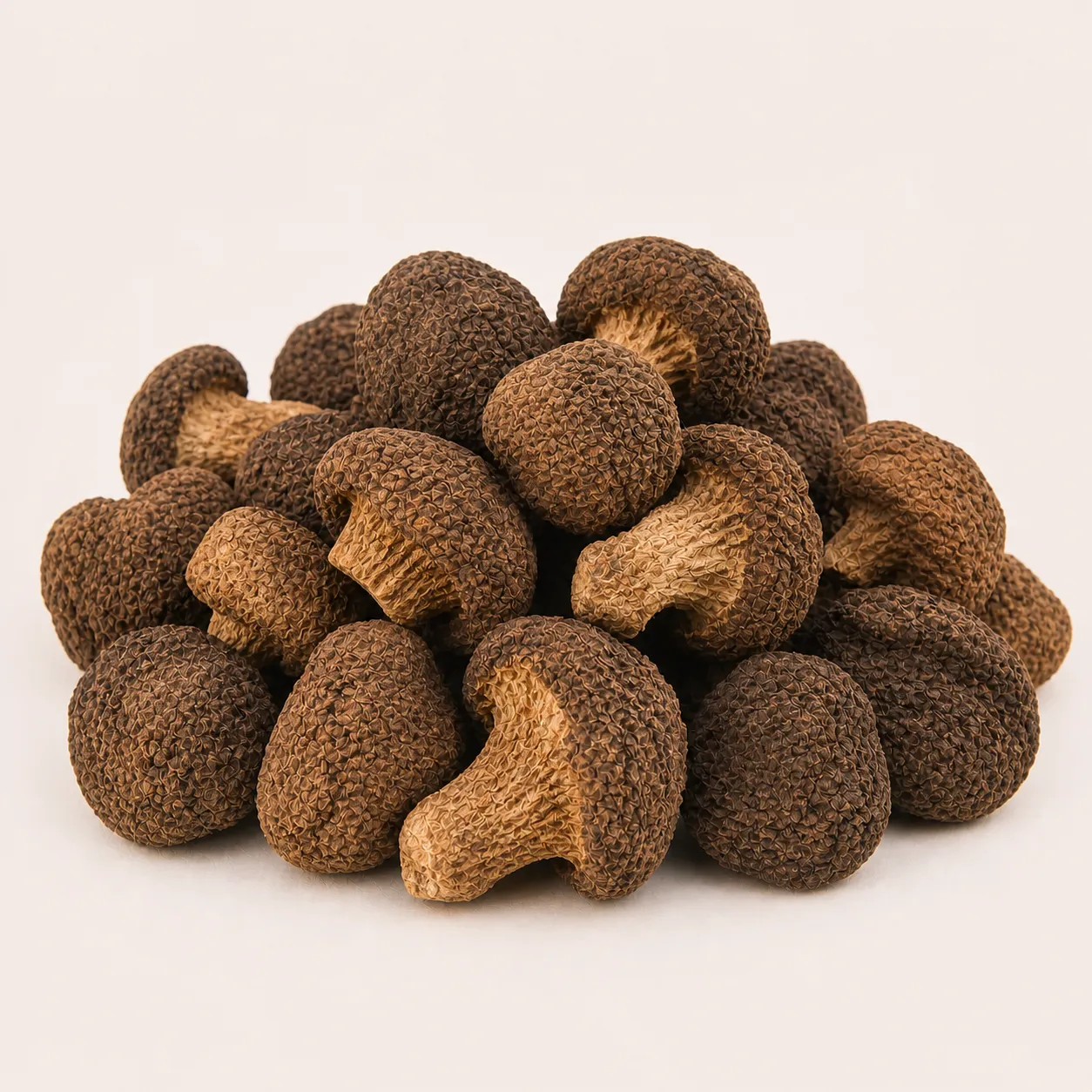
Truffle Slices
Premium dried truffle slices for specialty food buyers and wholesale supply.
Wholesale price
$111.04/lb
$244.80/kg
Market reference
Approx. $400+/kg
Need wholesale support?
Contact Fungi Origin for pricing, product inspection, pickup, GTA delivery, or courier shipping across Canada and the US for bulk dried mushroom orders.
Contact Us