Chanterelle Mushroom
How to Cook Dried Chanterelle Mushrooms (5 Methods)
Five proven cooking methods for dried chanterelles — sauté, cream sauce, pasta, risotto, and game pairing. Restaurant techniques for the apricot-aroma mushroom.
By Editorial Team
Food sourcing and kitchen operations specialists covering ingredient procurement, storage science, and commercial kitchen efficiency across Canada.
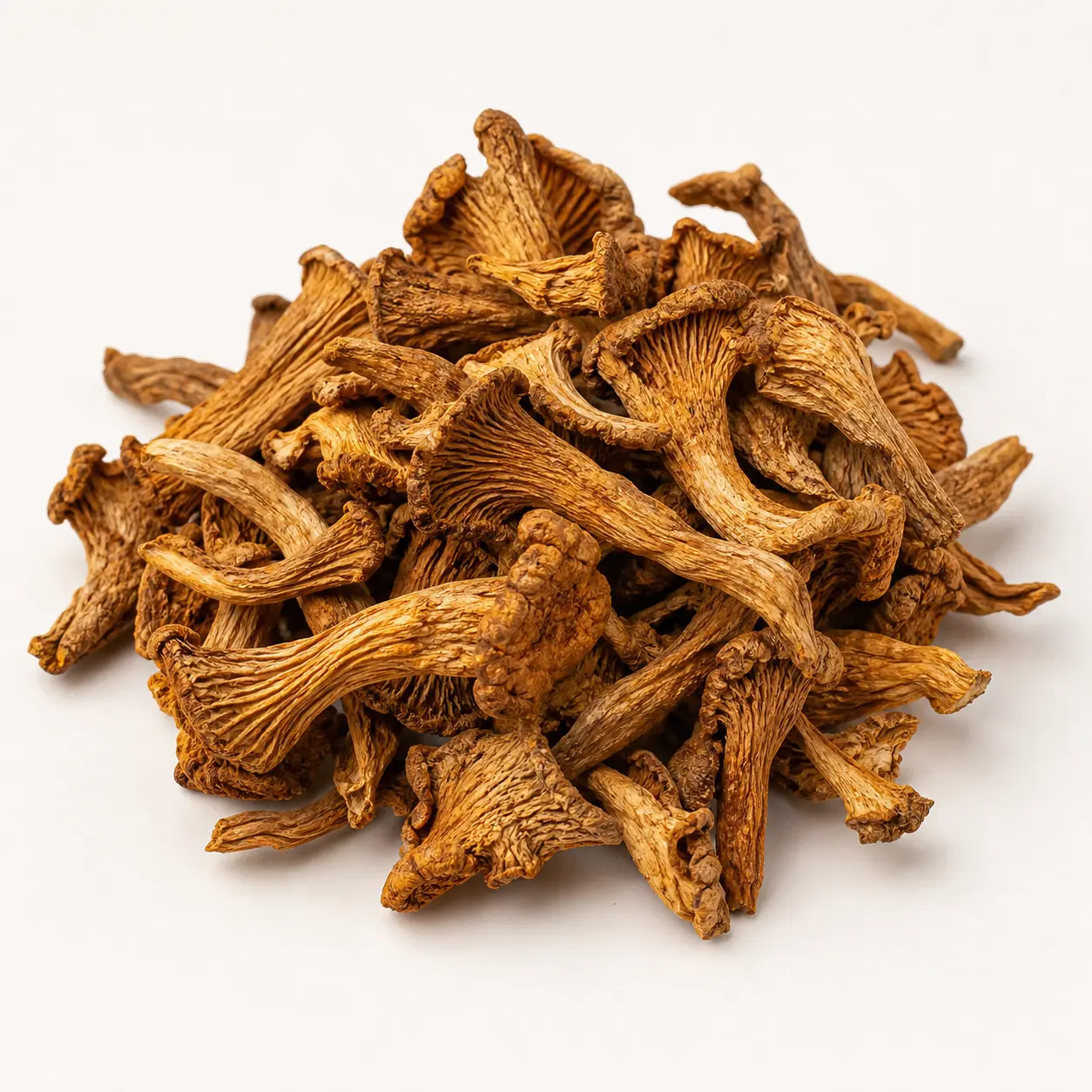
Chanterelles cook differently from other premium dried mushrooms. The same techniques that develop deep flavor in porcini and Lion's Mane will damage chanterelles. The right approach uses gentler heat, faster cook times, and dishes that highlight the apricot-like aroma rather than masking it. Five core cooking methods cover virtually every restaurant and home application of dried chanterelles. Cooking dried chanterelle mushrooms involves rehydrating gently and applying one of five proven techniques — butter sauté, cream sauce, pasta integration, autumn risotto, or game-and-poultry pairing — each suited to specific dishes that highlight chanterelle's signature fruity aroma.
Master the Butter Sauté Technique
The butter sauté is the foundational chanterelle technique. Done correctly, it preserves the golden color, the vase-shape cap structure, and the signature apricot aroma while developing modest browning that adds richness without overwhelming the mushroom's delicacy.
The butter sauté method:
- Rehydrate chanterelles gently (warm water, 15–25 minutes); pat dry without squeezing
- Heat a wide pan over medium heat
- Add unsalted butter and let it foam but not brown
- Place chanterelles in a single layer, give each piece room
- Sauté 4–6 minutes, turning gently halfway through
- Add finely minced shallot and thyme in the last 2 minutes
- Salt at the end, finish with fresh chopped parsley or chives
- Serve immediately or hold briefly in warm pan
This is the technique that gets chanterelles onto plates as side dishes, garnishes, omelet fillings, and toast toppings. A 30g portion of dried chanterelles (rehydrated to roughly 150g) serves 2–3 people generously as a side. The butter is non-negotiable — chanterelles and butter are one of the genuine flavor-affinity pairings in classical French and modern Canadian cooking.
Build Cream-Based Chanterelle Sauces
Cream sauces are where chanterelles arguably reach their peak culinary expression. The fat in cream binds and amplifies the volatile aromatic compounds, producing sauces with depth and elegance suited to poultry, fish, eggs, and pasta.
Standard cream sauce technique:
- Sauté shallots in butter until soft, no color
- Add rehydrated chanterelles, sauté 3–4 minutes
- Deglaze with dry white wine or vermouth
- Add reserved chanterelle broth (strained), reduce by half
- Add heavy cream, reduce to coating consistency
- Finish with fresh thyme, lemon zest, salt, white pepper
- Serve over chicken, fish, eggs, or pasta
This sauce serves as the centerpiece of countless autumn restaurant menu items in Canadian fine dining and casual fine concepts. The chanterelle broth from rehydration is the secret weapon — it doubles the chanterelle flavor presence in the finished dish without adding ingredient cost. According to a 2024 Canadian fine-dining menu survey, chanterelle cream sauce appears on autumn menus at over 350 Canadian restaurants.
Integrate Chanterelles Into Pasta Dishes
Pasta is a flexible canvas for chanterelles. The mushroom's delicate flavor pairs beautifully with simple pasta preparations that don't compete with the apricot-like aroma profile.
Three pasta-application approaches:
- Cream-based pasta — chanterelle cream sauce tossed with tagliatelle or pappardelle
- Olive-oil pasta — chanterelles sautéed in olive oil with garlic and pasta water emulsion
- Brown-butter pasta — chanterelles in brown-butter-sage sauce over pumpkin ravioli or gnocchi
The brown-butter approach particularly suits autumn menus — the nutty brown butter and the fruity chanterelle aroma create a flavor profile that anchors fall feature menus. Pair with stuffed pasta filled with squash, ricotta, or pumpkin for cohesive autumn courses.
Pasta shape selection matters. Wide flat pasta (tagliatelle, pappardelle, fettuccine) showcases whole chanterelles visibly on the plate. Stuffed pasta (ravioli, agnolotti) frames chanterelles as a sauce-and-garnish element. Avoid small pasta shapes (orzo, ditalini) that visually lose the chanterelle.
Build Autumn Chanterelle Risotto
Risotto is among the most popular chanterelle applications on Canadian fall menus. The slow, gradual liquid absorption of risotto preparation works perfectly with chanterelle's flavor-release profile, and the dish format showcases the golden caps visibly.
Standard chanterelle risotto for 4:
- 30g dried chanterelles, rehydrated, broth reserved
- 320g Arborio or Carnaroli rice
- 1 medium shallot, finely diced
- 2 cloves garlic, minced
- 120ml dry white wine
- 5 cups warm liquid (50% chanterelle broth, 50% chicken or vegetable stock)
- 80g grated Parmigiano Reggiano
- 40g unsalted butter
- Olive oil, salt, fresh thyme
Technique highlights:
- Sauté half the chanterelles separately for the finishing garnish
- Cook the other half with the rice during early sauté stage
- Add liquid one ladle at a time, stirring continuously
- Don't overstir at the end — the rice should still have movement
- Mantecatura step is non-negotiable — butter and Parmigiano off the heat
- Garnish with reserved sautéed chanterelles and fresh thyme
This dish carries average menu pricing of CAD $32–$36 at Canadian restaurants featuring it on autumn menus, with food cost of approximately 30% — strong margin profile against premium-ingredient pricing.
Pair Chanterelles With Game and Poultry
Chanterelles have a long classical pairing tradition with game birds (grouse, partridge, quail, pheasant), poultry (chicken, Cornish hen, turkey), and small-game proteins. The fruity-apricot aroma complements the slightly sweet, slightly funky character of these proteins beautifully.
Classic game-and-poultry pairings:
- Chanterelles with roast chicken — sautéed chanterelles plated alongside
- Quail with chanterelle reduction — game bird with chanterelle pan sauce
- Pheasant with cream sauce — featuring chanterelle in classical French preparation
- Duck breast with chanterelle jus — modern Canadian fall menu staple
- Veal with chanterelle cream — lighter cousin of beef-and-mushroom
Restaurant technique: roast or sear the protein separately, build a chanterelle-cream or chanterelle-jus sauce on the side, and assemble at plating. This preserves both the protein's sear and the chanterelle's delicate identity. Reduction of the chanterelle broth to a glaze adds another flavor layer for plating.
According to a 2024 Canadian fine-dining menu analysis, chanterelle-and-game-bird pairings appear on roughly 80% of fall feature menus at restaurants with average ticket above CAD $80 per cover.
Frequently Asked Questions
Should I cook chanterelles in butter or olive oil?
Both work, but butter is the classical and most-recommended choice for chanterelles. Butter's fat content binds and amplifies chanterelle's volatile aromatic compounds better than olive oil, and the flavor pairing is one of the genuine culinary affinities in classical French cooking. Use olive oil when high heat is needed (rare for chanterelles) or for dietary reasons. Many chefs combine — start with olive oil, finish with butter.
What seasonings pair best with chanterelles?
Chanterelles pair beautifully with shallot, garlic, thyme, parsley, chives, lemon zest, white wine, brandy, sherry, butter, cream, and gentle herb preparations. They clash with assertive ingredients (chili, strong fermented sauces, heavy spice blends, hot smoke) that mask the delicate apricot aroma. Treat chanterelles like a delicate fish — supporting flavors should highlight, not compete with, the main ingredient.
Can I substitute chanterelles in mushroom recipes that call for porcini or shiitake?
Substitution requires recipe adjustment. Chanterelles deliver lighter, fruitier flavor than porcini's beefy umami or shiitake's savory depth. Use chanterelles in delicate cream-based or olive-oil-based preparations; avoid using chanterelles in robust ragu, beef-and-mushroom stews, or heavily-seasoned Asian dishes where their delicacy is wasted. Reverse substitutions (porcini for chanterelle) often overwhelm dishes designed around chanterelle's lighter character.
Build Five Chanterelle Techniques Into Your Cooking
Butter sauté for foundational use, cream sauce for premium plate features, pasta integration for autumn feature menus, risotto for showcase dishes, and game-and-poultry pairing for classical fine-dining preparations. Each method unlocks different applications, and together they cover the full range of chanterelle potential on Canadian menus and home kitchens.
Browse Fungi Origin's dried chanterelle selection — whole, pieces, and powder formats with apricot-aroma-grade quality assurance and full origin documentation.
Shop this product
Buy chanterelle mushroom wholesale
Stocked in Ontario. Free GTA delivery over $350 CAD; courier shipping across Canada and to the US.
Wholesale
Dried Wild Mushrooms
Chanterelle Mushroom
High-quality dried chanterelle mushrooms with strong price advantage for bulk buyers.
Wholesale price
$30.54/lb
$67.32/kg
Market reference
Approx. $176/kg
Need wholesale support?
Contact Fungi Origin for pricing, product inspection, pickup, GTA delivery, or courier shipping across Canada and the US for bulk dried mushroom orders.
Contact Us