Lion's Mane Mushroom
How to Cook Dried Lion's Mane Mushroom (5 Methods)
Five proven cooking methods for dried Lion's Mane — sear, sauté, braise, roast, and shred. Restaurant techniques adapted for home kitchens.
By Editorial Team
Food sourcing and kitchen operations specialists covering ingredient procurement, storage science, and commercial kitchen efficiency across Canada.
Lion's Mane is the most versatile mushroom on a plant-based menu and one of the trickier mushrooms in the dry pantry. The same fibrous texture that makes it remarkable also makes it unforgiving — wrong technique produces rubbery, watery, or flavorless results. Five core cooking methods cover virtually every home and restaurant application, and learning all five expands what Lion's Mane can do on your menu or in your weeknight rotation. Cooking dried Lion's Mane mushroom involves rehydrating, squeezing out excess water, and applying one of five proven techniques — pan-searing, sautéing, braising, roasting, or shredding-and-cooking — each suited to specific dishes and texture outcomes.
Pan-Sear for Scallop-Style Medallions
Pan-searing is the technique that established Lion's Mane as a vegan seafood substitute. The high-heat dry-pan approach develops a golden crust on the exterior while preserving the fibrous interior — the textural illusion that fools many diners into thinking they're eating actual scallops or lobster medallions.
The pan-sear method:
- Cut rehydrated, squeezed Lion's Mane into 1–2cm thick slices or rounds
- Pat each piece very dry with a kitchen towel
- Heat a heavy pan (cast iron preferred) over medium-high heat
- Add neutral oil or clarified butter, swirl to coat
- Place pieces flat with space between them; don't crowd
- Sear 3–4 minutes undisturbed until golden crust develops
- Flip and sear the second side another 2–3 minutes
- Finish with butter, garlic, herbs, lemon in the last minute
This is the technique behind the "vegan scallop" preparation that's spread across Canadian plant-based menus. Pair with pea purée, polenta, lemon-butter sauce, or a brown-butter herb finish.
Sauté for Pasta and Stir-Fry Applications
Sautéing is the workhorse technique for Lion's Mane in pasta, grain bowls, and stir-fries. The method develops some browning while keeping the mushroom flexible enough to integrate into a finished dish.
Sauté technique:
- Pull rehydrated Lion's Mane into bite-sized fibers or chunks
- Heat a wide pan over medium-high heat with oil or butter
- Add Lion's Mane in a single layer, sauté 4–5 minutes
- Stir occasionally but allow some browning between stirs
- Add aromatics (garlic, shallot, ginger, chili) in the last 2 minutes
- Toss with the finished dish at service
Pasta application: sauté Lion's Mane with garlic and red pepper flakes in olive oil, deglaze with white wine, toss with linguine and finishing herbs. Stir-fry application: sauté with aromatics, add ginger and soy, finish with sesame oil. The mild flavor of Lion's Mane lets it adapt across cuisines without imposing identity. According to a 2024 menu trends report, sautéed Lion's Mane appears on plant-based pasta sections at over 200 Canadian restaurants.
Braise for Pulled and Saucy Dishes
Braising transforms Lion's Mane into a long-cooked, sauce-saturated, pulled-style protein. The method works particularly well for vegan "pulled pork" sandwiches, taco fillings, and stew-style preparations.
The braise technique:
- Sauté rehydrated Lion's Mane to develop initial color (5 minutes)
- Add aromatics (onion, garlic, spices) and cook briefly
- Add liquid (stock, beer, wine, tomato, BBQ sauce, etc.) to half-cover
- Reduce heat to low, cover, simmer 25–35 minutes
- Pull apart with two forks as it cooks, into long fibers
- Reduce sauce at the end if needed to coat
Lion's Mane braised in BBQ sauce produces a remarkable vegan pulled-pork analog. Braised in red wine and tomato, it becomes a vegan ragu. Braised in chipotle and orange, it becomes vegan tinga. The fibrous structure absorbs flavor while the cooking liquid develops body — the same dynamic that makes braised meats successful, applied to a plant ingredient.
Roast for Whole or Large-Format Presentations
Roasting Lion's Mane in larger pieces or whole produces a center-of-plate vegan main course preparation. The method develops deep browning and concentrated flavor over 25–35 minutes in a hot oven.
The roast method:
- Keep rehydrated Lion's Mane in larger pieces (4–6cm chunks or whole)
- Squeeze well and pat dry
- Toss with olive oil, salt, herbs, garlic
- Place on a parchment-lined sheet pan with space between pieces
- Roast at 200°C (400°F) for 25–35 minutes
- Turn once at the halfway mark
- Finish with butter and fresh herbs out of the oven
Roast Lion's Mane works as a center-of-plate main with sides like roasted root vegetables, mushroom jus, and grain pilafs. It also works as a featured component in plant-based steak preparations with chimichurri or peppercorn sauce. The technique is particularly relevant for tasting-menu vegan options where the mushroom needs to anchor a course.
Shred and Cook for Crab-Style Preparations
The most distinctive Lion's Mane technique is the shred-and-cook method that produces "vegan crab" or "vegan lobster" meat. This technique exploits the mushroom's fibrous structure to its fullest, creating a finished product that visually and texturally resembles seafood.
The shred-and-cook method:
- Pull rehydrated, squeezed Lion's Mane into long thin fibers by hand
- Pat dry thoroughly
- Sauté in butter or oil with seafood-style aromatics (Old Bay, lemon zest, garlic)
- Cook 5–7 minutes until lightly browned
- Use immediately in vegan crab cakes, vegan lobster rolls, vegan crab dips
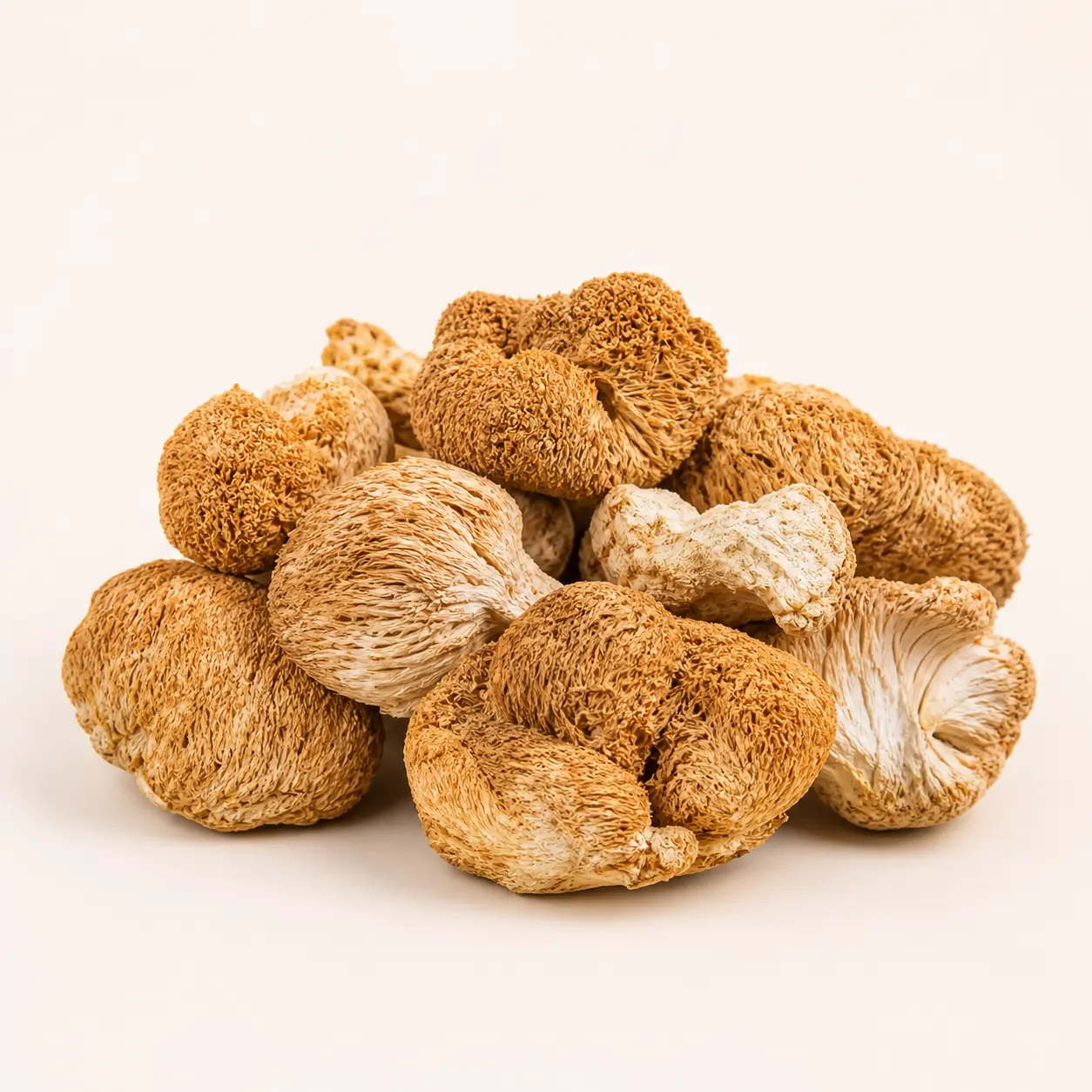
The visual is striking — the cooked fibers genuinely resemble crab meat. Combined with vegan mayo, lemon, and seasoning, the application convinces plant-based customers and curious omnivores alike. Several Canadian plant-based restaurants have built signature menu items around this technique. Fungi Origin's whole dried Lion's Mane is the right format for shredding — sliced format is too small for the long-fiber visual.
Frequently Asked Questions
Should I cook Lion's Mane in butter or oil?
Both work, with different outcomes. Butter develops nuttier, richer browning and pairs naturally with the seafood-style applications Lion's Mane is famous for. Neutral oil (avocado, grapeseed) handles higher heat without burning, useful for hard searing. Many chefs combine — start with oil for the high-heat sear, finish with butter for flavor. For vegan applications, vegan butter alternatives or olive oil work well.
Can I cook dried Lion's Mane without rehydrating first?
No, dried Lion's Mane must be rehydrated before cooking. Direct dry-to-cook attempts produce inedible chewy texture because the fibrous structure can't soften without water absorption. The 30–45 minute rehydration is non-negotiable. The only exception is Lion's Mane powder used as a flavoring agent in soups, sauces, or seasoning blends — powder bypasses the rehydration step entirely.
What seasonings pair best with Lion's Mane?
Lion's Mane pairs naturally with seafood-style seasonings (Old Bay, lemon, dill, garlic, butter), Italian herbs (sage, thyme, rosemary), Asian aromatics (ginger, soy, sesame, chili), and Mexican spices (chipotle, cumin, lime). The mushroom's mild flavor adapts across cuisines without conflict. Avoid heavy single-ingredient seasoning that overwhelms — Lion's Mane's character is delicacy, not boldness.
Build Five Lion's Mane Techniques Into Your Cooking
Pan-sear for scallop-style medallions, sauté for pasta and stir-fries, braise for pulled and saucy dishes, roast for whole-format presentations, shred-and-cook for vegan crab and lobster preparations. Each method unlocks different applications, and together they cover almost everything Lion's Mane can do on a Canadian menu or in a home kitchen.
Browse Fungi Origin's Lion's Mane formats — whole for shredding and roasting, sliced for sautés and pasta, powder for sauces and supplements. Choose the format that matches the technique.
Shop this product
Buy lion’s mane mushroom wholesale
Stocked in Ontario. Free GTA delivery over $350 CAD; courier shipping across Canada and to the US.
Wholesale
Dried Mushrooms
Lion’s Mane Mushroom
Top-grade dried lion's mane mushroom with reliable bulk supply.
Wholesale price
$19.43/lb
$42.84/kg
Market reference
Approx. $77/kg
Need wholesale support?
Contact Fungi Origin for pricing, product inspection, pickup, GTA delivery, or courier shipping across Canada and the US for bulk dried mushroom orders.
Contact Us