Chanterelle Mushroom
How to Rehydrate Dried Chanterelle Mushrooms (Gentle Method)
Rehydrate dried chanterelles without losing flavor. Step-by-step technique for the delicate apricot-aroma mushroom — water temperature, timing, and broth use.
By Editorial Team
Food sourcing and kitchen operations specialists covering ingredient procurement, storage science, and commercial kitchen efficiency across Canada.
Chanterelles are the most delicate of premium dried mushrooms, and the rehydration technique that works for porcini or shiitake will damage them. Over-soaking ruins texture; boiling water destroys the signature apricot-like aroma; aggressive rinsing washes away flavor. The correct approach is gentler and faster than for most other dried mushrooms — and worth getting right because chanterelles cost CAD $130–$220 per kilogram at wholesale. Rehydrating dried chanterelle mushrooms is the process of gently soaking them in warm water for 15–25 minutes, lifting them carefully to preserve cap integrity, and reserving the soaking liquid as a flavor-rich broth that captures the mushroom's distinctive fruity aroma compounds.
Use Warm Water and Shorter Soaking Times
Chanterelles need less time and gentler water than porcini, morel, or shiitake. The aromatic compounds responsible for chanterelle's signature fruity character are particularly heat-sensitive and water-soluble. Boiling water destroys them; extended soaking dilutes them into the surrounding water beyond useful levels.
The correct approach:
- Water temperature — 35°C–40°C (95°F–105°F), warmer than tepid but not hot
- Soaking time — 15–25 minutes for whole chanterelles; 10–15 minutes for pieces
- Water ratio — 4 cups warm water per 30g dried chanterelles
- Submersion — gentle weight only; harsh weighting damages cap structure
- Don't boil — destroys the signature apricot-aroma compounds
The shorter soaking time is critical. Chanterelles reach optimal hydration significantly faster than denser mushrooms — past 30 minutes the texture begins degrading and aroma compounds leach into the soaking water faster than they should. Test for done-ness at 15 minutes by gently pinching a cap; it should feel pliable but still retain noticeable body.
According to a 2023 culinary research study, chanterelles soaked at 38°C for 20 minutes retained approximately 85% of measurable aromatic compounds in the rehydrated mushroom. Boiling-water rehydration retained only 52%. Temperature discipline matters here.
Lift Carefully and Avoid Aggressive Handling
Chanterelle caps and stems are more delicate than porcini or shiitake — they bruise and break easily during rehydration. Aggressive handling produces broken pieces from what should be plate-ready whole caps.
Proper handling technique:
- Lift mushrooms out with a slotted spoon or your hands, one at a time
- Don't pour the bowl into a strainer — dumps grit back over the mushrooms and damages the caps
- Place rehydrated chanterelles on a paper towel-lined plate
- Don't squeeze them — the squeeze step that works for Lion's Mane damages chanterelles
- Pat gently dry if needed for sautéing
- Use within 30 minutes — rehydrated chanterelles deteriorate faster than other mushrooms
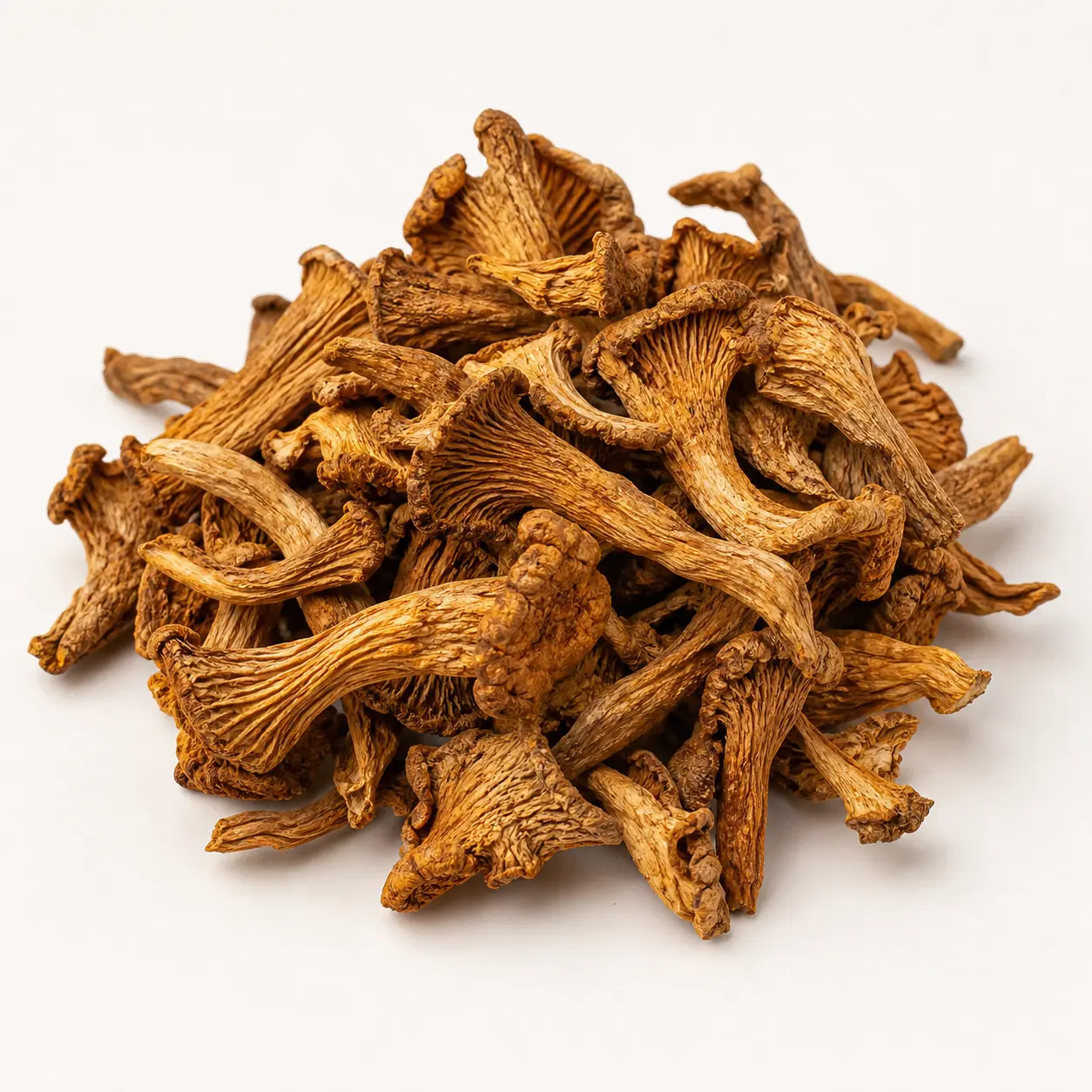
The rehydrated chanterelle should retain its golden color, vase-cap shape, and elegant overall appearance. If your rehydrated batch looks like broken pieces, you've either started with poor-quality dried product or handled them too aggressively during rehydration. Fungi Origin's whole dried chanterelles are graded specifically for cap integrity — they should arrive and rehydrate as whole-form mushrooms.
Save and Use the Aromatic Broth
The chanterelle soaking liquid is the most flavor-concentrated byproduct of the rehydration process. The clear amber-yellow broth carries the signature apricot-like aroma compounds that make chanterelles famous. Discarding it wastes much of the chanterelle's flavor.
How to handle and use the broth:
- Lift the mushrooms out carefully
- Strain the soaking liquid through a fine-mesh strainer to catch debris
- Optional second strain through a coffee filter for absolute clarity
- Use immediately or refrigerate up to 5 days; freezable in ice cube trays
Best uses for chanterelle broth:
- Cream sauces — particularly for chicken or fish dishes
- Risotto cooking liquid — replace half of the standard stock with chanterelle broth
- Pan reductions — deglaze chicken or fish pan with chanterelle broth
- Pasta sauce base — for autumn-feature pasta dishes
- Game and bird sauces — pairs with quail, duck, and grouse preparations
- Chanterelle-finishing oil — reduce to syrup, blend with neutral oil
The broth is reasonable to consider as the most valuable part of the chanterelle when properly preserved. Many fine-dining kitchens reduce the broth to a glaze and use it as a finishing accent on chanterelle-featured dishes.
Cook Gently After Rehydration
Chanterelles are also more delicate during cooking than denser mushrooms. The technique should preserve the cap shape and the flavor, not develop heavy browning the way porcini or Lion's Mane benefits from.
Gentle cooking technique:
- Heat a pan over medium (not high) heat
- Add butter and a small amount of olive oil
- Add rehydrated chanterelles in a single layer; don't crowd
- Sauté gently 4–6 minutes, turning occasionally
- Add aromatics (shallot, garlic, thyme) in the last 2 minutes
- Salt and finish at the end with fresh herbs
Don't try to develop deep brown crust on chanterelles — the cap structure can't tolerate the high heat required and the flavor is better preserved with gentler cooking. The right end-state is golden-yellow chanterelles with light browning at the edges, retaining their vase-shape on the plate.
For sauce applications, sauté the chanterelles separately, then combine with the sauce in the final assembly. This preserves both the cap integrity and the discrete chanterelle flavor identity in the finished dish.
Frequently Asked Questions
Why is the chanterelle soaking water orange?
Orange or amber-yellow soaking water indicates a flavor-rich rehydration. Premium dried chanterelles release pigments and flavor compounds (carotenoids, terpenes, aromatic compounds) into the soaking water — which is why the broth carries so much of the chanterelle's signature flavor. The color is natural and indicates a quality lot. Filter through a coffee filter to remove any fine sediment, then use confidently.
Can I rehydrate chanterelles in stock or wine instead of water?
Stock or wine rehydration works for specific dishes but limits flexibility. For most cooking applications, water rehydration delivers the best result because the resulting broth is itself a discrete chanterelle ingredient. Wine rehydration suits white-wine sauce applications where the wine character should integrate with the chanterelle flavor; stock rehydration suits soup and risotto where the rehydration liquid will become part of the dish anyway.
How long do rehydrated chanterelles keep in the fridge?
Rehydrated chanterelles deteriorate faster than most other rehydrated mushrooms — use within 24–48 hours of rehydration for best results. The cooked product (already sautéed) keeps 2–3 days refrigerated and can be reheated gently in butter for service. The strained broth keeps 5 days refrigerated or 3 months frozen in ice cube trays for portioned future use.
Treat Chanterelles with the Care They Deserve
The premium pricing of dried chanterelles only pays off if the rehydration and cooking technique respects the mushroom's delicate character. Warm (not hot) water, shorter soaking times, gentle handling, careful broth preservation, and gentle cooking. Done correctly, dried chanterelles deliver the apricot-like aroma and elegant golden presentation that earned them their premium reputation.
Browse Fungi Origin's whole dried chanterelle selection — graded for cap integrity and aromatic intensity, with full origin documentation on every wholesale shipment.
Shop this product
Buy chanterelle mushroom wholesale
Stocked in Ontario. Free GTA delivery over $350 CAD; courier shipping across Canada and to the US.
Wholesale
Dried Wild Mushrooms
Chanterelle Mushroom
High-quality dried chanterelle mushrooms with strong price advantage for bulk buyers.
Wholesale price
$30.54/lb
$67.32/kg
Market reference
Approx. $176/kg
Need wholesale support?
Contact Fungi Origin for pricing, product inspection, pickup, GTA delivery, or courier shipping across Canada and the US for bulk dried mushroom orders.
Contact Us