Lion's Mane Mushroom
How to Rehydrate Dried Lion's Mane Mushroom (Crab-Like Texture)
Rehydrate dried Lion's Mane the right way to get tender, crab-like texture instead of rubbery disappointment. Step-by-step technique for home and pro kitchens.
By Editorial Team
Food sourcing and kitchen operations specialists covering ingredient procurement, storage science, and commercial kitchen efficiency across Canada.
The single biggest reason new Lion's Mane buyers don't reorder is texture. Done right, rehydrated Lion's Mane has a remarkable crab-like, lobster-like fibrous texture that makes the mushroom famous. Done wrong — too short a soak, wrong water temperature, no squeeze step — it's rubbery, watery, and disappointing. The technique is simple but specific, and it's not the same as porcini or shiitake rehydration. Rehydrating dried Lion's Mane mushroom is the process of soaking it in warm water for 30–45 minutes, gently squeezing out excess liquid, and proceeding to a dry-sear cook step that develops the signature meaty, crab-like fibrous texture for use in seafood-style dishes and meaty preparations.
Use Warm Water and Plan Extra Soaking Time
Lion's Mane needs more time than most dried mushrooms. The dense fibrous structure absorbs water more slowly than the open-celled structure of porcini, morels, or shiitake. Rushing the soak produces unevenly hydrated mushrooms with chewy dry pockets at the center and over-soft exteriors.
The correct approach:
- Water temperature — 38°C–43°C (100°F–110°F), warm bath temperature
- Soaking time — 30–45 minutes for whole pieces; 25–30 minutes for sliced
- Water ratio — 5 cups warm water per 30g dried Lion's Mane
- Submersion — weight down with a small plate; Lion's Mane floats stubbornly
- Don't boil — destroys the subtle aromatic compounds
The ratio is more important for Lion's Mane than for other mushrooms. Insufficient water means the mushroom doesn't fully hydrate; too much water dilutes the soaking liquid which has secondary uses. The 5:1 water-to-dried-mushroom ratio gives consistent results.
After soaking, Lion's Mane should look like white-cream colored shaggy fibers, almost like wet wool. The volume increases roughly 4–5x from dry to rehydrated. Fungi Origin's whole dried Lion's Mane reaches optimal hydration at the 35-minute mark on average.
Squeeze Out the Water — This Is Critical
The squeeze step is where amateur preparation diverges from restaurant-quality preparation. Lion's Mane absorbs significantly more water than other dried mushrooms because of its fibrous structure. Cooking it with the absorbed water still inside produces watery, steamed mushrooms that never develop the meaty texture the mushroom is famous for.
The squeeze technique:
- Lift mushrooms out of the soaking water by hand or slotted spoon
- Press them gently between the palms to extract excess liquid
- Squeeze again with a clean kitchen towel wrapped around the mushroom
- Press out water until the mushroom feels firm but still moist — not dry
- Don't crush completely — preserve fibrous structure for cooking
A 30g dried portion rehydrates to roughly 150g, but after proper squeezing, it weighs closer to 90–110g. The water you remove represents about a third of the rehydrated weight. This step alone is the difference between disappointing and impressive Lion's Mane.
According to a 2023 culinary technique survey, only 28% of home cooks consistently squeeze rehydrated Lion's Mane before cooking. The texture difference is dramatic and immediately visible in finished dishes.
Decide Whether to Save the Soaking Liquid
Unlike porcini and morel soaking liquids, which are high-value byproducts, Lion's Mane soaking liquid is a different story. The liquid is mild and lacks the concentrated umami of other mushroom broths, making it less universally useful. But it's not worthless.
What to do with Lion's Mane soaking liquid:
- Use as a base for vegan seafood-style stocks (cioppino, paella, bouillabaisse)
- Add to vegan crab cake or scallop sauces for thematic flavor coherence
- Replace water in vegetable stocks for a slightly fuller flavor
- Discard if the dish you're making doesn't benefit from the mild flavor
Strain the liquid through a fine-mesh strainer to remove any debris, then refrigerate up to 5 days or freeze in ice cube trays for portioned future use. For most home cooks, discarding the soaking water is reasonable. For chefs working on plant-based seafood-themed dishes, saving and using the broth adds menu coherence at no extra cost.
Develop Meaty Texture with a Dry Sear
The cook step is where Lion's Mane texture is finalized. The technique is closer to searing a scallop than sautéing a mushroom — high heat, dry surface, minimal stirring, generous fat.
The dry-sear technique for Lion's Mane:
- Heat a heavy pan (cast iron preferred) over medium-high heat
- Add neutral oil or clarified butter — enough to lightly coat the pan
- Place the squeezed Lion's Mane pieces flat in the pan, give each room
- Don't move them for 3–4 minutes until the underside develops golden color
- Flip and sear the second side another 2–3 minutes
- Add aromatics (garlic, shallot, herbs) in the last minute
- Salt at the end — early salting draws moisture and prevents browning
The result should be golden-brown crusted exterior with tender, fibrous interior — the texture that earned Lion's Mane its reputation as a vegan seafood substitute. For shredded-mushroom applications (vegan crab, pulled-style sandwiches), pull the seared pieces apart with two forks rather than chopping with a knife. Pulled Lion's Mane has visible long fibers; chopped Lion's Mane just looks like chopped mushroom.
Frequently Asked Questions
Why is my Lion's Mane mushroom rubbery?
Rubbery Lion's Mane usually indicates one of two problems: the mushroom wasn't squeezed dry after rehydration, or it was cooked at too low a temperature. Water inside the mushroom turns to steam during low-heat cooking, producing rubbery texture. Squeeze hard before cooking, use medium-high heat, and don't crowd the pan. The squeeze step alone solves about 70% of texture problems.
Can I rehydrate Lion's Mane in the fridge overnight?
Yes, cold-water overnight rehydration in the fridge works for Lion's Mane and produces slightly firmer texture than warm-water rehydration. Use 5 cups cold water per 30g dried Lion's Mane in a covered container and refrigerate 8–12 hours. Squeeze out the excess water and proceed to cooking. This method is convenient for meal prep or restaurant batch preparation.
How long does rehydrated Lion's Mane keep in the fridge?
Rehydrated and squeezed Lion's Mane keeps 3–4 days refrigerated in an airtight container. For meal prep, rehydrate a full bag Sunday and use across two or three weeknight dishes. Cooked Lion's Mane (already seared) keeps 2–3 days refrigerated and reheats reasonably well in dry-sauté applications, less well in liquid-based applications where it loses texture.
Master the Technique to Unlock Lion's Mane
Warm water, 30–45 minute soak, hard squeeze to remove excess water, and a dry-sear cook step. Done correctly, dried Lion's Mane delivers texture and meaty appeal unmatched by virtually any other mushroom — the foundation of vegan seafood applications, plant-based mains, and umami-rich savory dishes across Canadian menus and home kitchens.
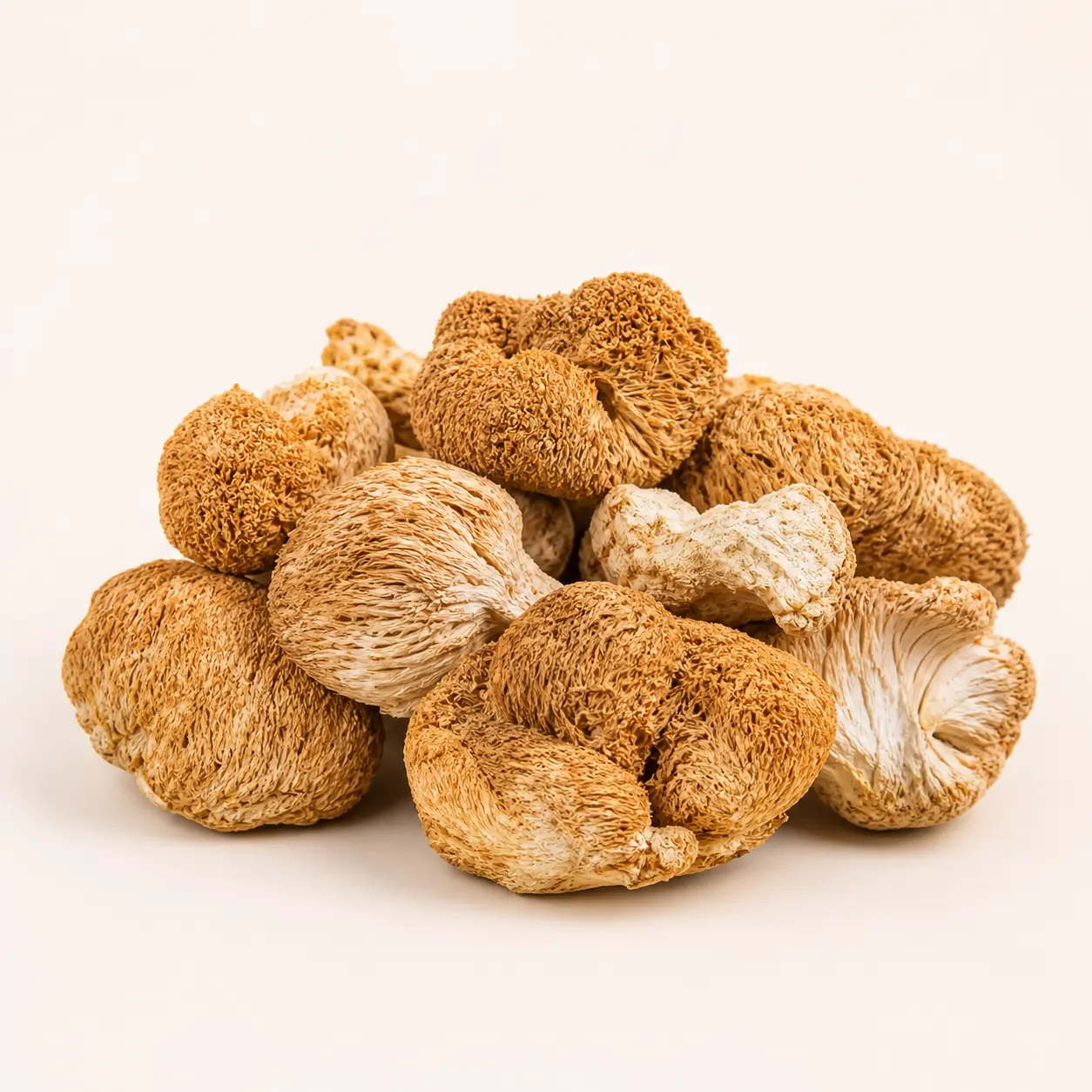
Browse Fungi Origin's dried Lion's Mane selection — whole, sliced, and powder formats with rehydration instructions included on every wholesale shipment.
Shop this product
Buy lion’s mane mushroom wholesale
Stocked in Ontario. Free GTA delivery over $350 CAD; courier shipping across Canada and to the US.
Wholesale
Dried Mushrooms
Lion’s Mane Mushroom
Top-grade dried lion's mane mushroom with reliable bulk supply.
Wholesale price
$19.43/lb
$42.84/kg
Market reference
Approx. $77/kg
Need wholesale support?
Contact Fungi Origin for pricing, product inspection, pickup, GTA delivery, or courier shipping across Canada and the US for bulk dried mushroom orders.
Contact Us