Oyster Mushroom
How to Rehydrate Dried Oyster Mushrooms (Tender vs Crispy)
Two rehydration approaches for dried oyster mushrooms — tender for soups and sauces, crispy for vegan bacon and snacks. Step-by-step technique.
By Editorial Team
Food sourcing and kitchen operations specialists covering ingredient procurement, storage science, and commercial kitchen efficiency across Canada.
Dried oyster mushrooms can finish in two completely different ways depending on rehydration approach. The standard tender-rehydration method produces soft, savory mushrooms suited to soups, pastas, and sauces. The newer crispy-rehydration method (combined with high-heat finishing) produces bacon-textured snacks, vegan crisp toppings, and crunchy salad components. Knowing both techniques expands what oyster mushrooms can do in the kitchen meaningfully. Rehydrating dried oyster mushrooms is the process of soaking them in warm water for 15–25 minutes for tender applications, or skipping the soak and directly cooking with limited liquid for crispy applications, with each approach producing dramatically different finished textures suited to different culinary uses.
Master the Tender Rehydration Method
The standard tender-rehydration method is the most common technique and produces oyster mushrooms suited to soups, pastas, stir-fries, and any application where the mushroom integrates into a sauce or broth.
The standard tender-rehydration method:
- Water temperature — 38°C–43°C (100°F–110°F), warm bath temperature
- Soaking time — 15–25 minutes for whole oyster mushrooms; 10–20 minutes for sliced
- Water ratio — 4 cups warm water per 30g dried oyster mushrooms
- Submersion — gentle weight; oyster mushrooms float initially
- Don't boil — the volatile aromatic compounds are heat-sensitive
Oyster mushrooms rehydrate more quickly than denser mushrooms (porcini, shiitake) because of their thinner cell-wall structure. Test for done-ness at 15 minutes by gently pinching a piece — it should feel pliable but still retain meaningful body. Past 30 minutes the texture begins becoming overly soft for most applications.
After soaking, drain in a colander and pat dry gently before cooking. The strained soaking liquid is mild but usable — incorporate into the dish's stock or broth base when possible.
Apply the Crispy Method for Vegan Bacon and Snacks
The crispy method has emerged as a major application for dried oyster mushrooms in Canadian plant-based and modern restaurant kitchens. The technique produces mushrooms with bacon-like crispy texture suited to snack applications, vegan breakfast items, and salad toppings.
The crispy method:
- Don't pre-soak the dried oyster mushrooms
- Cut into 1–2cm strips while still dry
- Toss with olive oil, soy sauce or tamari, smoked paprika, salt (optional: maple syrup for sweetness)
- Spread on a parchment-lined baking sheet in a single layer
- Bake at 175°C (350°F) for 18–25 minutes, turning halfway through
- Cool on the sheet to fully crisp up before serving
The result is shelf-stable, bacon-textured mushroom strips with deep umami flavor and pleasant crunch. The technique works particularly well with pearl oyster mushrooms; king oyster produces slightly different (more meaty than crispy) results.
According to a 2024 plant-based menu trends survey, "oyster mushroom bacon" appears on the breakfast and brunch menus of approximately 18% of Canadian plant-based restaurants — up from less than 5% in 2022.
Save the Tender-Method Soaking Liquid
Unlike the rich amber broths from porcini or shiitake rehydration, oyster mushroom soaking liquid is more modest in flavor — but still useful in specific applications.
Best uses for oyster mushroom soaking liquid:
- Vegan stocks — adds gentle mushroom umami to plant-based broths
- Risotto cooking liquid — replaces some of the standard stock for mushroom-themed risottos
- Pasta cooking water enhancement — adds modest umami to mushroom pasta
- Bread baking — replaces water in mushroom-themed savory breads
- Plant-based sauce reductions — adds depth without animal products
Strain the liquid through a fine-mesh strainer to remove any debris, then refrigerate up to 4 days or freeze in ice cube trays. For most home cooks, discarding the soaking liquid is reasonable. For chefs working on plant-based menus where every flavor source matters, the broth adds incremental value at no extra cost.
Cook Properly After Rehydration
Rehydration is just preparation. The cook step determines whether your dried oyster mushrooms produce excellent finished dishes or disappointing ones. Different applications demand different cook techniques.
Post-rehydration cook techniques (tender method):
- Sauté in oil or butter for 4–6 minutes for stir-fries and pastas
- Add to soups in the final 10–15 minutes of cooking
- Braise in liquid for slow-cooked applications (oyster mushroom holds up well)
- Stir-fry over high heat with aromatics for Asian-cuisine applications
- Roast at high heat for golden-crusted texture
For king oyster specifically, the cooking technique often differs. Sliced king oyster sears beautifully into golden-crusted "scallop"-style medallions when the dried product is rehydrated, sliced thick (1–2cm), patted very dry, and seared in a hot pan. This is one of the highest-leverage techniques for any plant-based menu.
Choose the Right Variety for Your Cooking Approach
Different oyster mushroom varieties respond differently to the two rehydration approaches. Choosing the right variety for your technique improves results meaningfully.
Variety-by-technique guidance:
- Pearl oyster — both tender and crispy methods work; pearl is the most versatile
- King oyster — favors tender method with subsequent searing; doesn't crisp as well
- Pink oyster — crisps beautifully; "vegan bacon" use case is excellent
- Golden oyster — both methods work; visual appeal makes it suited to plate features
- Blue oyster — both methods work; firmer texture suits longer cooking
For Canadian plant-based restaurants developing oyster mushroom menu items, stocking pearl oyster (for crispy method versatility) and king oyster (for meaty searing applications) covers most application needs. Specialty varieties (pink, golden, blue) can be added for menu differentiation.
Frequently Asked Questions
Why do my oyster mushrooms turn out rubbery?
Rubbery oyster mushrooms usually indicate one of three issues: oversoaking past 30 minutes (texture degrades), cooking with too much residual water (steams instead of browns), or undercooking (oyster mushrooms need 4–6 minutes of medium-high heat to develop properly). Squeeze rehydrated oyster mushrooms gently to remove excess water before cooking, use medium-high heat, and don't crowd the pan. Most rubbery-mushroom problems disappear with proper drying and proper heat.
Can I rehydrate oyster mushrooms in milk or stock?
Yes, but reserve this for specific dishes where the soaking liquid will be used in the final preparation. Cream rehydration works for cream-based mushroom pasta or risotto. Stock rehydration works for soups and braises. For most general-purpose use, water rehydration is more flexible — the resulting broth can flavor any direction the recipe takes.
How do I make oyster mushroom bacon shelf-stable?
Properly cooked oyster mushroom "bacon" using the crispy method (baked at 175°C for 18–25 minutes until fully crisp and dry) keeps 2–3 weeks at room temperature in airtight containers, similar to other crispy snack foods. The key is full moisture removal during baking — any residual moisture leads to softening within days. Cool completely on the baking sheet before transferring to storage containers.
Choose the Method That Matches Your Application
Tender rehydration for soups, pastas, sauces, and integrated dishes; crispy method for vegan bacon, snack toppings, and salad components. Both techniques unlock different applications, and together they cover virtually every dried oyster mushroom use case in Canadian home and restaurant kitchens.
Browse Fungi Origin's dried oyster mushroom selection — pearl, king, and specialty varieties in whole, sliced, and powder formats sized for both tender and crispy preparations.
Shop this product
Buy oyster mushroom wholesale
Stocked in Ontario. Free GTA delivery over $350 CAD; courier shipping across Canada and to the US.
Wholesale
Dried Mushrooms
Oyster Mushroom
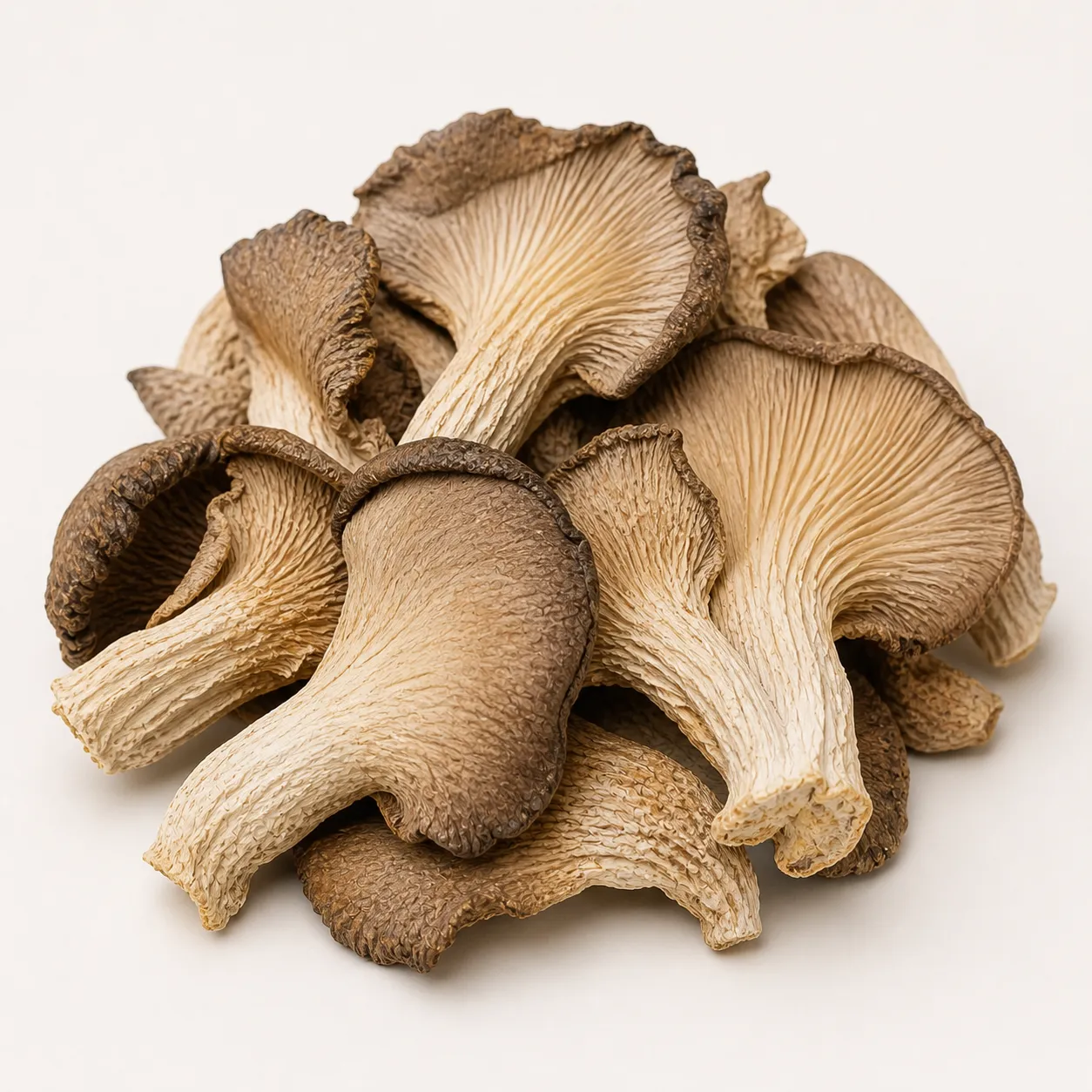
Dried oyster mushrooms suitable for bulk supply, restaurants, and distributors.
Wholesale price
$15.62/lb
$34.43/kg
Market reference
Approx. $35–60/kg
Need wholesale support?
Contact Fungi Origin for pricing, product inspection, pickup, GTA delivery, or courier shipping across Canada and the US for bulk dried mushroom orders.
Contact Us