Porcini Mushroom
How to Identify High-Quality Dried Porcini (Color, Aroma, Grade)
A practical 5-point quality check for dried porcini — color, cream-stripe pattern, aroma, moisture, and grade structure. Stop overpaying for inferior lots.
By Editorial Team
Food sourcing and kitchen operations specialists covering ingredient procurement, storage science, and commercial kitchen efficiency across Canada.
The dried porcini market mixes premium product with low-grade lookalikes more aggressively than almost any other specialty mushroom category. Inferior species (bay bolete and lower-grade bolete relatives) get blended into "porcini" lots; old-stock product gets rebagged with fresh dates; commodity-grade slices get sold at premium pricing. The buyer with a quality-check method protects margin and reputation. Identifying high-quality dried porcini means evaluating five visible and sensory signals — color and cream-stripe pattern, aroma intensity, moisture content, slice or cap structure, and grade documentation — before paying for a wholesale lot.
Inspect Color and the Cream-Stripe Pattern
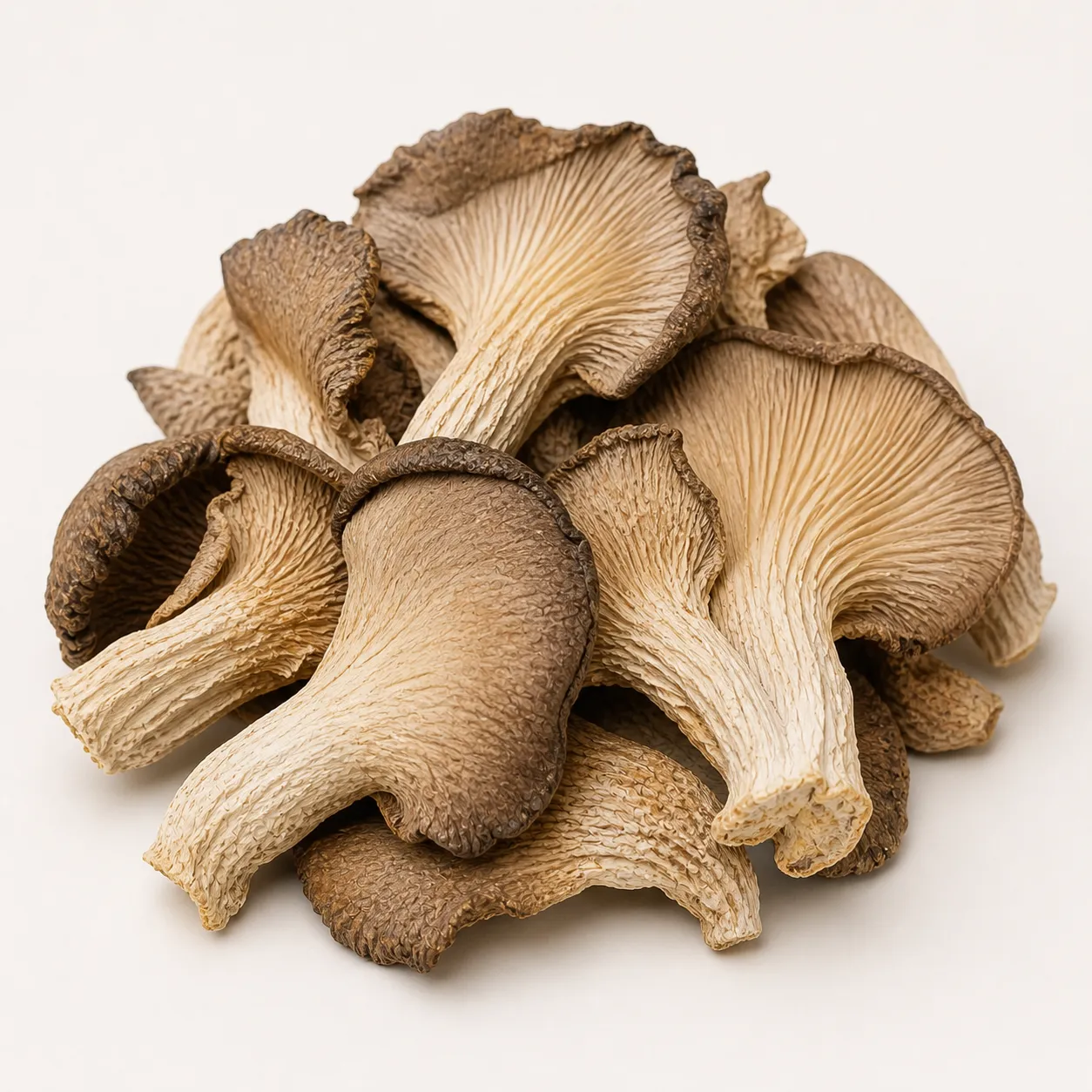
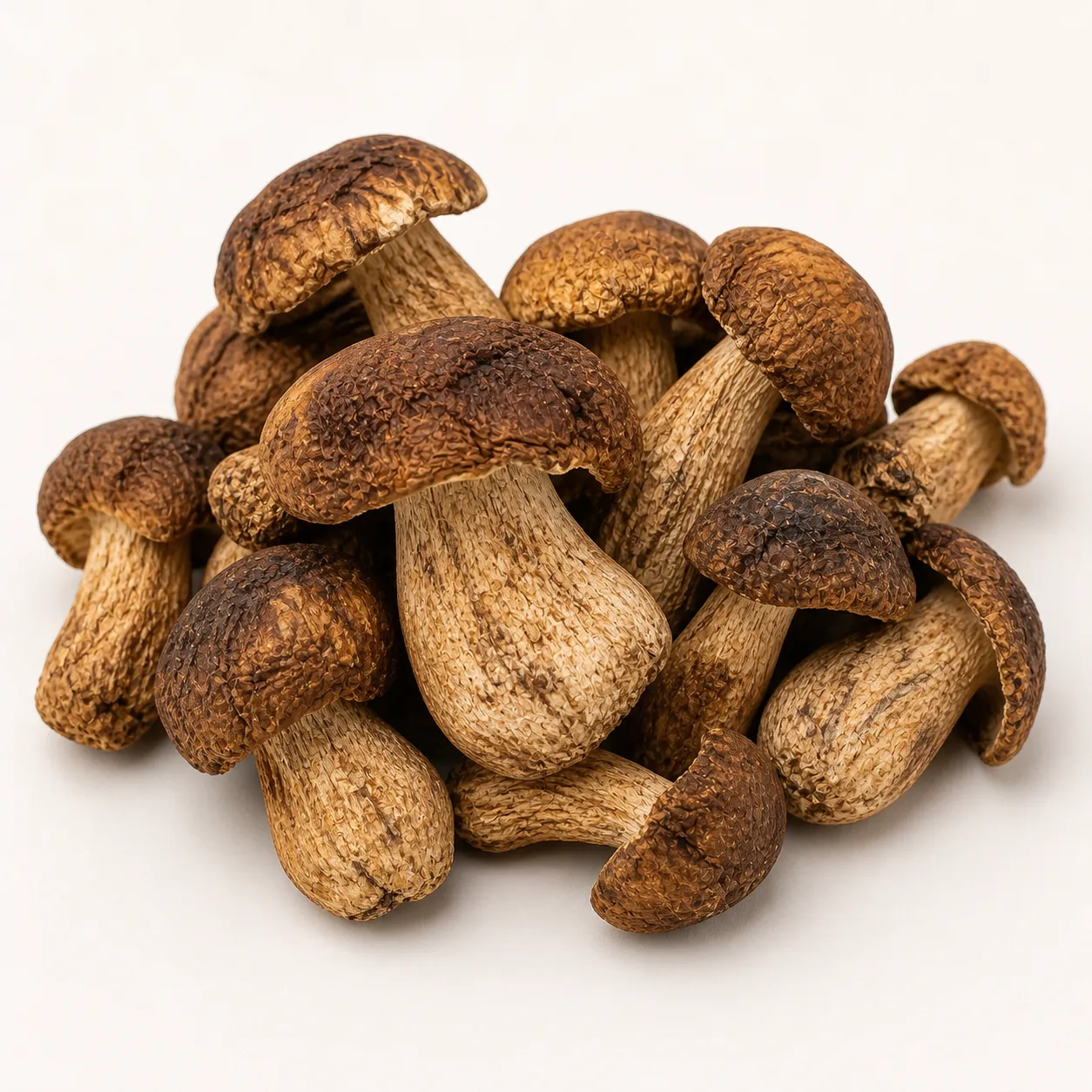
Color is the first quality signal a buyer can verify. Premium dried porcini (true Boletus edulis group) shows a distinctive coloration: the cap face is golden brown to deep brown, and the cut underside reveals a creamy white-to-pale-yellow flesh. The interface between cap surface and flesh produces a characteristic "cream stripe" visible on every premium slice.
What to look for:
- Cap face — golden brown to walnut brown, not gray or muddy
- Slice underside flesh — cream to pale yellow, never gray or olive
- Cream stripe at the cap edge — clear, defined, present on most slices
- Stem pieces — light tan to cream, with vertical fiber pattern
- Pore surface (when visible) — pale yellow to olive when fresh-dried
Off-color signals for poor quality or substitution:
- Uniform dark-brown slices with no cream stripe — possibly bay bolete or lower-grade species
- Gray or olive flesh tones — old stock or improperly dried
- Black powdery surface coating — over-dried or burnt
- Excessive variation across the lot — multiple harvests blended
According to a 2024 specialty mushroom quality survey, the cream-stripe pattern is the single most reliable visual marker that distinguishes true porcini from blended-species commodity lots.
Smell-Test for Aromatic Depth
Aroma is the most reliable single quality indicator and the hardest to fake. Open the bag, take a deep inhale, and judge against three benchmarks. Premium dried porcini produces an intense, complex, earthy-sweet aroma — sometimes described as "forest floor with cocoa undertones."
Aromatic signals:
- Strong, sweet, earthy, slightly cocoa-like — premium quality
- Strong but slightly stale — older stock, still acceptable
- Faint or dusty — underaroma, low quality or aged-out lot
- Musty or mildewy — humidity damage; reject the lot
- Chemical or harsh — possible sulfite treatment; reject
- Smoky or charred — over-dried
Premium porcini aroma should fill a small kitchen when a 100g bag is opened. If the aroma is barely detectable from a closed bag, the product has either degraded or never had the aromatic concentration that defines quality. Fungi Origin sends pre-purchase aroma samples for first-time wholesale buyers as a quality-assurance step before commitment.
Verify Moisture Content and Texture
Properly dried porcini is crisp, lightweight, and snaps cleanly rather than bending. The target moisture content is under 12% — the threshold for microbiologically stable storage and 18–24 month shelf life.
Practical moisture tests:
- Snap test — slice should crackle or snap when bent
- Weight test — a properly dried bag feels lighter than expected
- Surface test — caps should not feel sticky or tacky
- Bend test — slices that bend without breaking are too moist
Beyond moisture, check the slice or cap structure. Premium sliced porcini has consistent thickness (typically 3–5mm), uniform sizing, and minimal broken fragments. Whole caps should retain shape and integrity, with caps and stems still recognizable. Lots with heavy fragmentation suggest poor handling during drying or transport.
Suppliers should provide moisture documentation on the packing list. A reputable lot certificate states measured moisture percentage, harvest origin, harvest year, and grade. Documentation absence is a yellow flag worth investigating.
Evaluate Lot Composition and Debris
Even premium dried porcini contains some debris — small fragments, stem pieces, occasional forest material. The question is how much. Acceptable thresholds for Grade A porcini are no more than 4% debris by weight, with whole slices or caps making up at least 88% of the lot.
Inspection method:
- Pour a small portion onto a white plate
- Count whole slices versus broken fragments
- Look for visible grit, sand, or twigs
- Check for evidence of pest activity (webbing, holes, larvae casings)
- Note any non-porcini species mixed in — small flat caps or off-color slices may indicate species blending
According to 2024 import-grade data, lots with debris levels above 8% should price 25–40% lower than Grade A. Don't pay Grade A prices for commercial-grade debris content. A clean, well-sorted lot reflects supplier care from foraging through final packaging — and is a leading indicator of overall quality.
Demand Grade Documentation and Origin
Quality verification extends beyond the mushrooms to the paperwork. Premium porcini ships with a complete grade certificate and origin documentation that allows the buyer to verify quality claims and trace the supply chain.
Documentation that should accompany a wholesale shipment:
- Origin region (Yunnan, Italian Piedmont, Romanian Carpathians, etc.)
- Harvest year — current-year preferred, second-year acceptable
- Grade classification (Grade A, Grade B, Grade C)
- Format specification (whole / sliced / pieces / powder)
- Moisture content measurement
- Lot or batch number for traceability
- Importer of record for Canadian regulatory compliance
If a supplier won't provide grade documentation, treat the quote as uncertain and price-discount accordingly. Fungi Origin includes complete lot documentation with every wholesale porcini shipment as standard, enabling buyers to verify claims and build confidence with each reorder.
Frequently Asked Questions
How can I tell if dried porcini are old or stale?
Stale dried porcini show three signs: faded color (less golden, more uniform brown), reduced aroma when the bag is opened, and slightly soft or rubbery texture instead of crisp snap. Premium porcini lasts 18–24 months but loses aromatic intensity progressively past 12 months. If the aroma test fails, the lot has aged out of premium category regardless of paperwork.
What's the difference between Grade A and Grade B dried porcini?
Grade A dried porcini features whole or near-whole slices/caps, deep golden-brown color with clear cream stripe, intense aroma, and under 4% debris. Grade B includes more broken pieces, mixed sizes, slightly faded color, and 6–10% debris. Grade B is acceptable for sauces, stocks, and powder applications at 25–40% lower pricing than Grade A.
Are Italian porcini better than Chinese porcini?
Not categorically. Italian porcini commands a price premium driven by storytelling and tradition, but quality varies within both origins. Premium Chinese (Yunnan, Sichuan) porcini regularly outperforms mid-grade Italian porcini in blind sensory tests. Origin alone shouldn't drive the buying decision — grade documentation, supplier quality control, and freshness matter more.
Buy Confidently with a Five-Point Quality Check
Quality dried porcini reward the buyer who runs a quick five-point check on every shipment — color and cream stripe, aroma intensity, moisture and snap, debris and structure, and origin documentation. Suppliers who consistently pass these checks earn long-term wholesale relationships; those who don't reveal themselves on the first or second order.
Browse Fungi Origin's graded dried porcini selection where every shipment ships with full lot documentation, or contact our team for a pre-purchase sample of any grade you're evaluating.
Shop this product
Buy sliced porcini mushroom wholesale
Stocked in Ontario. Free GTA delivery over $350 CAD; courier shipping across Canada and to the US.
Wholesale
Dried Wild Mushrooms
Sliced Porcini Mushroom
Premium sliced dried porcini mushrooms for restaurants, distributors, and specialty food buyers.
Wholesale price
$72.87/lb
$160.65/kg
Market reference
Approx. $264/kg
Need wholesale support?
Contact Fungi Origin for pricing, product inspection, pickup, GTA delivery, or courier shipping across Canada and the US for bulk dried mushroom orders.
Contact Us