Oyster Mushroom
King Oyster vs Pearl Oyster: Which Format Should You Buy
King oyster (Pleurotus eryngii) vs pearl oyster (Pleurotus ostreatus) — flavor, texture, price, and best uses compared. Canadian buyer's guide.
By Editorial Team
Food sourcing and kitchen operations specialists covering ingredient procurement, storage science, and commercial kitchen efficiency across Canada.
Most Canadian buyers searching for "oyster mushroom" don't realize they're often choosing between two fundamentally different products with different appearance, texture, flavor, price, and ideal applications. King oyster and pearl oyster are both Pleurotus species, but they're commercial products as different as morel and porcini — substituting one for the other rarely produces equivalent results. King oyster (Pleurotus eryngii) features a thick meaty stem with small cap and produces scallop-like texture when seared; pearl oyster (Pleurotus ostreatus) features delicate gray-white shelf-shaped caps suited to sautés, bacon, and integrated dishes — they are complementary rather than interchangeable formats with different price points and culinary uses.
Compare the Visual and Structural Differences
The visual difference between king oyster and pearl oyster is the first thing to notice. They look like different mushrooms because they essentially are — different species producing different fruiting body structures.
Side-by-side visual comparison:
- Pearl oyster (Pleurotus ostreatus) — gray-white shelf-shaped caps, thin stem, delicate appearance
- King oyster (Pleurotus eryngii) — thick beige stem (the dominant edible part), small cap on top
- Pearl cap diameter — 5–15cm, fan-shaped
- King oyster stem diameter — 3–5cm, cylindrical
- Pearl edible portion — primarily the cap with thin stem
- King oyster edible portion — primarily the stem with modest cap
The structural difference matters enormously for cooking technique. Pearl oyster's fan-shaped caps are suited to sautés, vegan bacon, soup integration, and pasta dishes. King oyster's thick stem is suited to slicing into medallions for searing, pulling apart for pulled-style dishes, or pressing for "steak" preparations. The two mushrooms unlock different culinary techniques entirely.
Compare Flavor and Texture Profiles
Both varieties share the Pleurotus family's mild, slightly nutty character, but with meaningful differences in intensity and texture.
Side-by-side flavor and texture:
- Pearl oyster flavor — mild, slightly anise/seafood, delicate
- King oyster flavor — nutty, savory, more complex; closer to scallop than mushroom
- Pearl oyster texture (rehydrated) — soft, tender, cap-and-gill structure visible
- King oyster texture (rehydrated) — meaty, dense, fibrous like a portobello cap
In application, pearl oyster integrates into dishes; king oyster anchors them. A pearl oyster stir-fry tastes mushroom-supportive; a king oyster scallop preparation tastes scallop-substitute. Both have value, and many Canadian plant-based restaurants stock both for different applications.
According to a 2023 sensory analysis published in Food Chemistry, king oyster registered approximately 35% higher umami impact than pearl oyster in trained-panel testing — driven by both glutamate concentration and structural texture impact.
Compare Pricing and Availability
Both varieties are widely available year-round in Canadian wholesale, but at different price points.
2025 Canadian wholesale pricing comparison:
- Pearl oyster (Grade A whole) — CAD $50–$95/kg
- Pearl oyster (sliced) — CAD $45–$85/kg
- King oyster (Grade A whole) — CAD $80–$140/kg
- King oyster (sliced) — CAD $75–$130/kg
- Specialty oyster (pink, golden, blue) — CAD $90–$160/kg
King oyster typically prices 50–80% higher than pearl oyster at equivalent grades. The price premium reflects king oyster's lower cultivation yield, longer growing cycle, and higher demand for specific plant-based applications.
For high-volume daily use (sautés, pasta, pizza, soup), pearl oyster's pricing advantage compounds significantly. For specialty applications where king oyster's specific texture is required (vegan scallops, steak preparations, premium plant-based menu items), the premium is justified.
Match Each Variety to Its Best Applications
The most useful framework for choosing between king oyster and pearl oyster is application matching. Each variety dominates specific use cases that the other can't replicate effectively.
Best pearl oyster applications:
- Crispy vegan bacon (the standout pearl oyster application)
- Sautés for pasta, pizza, grain bowls
- Soups and broths
- Stir-fries (Asian and Western)
- Vegan pulled-style fillings
- Scrambled tofu and breakfast applications
- Salad toppings and integrated dishes
Best king oyster applications:
- Vegan scallop medallions (the signature king oyster application)
- Plant-based steak and Wellington preparations
- Center-of-plate vegan main courses
- Premium tasting-menu courses
- Sliced "abalone-style" preparations
- High-impact visual plates with thick meaty texture
A practical rule: if the dish needs "mushroom presence" supporting other ingredients, pearl oyster wins (and saves money). If the dish needs "vegan protein anchor" with substantial meaty texture, king oyster wins (justifying the premium).
Stock Both for a Complete Oyster Mushroom Program
Most serious Canadian plant-based restaurants stock both pearl and king oyster, deploying each to its strength rather than picking one.
Sample plant-based restaurant oyster mushroom program:
- Pearl oyster (sliced) — 4–8kg monthly; daily sauté and pasta applications
- Pearl oyster (whole) — 2–4kg monthly; vegan bacon and pulled applications
- King oyster (whole) — 2–6kg monthly; scallop and steak preparations
- Specialty varieties — 0–1kg monthly; menu differentiation pieces
The combined inventory at 2025 wholesale pricing runs CAD $400–$1,200 monthly — modest against the menu revenue oyster-mushroom-featured dishes generate at typical plant-based restaurant pricing. Direct-import sourcing keeps these economics favorable.
Frequently Asked Questions
Can I substitute pearl oyster for king oyster in a recipe?
Substitute only when the recipe doesn't depend on king oyster's specific texture. Pearl oyster substitutes adequately in pasta, soups, and integrated applications. Pearl oyster does NOT substitute well for king oyster in scallop or steak preparations — the textural impact that defines those dishes comes specifically from king oyster's thick stem structure. The reverse substitution (king oyster for pearl oyster) often results in too-meaty texture for delicate applications.
Why is king oyster mushroom so much more expensive?
King oyster cultivation has lower yields, longer growing cycles, and more substrate input per kilogram of finished product than pearl oyster. The mushroom also has stronger demand for specific premium applications (vegan scallops, fine dining) that support the price premium. Combined, these factors result in 50–80% pricing premium for king oyster versus pearl oyster at equivalent grades.
Which variety is more nutritious?
Both varieties are nutritionally similar — same family, similar mineral and vitamin profiles, comparable beta-glucan content. King oyster contains slightly higher protein per gram and slightly different amino acid balance. For most dietary purposes the differences are modest. The choice should follow culinary fit and budget rather than nutritional differentiation alone.
Choose Based on Application, Not Default Preference
King oyster and pearl oyster aren't competitors — they're complementary tools serving different culinary goals. Pearl oyster delivers everyday versatility at favorable food cost; king oyster delivers signature plant-based protein applications at premium pricing. Choose by the dish, not by default. Stock both for the fullest range.
Browse Fungi Origin's oyster mushroom range — pearl oyster, king oyster, and specialty varieties in whole and sliced formats with full origin documentation on every wholesale shipment.
Shop this product
Buy oyster mushroom wholesale
Stocked in Ontario. Free GTA delivery over $350 CAD; courier shipping across Canada and to the US.
Wholesale
Dried Mushrooms
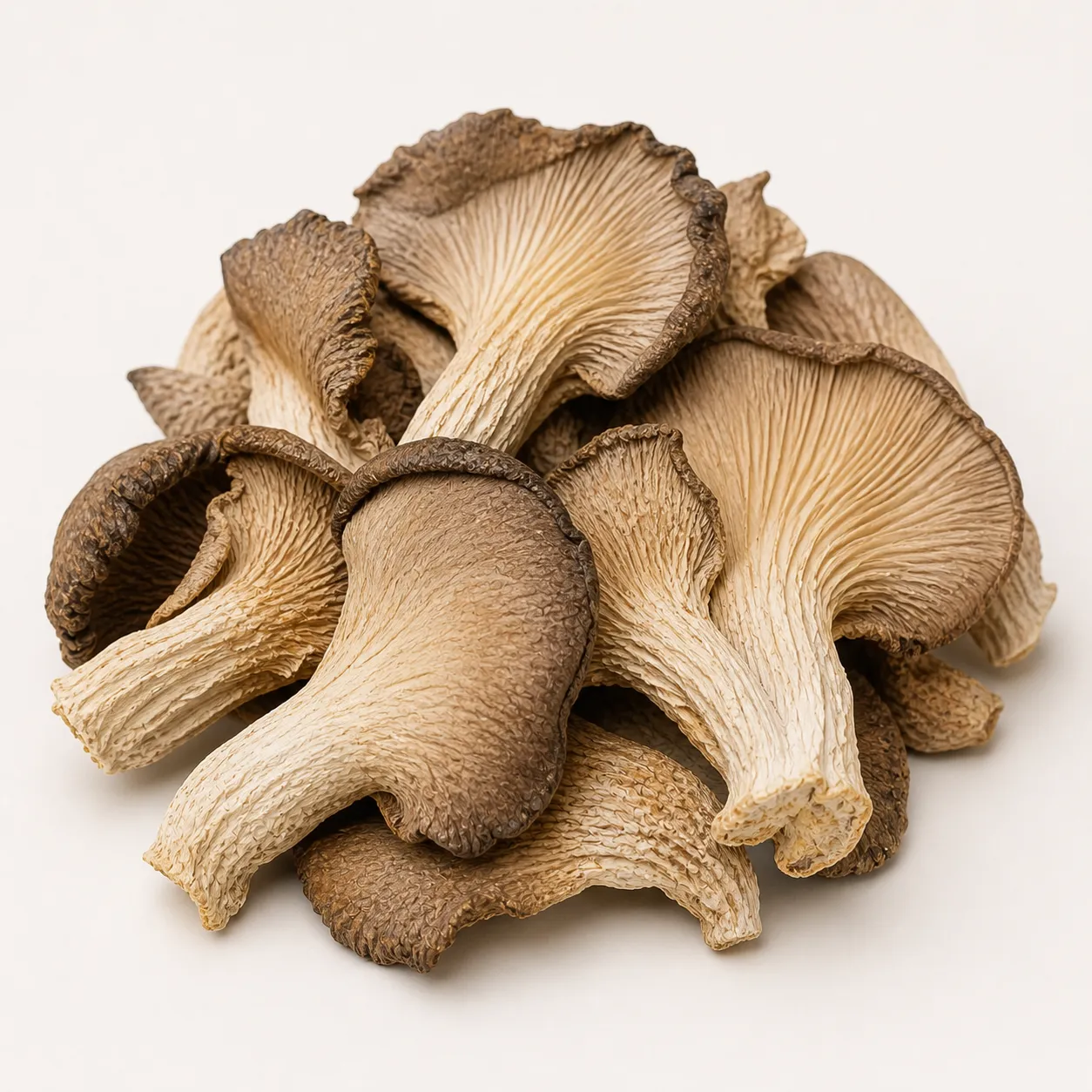
Oyster Mushroom
Dried oyster mushrooms suitable for bulk supply, restaurants, and distributors.
Wholesale price
$15.62/lb
$34.43/kg
Market reference
Approx. $35–60/kg
Need wholesale support?
Contact Fungi Origin for pricing, product inspection, pickup, GTA delivery, or courier shipping across Canada and the US for bulk dried mushroom orders.
Contact Us