Lion's Mane Mushroom
Lion's Mane for Vegan and Plant-Based Menus
Lion's Mane is the most versatile mushroom on a plant-based menu — vegan crab, scallops, lobster, pulled sandwiches. Restaurant applications and food cost.
By Editorial Team
Food sourcing and kitchen operations specialists covering ingredient procurement, storage science, and commercial kitchen efficiency across Canada.
Plant-based dining is the fastest-growing menu segment in Canadian restaurants, with vegan menu items adding revenue at chains, fine-dining operations, and casual concepts alike. Lion's Mane has emerged as the single most versatile mushroom on plant-based menus — partly because of its texture, partly because few other ingredients can credibly anchor a center-of-plate vegan main. Operators learning to deploy Lion's Mane strategically gain pricing power and menu differentiation that competitors using generic mushroom-based proteins can't match. Lion's Mane mushroom is a premium plant-based protein option for vegan and plant-based menus, prized for its fibrous meat-like texture that creates credible vegan analogs of crab, lobster, scallops, pulled pork, and chicken — typically used in 25–60g portions per dish at a food cost meaningfully below most plant-based meat alternatives.
Build Vegan Seafood Applications
Lion's Mane's texture-driven seafood-resemblance is its single most-recognized commercial application. Vegan crab cakes, vegan scallops, vegan lobster rolls — these aren't gimmicks; they're legitimate menu items that hold up in side-by-side comparison with their seafood originals on texture, and that satisfy guests who want plant-based eating without sacrificing dish format.
The core vegan seafood applications:
- Vegan crab cakes — shred Lion's Mane with vegan mayo, Old Bay, lemon, breadcrumbs; pan-fry into cakes
- Vegan scallops — sear thick-cut Lion's Mane medallions in butter and serve in scallop format
- Vegan lobster rolls — shred and dress with vegan mayo, butter alternative, herbs
- Vegan crab dip — shred into crab-dip recipes with cream cheese alternatives
- Vegan crab cake sandwich — substitute crab cakes onto buns with traditional condiments
These dishes carry strong menu pricing power. According to 2024 Canadian plant-based menu data, vegan crab cakes carry an average menu price of CAD $19, with food cost averaging 28%. The food cost favorability is dramatic compared to plant-based meat substitutes (which often run 40%+ food cost) — meaning Lion's Mane delivers higher gross margins for similar guest perceptions of quality.
Develop Plant-Based Pulled and Shredded Dishes
The braised-and-pulled application range opens Lion's Mane's potential beyond seafood analogs. Lion's Mane braises into pulled-pork-style or pulled-chicken-style fillings remarkably well, taking on the surrounding flavor while maintaining the fibrous structure that suggests "meat" to the diner.
Pulled-application examples:
- Vegan pulled-pork sandwich — Lion's Mane braised in BBQ sauce, served on a bun with slaw
- Vegan tinga tacos — braised in chipotle-tomato sauce
- Vegan jackfruit-style fillings — Lion's Mane often outperforms jackfruit on protein content
- Vegan tortas and Cuban sandwiches — pulled with mojo and herbs
- Vegan ragu — pulled into long-cooked Italian-style sauces
Lion's Mane competes directly with and often beats jackfruit and meat-substitute brands like Beyond and Impossible for these applications. The advantages: lower food cost, simpler ingredient list (whole-food positioning), better mouthfeel, and freedom from highly processed alternatives. A 2024 plant-based menu survey of Canadian restaurants found Lion's Mane appearing on 22% more menu items than two years prior, with the highest growth in pulled-style applications.
Create Center-of-Plate Vegan Main Courses
Plant-based fine dining and tasting-menu programs need center-of-plate components that can carry an entire course. Few ingredients meet that bar. Lion's Mane, particularly when prepared as a whole-roasted or large-medallion piece, delivers genuine main-course presence.
Center-of-plate techniques:
- Whole-roasted Lion's Mane — basted with herb oil, served sliced
- Lion's Mane "steak" — pressed and seared into thick medallions, served with chimichurri or peppercorn sauce
- Lion's Mane Wellington — wrapped in mushroom duxelles and puff pastry
- Lion's Mane confit — slow-cooked in olive oil with garlic and herbs
- Lion's Mane schnitzel — breaded and pan-fried in cutlet form
These applications appear on plant-based fine dining tasting menus across Canada at price points of CAD $34–$58 per course. The dish format is recognizable to omnivore guests (looks like a real main course), while the ingredient story differentiates it from generic mushroom side dishes. According to 2024 plant-based fine dining trend research, Lion's Mane center-of-plate applications grew 47% year-over-year on tasting-menu programs.
Add Functional Wellness Positioning
The plant-based diner overlaps significantly with the wellness-conscious diner. Lion's Mane's research-backed cognitive and nerve-support claims add meaningful wellness positioning to plant-based menu items at no additional ingredient cost.
Wellness-positioning opportunities:
- Brain-health menu callouts — "Lion's Mane mushroom — researched for cognitive support"
- Daily wellness-themed plates — combine Lion's Mane with other functional ingredients
- Functional smoothies and teas — Lion's Mane powder in beverages
- Wellness tasting menus — multi-course menus organized around functional ingredients
Caution on health claims: Canada has specific regulations about food-related health claims. Menu language should describe traditional use and research areas without making medical or therapeutic claims. "Lion's Mane mushroom — used traditionally for cognitive support" is acceptable in most contexts; "Lion's Mane mushroom — clinically proven to improve memory" is not. Work with regulatory counsel on menu language before deploying medical-style positioning.
Manage Food Cost and Wholesale Sourcing
Lion's Mane food cost on plant-based menu items is favorable when sourcing is right. Direct-import wholesale at CAD $90–$140/kg for whole dried Grade A produces per-portion costs of CAD $2.70–$8.40 depending on portion size — competitive with mid-tier proteins and meaningfully below most branded plant-based meat substitutes.
Sample plant-based restaurant Lion's Mane program:
- Monthly dried Lion's Mane purchase — 4–10kg
- Average per-portion cost — CAD $4.50 at 30g portion
- Average menu pricing — CAD $19–$24 per dish featuring Lion's Mane
- Resulting food cost percentage — 19–24% (well below restaurant-industry benchmarks)
- Annual Lion's Mane wholesale spending — CAD $4,800–$13,500
Direct-import sourcing is essential for these economics. Retail-priced or distributor-marked-up Lion's Mane pushes per-portion cost into the CAD $8–$14 range, eroding the food-cost advantage that makes the category attractive. Fungi Origin offers plant-based restaurant accounts dedicated wholesale-tier pricing with monthly delivery scheduling.
Frequently Asked Questions
How much Lion's Mane does a plant-based restaurant typically use per month?
A full-service Canadian plant-based restaurant typically uses 4–10kg of dried Lion's Mane per month, depending on menu prominence and portion sizes. Tasting-menu and fine-dining plant-based operations on the higher end of the range; fast-casual plant-based concepts on the lower. Annual usage scales with growth — a successful plant-based restaurant often doubles Lion's Mane usage year-over-year as the menu evolves.
Is Lion's Mane more affordable than plant-based meat substitutes?
Yes, in most cases significantly. Direct-import Lion's Mane at CAD $90–$140/kg dried produces per-portion costs of CAD $3–$8 — meaningfully below branded plant-based meats (Beyond, Impossible) which typically cost $9–$15+ per equivalent portion. Lion's Mane also offers a whole-food positioning that branded substitutes can't claim, supporting menu narratives around "real food" plant-based dining.
Can Lion's Mane appear on non-plant-based menus too?
Yes, Lion's Mane appears on omnivore menus across Canadian restaurants — particularly fine dining, hotel restaurants, and creative casual concepts. The "interesting mushroom" positioning works for adventurous omnivore diners, and the ingredient adds menu differentiation. Many restaurants run Lion's Mane as a menu option that happens to be vegan rather than positioning the item as plant-based-exclusive.
Anchor a Plant-Based Menu with Lion's Mane
Lion's Mane has earned its place as the cornerstone ingredient of serious plant-based menus across Canada — versatile enough to span vegan seafood, pulled-style dishes, and center-of-plate mains; affordable enough at direct-import wholesale to support strong food costs; and increasingly recognized by guests as a premium plant-based ingredient. Operators building or expanding plant-based menus should evaluate Lion's Mane as a strategic ingredient rather than an occasional special.
Contact the Fungi Origin plant-based menu team for sample shipments, wholesale-tier monthly delivery scheduling, and chef-tailored ordering across whole, sliced, and powder Lion's Mane formats.
Shop this product
Buy lion’s mane mushroom wholesale
Stocked in Ontario. Free GTA delivery over $350 CAD; courier shipping across Canada and to the US.
Wholesale
Dried Mushrooms
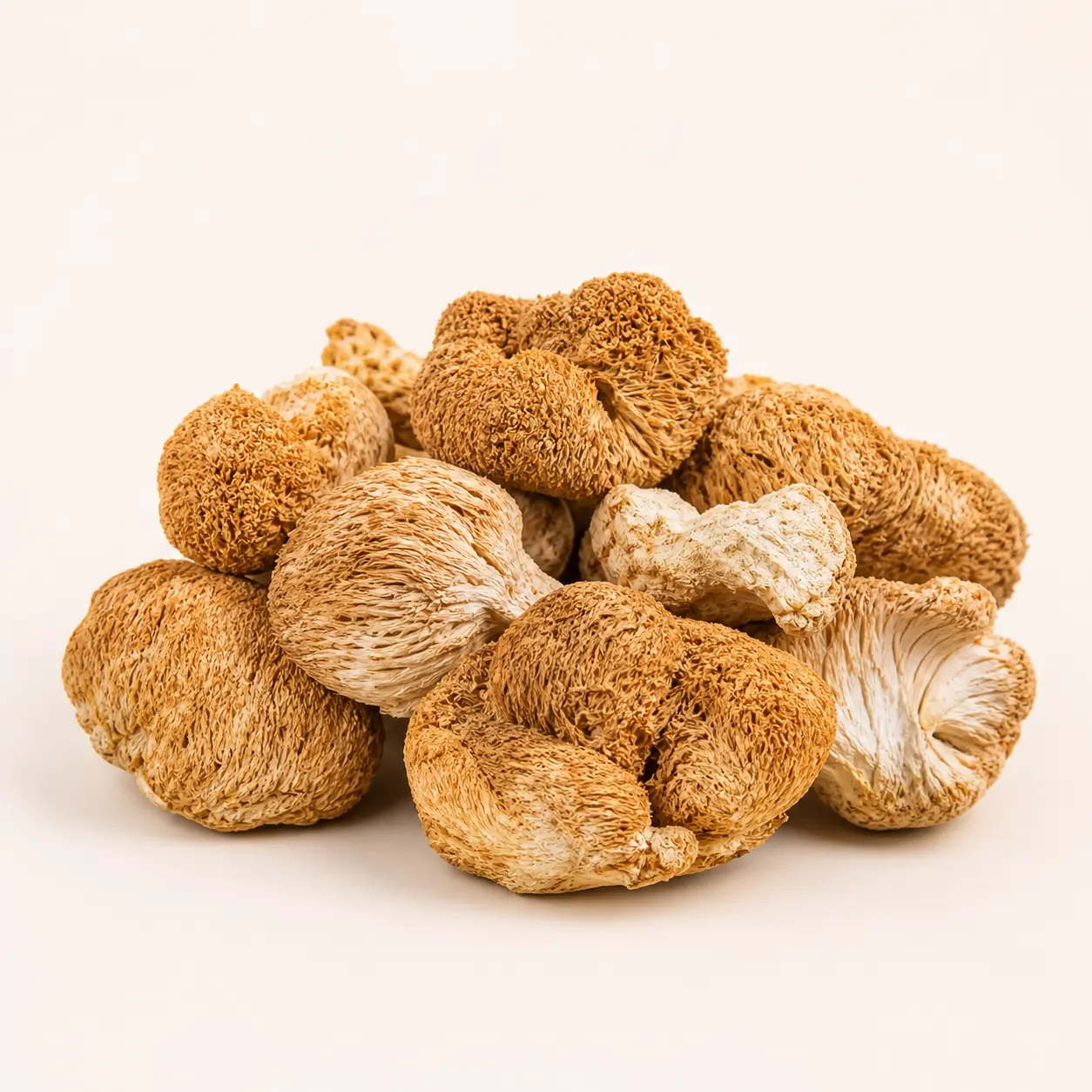
Lion’s Mane Mushroom
Top-grade dried lion's mane mushroom with reliable bulk supply.
Wholesale price
$19.43/lb
$42.84/kg
Market reference
Approx. $77/kg
Need wholesale support?
Contact Fungi Origin for pricing, product inspection, pickup, GTA delivery, or courier shipping across Canada and the US for bulk dried mushroom orders.
Contact Us