Oyster Mushroom
Oyster Mushrooms as a Meat Substitute (Vegan Bacon, Pulled, Scallops)
Oyster mushrooms as plant-based meat — vegan bacon, pulled-style sandwiches, scallop medallions. Restaurant techniques, food cost economics, and menu pricing.
By Editorial Team
Food sourcing and kitchen operations specialists covering ingredient procurement, storage science, and commercial kitchen efficiency across Canada.
Oyster mushrooms have emerged as one of the most-used meat substitutes in plant-based cuisine — alongside Lion's Mane and jackfruit. The combination of meaty texture, neutral flavor, and broad availability at affordable wholesale pricing makes oyster mushrooms a structural ingredient on serious plant-based Canadian menus. Three core meat-substitute applications drive the bulk of restaurant use. Oyster mushrooms work as a meat substitute through three primary techniques — crispy oven-baked vegan bacon strips, slow-braised pulled-style fillings for sandwiches and tacos, and seared king oyster medallions as plant-based scallops or steaks — each producing visually and texturally credible alternatives to traditional animal proteins.
Build Vegan Bacon Programs With Pearl Oyster
Pearl oyster mushrooms work beautifully as a base for crispy vegan bacon — strips that go into BLT sandwiches, on top of vegan breakfast plates, alongside vegan pancakes, and as crisp snack-product retail items.
The vegan oyster bacon process:
- Cut dried pearl oyster into thin strips (1–2cm wide, 4–8cm long)
- Marinate briefly with olive oil, soy/tamari, smoked paprika, maple syrup, garlic powder
- Bake at 175°C (350°F) for 18–25 minutes
- Cool on the sheet to crisp fully
The flavor profile matches bacon's signature umami-smoky-sweet character; the crispy texture delivers the satisfying crunch that defines bacon. Plant-based diners and curious omnivores both find the result remarkably credible. Restaurants serving vegan oyster bacon typically present it on:
- Vegan breakfast plates — alongside scrambled tofu and roasted potatoes
- BLT sandwiches — replacing pork bacon entirely
- Topping for vegan grain bowls and salads — replacing croutons or bacon bits
- Brunch caesar salads — vegan caesar with oyster bacon
- Snack-shelf retail products — packaged crispy oyster bacon for wellness retailers
Food cost economics work well. A serving of oyster bacon (typically 30g dried, baking down to 15–20g crispy) costs approximately CAD $0.90–$1.50 in ingredient cost, against menu pricing supporting CAD $3–$8 upcharge over equivalent dishes without the bacon.
Develop Pulled-Style Oyster Mushroom Applications
The braised-and-pulled application range opens oyster mushrooms' potential for sandwich fillings, taco proteins, and stew-style preparations. The technique works particularly well with pearl and blue oyster varieties, which break down into pulled-style strands.
Pulled oyster mushroom applications:
- Vegan pulled "pork" sandwich — oyster mushrooms braised in BBQ sauce, served on a bun with slaw
- Vegan tinga tacos — oyster mushroom braised in chipotle-tomato sauce
- Vegan ropa vieja — Cuban-inspired braised oyster mushroom
- Vegan jackfruit-style fillings — oyster mushrooms often outperform jackfruit on protein content
- Vegan ragu and Bolognese — chopped oyster mushroom in slow-cooked sauces
The pulled technique:
- Sauté rehydrated oyster mushrooms to develop initial color (5 minutes)
- Add aromatics, spices, and braising liquid (BBQ sauce, chipotle, etc.)
- Reduce heat to low, cover, simmer 25–35 minutes
- Pull apart with two forks as it cooks, into long strands
- Reduce sauce at the end if needed to coat
Oyster mushrooms compete directly with jackfruit and branded plant-based meat substitutes for these applications. The advantages: lower food cost, simpler ingredient list (whole-food positioning), better texture, and freedom from highly processed alternatives. According to a 2024 plant-based menu survey, oyster mushroom appears on plant-based pulled-protein menu items at over 150 Canadian restaurants — a substantial share of the segment.
Sear King Oyster as Plant-Based Scallops and Steaks
King oyster's thick, meaty stems offer the most distinctive plant-based protein application for the oyster mushroom family. Sliced into thick rounds and seared at high heat, king oyster produces "scallops" or "steak medallions" with remarkable visual and textural similarity to animal proteins.
King oyster center-of-plate applications:
- King oyster "scallops" — 1.5–2cm medallions seared to golden crust
- King oyster "steak" — thicker pressed slabs, scored, seared, finished with herbs
- King oyster Wellington — wrapped in mushroom duxelles and puff pastry
- King oyster confit — slow-cooked in olive oil with garlic and herbs
- King oyster schnitzel — breaded and pan-fried in cutlet form
These applications appear on Canadian fine-dining and fine-casual menus at price points of CAD $26–$42 per dish. The dish format is recognizable to omnivore guests (looks like a real entrée), while the king oyster ingredient story differentiates from generic mushroom side dishes. According to 2024 plant-based fine dining trend research, king oyster center-of-plate applications grew 38% year-over-year.
Compare Food Cost vs Branded Plant-Based Meats
The economic case for oyster mushrooms as a meat substitute is compelling versus branded plant-based meat alternatives (Beyond Meat, Impossible Foods, etc.). Oyster mushrooms deliver competitive guest experiences at meaningfully lower food cost.
Sample food cost comparison (per equivalent serving):
- Branded plant-based meat substitute — CAD $9–$15 per portion
- Pearl oyster bacon — CAD $0.90–$1.50 per portion
- Pulled oyster mushroom filling — CAD $1.50–$3.00 per portion
- King oyster "scallops" — CAD $3.50–$6.00 per portion
- Beef-style pulled (real) — CAD $4–$7 per portion
The food cost advantage versus branded plant-based meat substitutes is dramatic — typically 60–85% lower at equivalent serving sizes. This translates directly to gross margin improvement on plant-based menu items, which often run higher food cost than animal-protein equivalents.
A Canadian plant-based restaurant featuring 4–5 oyster mushroom-based menu items typically saves CAD $35,000–$80,000 annually versus equivalent menu items built around branded plant-based meat substitutes — meaningful margin in a category often constrained by ingredient cost.
Plan Sourcing for Plant-Based Restaurant Programs
Plant-based restaurants featuring oyster mushrooms heavily benefit from direct-import sourcing relationships with monthly delivery scheduling.
Sample plant-based restaurant oyster mushroom program:
- Pearl oyster — 4–8kg monthly for vegan bacon and pulled applications
- King oyster — 2–6kg monthly for scallop and steak preparations
- Sliced oyster format — 1–3kg monthly for daily sauté and pasta applications
- Annual oyster mushroom spending — CAD $1,800–$5,200 supporting CAD $35,000+ in oyster-featured menu revenue
Direct-import sourcing is essential to these economics. Retail-priced or distributor-marked-up oyster mushroom pushes per-portion cost into ranges that erode the food-cost advantage that makes plant-based oyster applications attractive.
Frequently Asked Questions
Are oyster mushrooms better than jackfruit for vegan pulled dishes?
Oyster mushrooms typically outperform jackfruit for vegan pulled applications on protein content (oyster mushrooms have meaningful protein; jackfruit has minimal protein), umami flavor (oyster mushrooms add umami; jackfruit is essentially flavor-neutral), and texture variety (oyster mushrooms produce real strand-like texture; jackfruit can be stringy). Both work; oyster mushrooms generally produce more satisfying finished dishes.
Can oyster mushrooms replace beef or chicken in any recipe?
Not universally. Oyster mushrooms substitute well in pulled, braised, and ground-meat applications (pulled pork sandwiches, beef Bolognese, chicken stews). They substitute less well in whole-protein applications (steak preparations, where king oyster offers a textural approximation but not flavor match) and don't substitute meaningfully in egg-protein-driven dishes. Match the substitution to the recipe role rather than expecting universal interchangeability.
How much oyster mushroom does a Canadian plant-based restaurant use monthly?
A full-service Canadian plant-based restaurant featuring oyster mushrooms across 3–5 menu items typically uses 8–15kg of dried oyster mushroom monthly across pearl, king, and sliced varieties. Higher-volume operations or restaurants with multiple oyster-mushroom-featured items can run 20kg+ monthly. Annual usage scales with menu growth.
Anchor Plant-Based Menus With Oyster Mushroom Meat Substitutes
Three core techniques — crispy vegan bacon, slow-braised pulled fillings, seared king oyster medallions — combine with substantial food-cost advantages versus branded plant-based meat alternatives to make oyster mushrooms a strategic ingredient for serious plant-based restaurant operations across Canada.
Contact the Fungi Origin plant-based menu team for sample shipments, wholesale-tier monthly delivery scheduling, and tailored ordering across pearl oyster, king oyster, and specialty varieties.
Shop this product
Buy oyster mushroom wholesale
Stocked in Ontario. Free GTA delivery over $350 CAD; courier shipping across Canada and to the US.
Wholesale
Dried Mushrooms
Oyster Mushroom
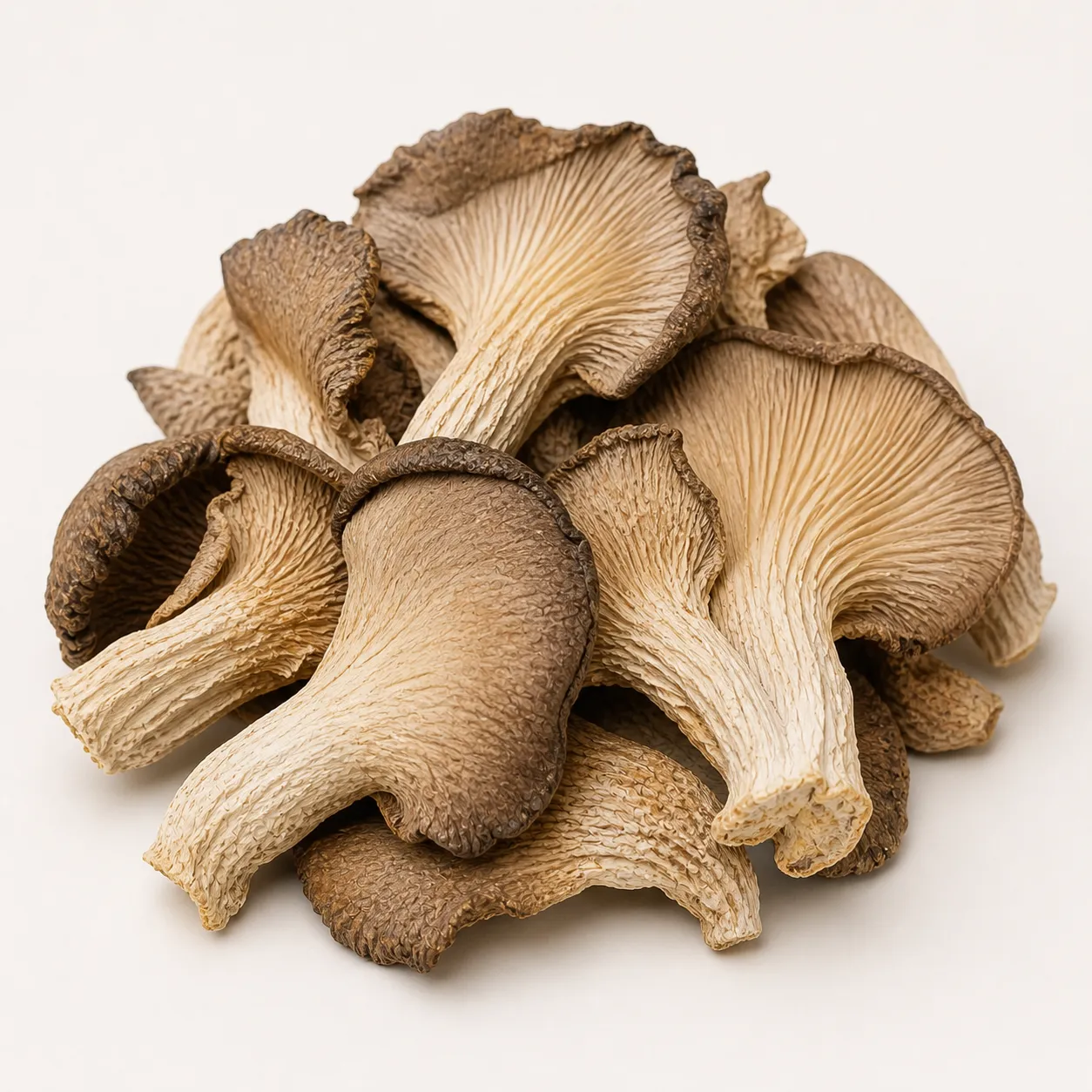
Dried oyster mushrooms suitable for bulk supply, restaurants, and distributors.
Wholesale price
$15.62/lb
$34.43/kg
Market reference
Approx. $35–60/kg
Need wholesale support?
Contact Fungi Origin for pricing, product inspection, pickup, GTA delivery, or courier shipping across Canada and the US for bulk dried mushroom orders.
Contact Us