Truffle Slices
Truffle Slices vs Truffle Oil: The Honest Comparison
Truffle slices vs truffle oil — real truffle vs synthetic aroma compound, food cost, restaurant credibility, and what serious chefs actually use.
By Editorial Team
Food sourcing and kitchen operations specialists covering ingredient procurement, storage science, and commercial kitchen efficiency across Canada.
Truffle oil has become one of the most controversial ingredients in modern cuisine. The product has expanded across mass-market grocery stores, mid-range restaurant chains, and home pantries — but most "truffle oil" sold globally contains zero actual truffle. The aromatic compound 2,4-dithiapentane, synthesized in laboratories, replaces real truffle in most commercial truffle oil. For Canadian restaurants and home cooks deciding between truffle slices and truffle oil, knowing this controversy is essential. Truffle slices contain real Tuber species truffle preserved through drying or oil/brine packaging, while most commercial truffle oil contains synthetic aroma compounds (especially 2,4-dithiapentane) rather than real truffle — making truffle slices the credible truffle ingredient for serious culinary applications and most truffle oil the convenient flavoring agent for casual applications.
Understand the Truffle Oil Synthetic Reality
Most truffle oil sold globally is "truffle-flavored oil" rather than truffle-infused oil. The distinction matters enormously for any restaurant or chef serious about ingredient quality and menu authenticity.
The truffle oil reality:
- Most commercial truffle oil contains 2,4-dithiapentane — a synthetic chemical compound
- Real truffle compounds are too volatile and expensive for stable commercial oil products
- 2,4-dithiapentane delivers signature truffle aroma without containing actual truffle
- Some premium brands use real truffle infusion with truffle pieces visible in the oil
- Reading the ingredient list matters — "natural truffle aroma" often means synthetic compound
The synthetic-aroma issue isn't necessarily about food safety — 2,4-dithiapentane is generally regarded as safe — it's about culinary authenticity, ingredient quality positioning, and menu storytelling. Diners increasingly recognize synthetic truffle oil and downgrade their perception of restaurants featuring it. Many serious Canadian fine-dining chefs publicly avoid truffle oil entirely.
Compare Real Truffle Content Side by Side
The real-vs-synthetic distinction creates dramatic differences between truffle slices and most truffle oil products.
Truffle ingredient comparison:
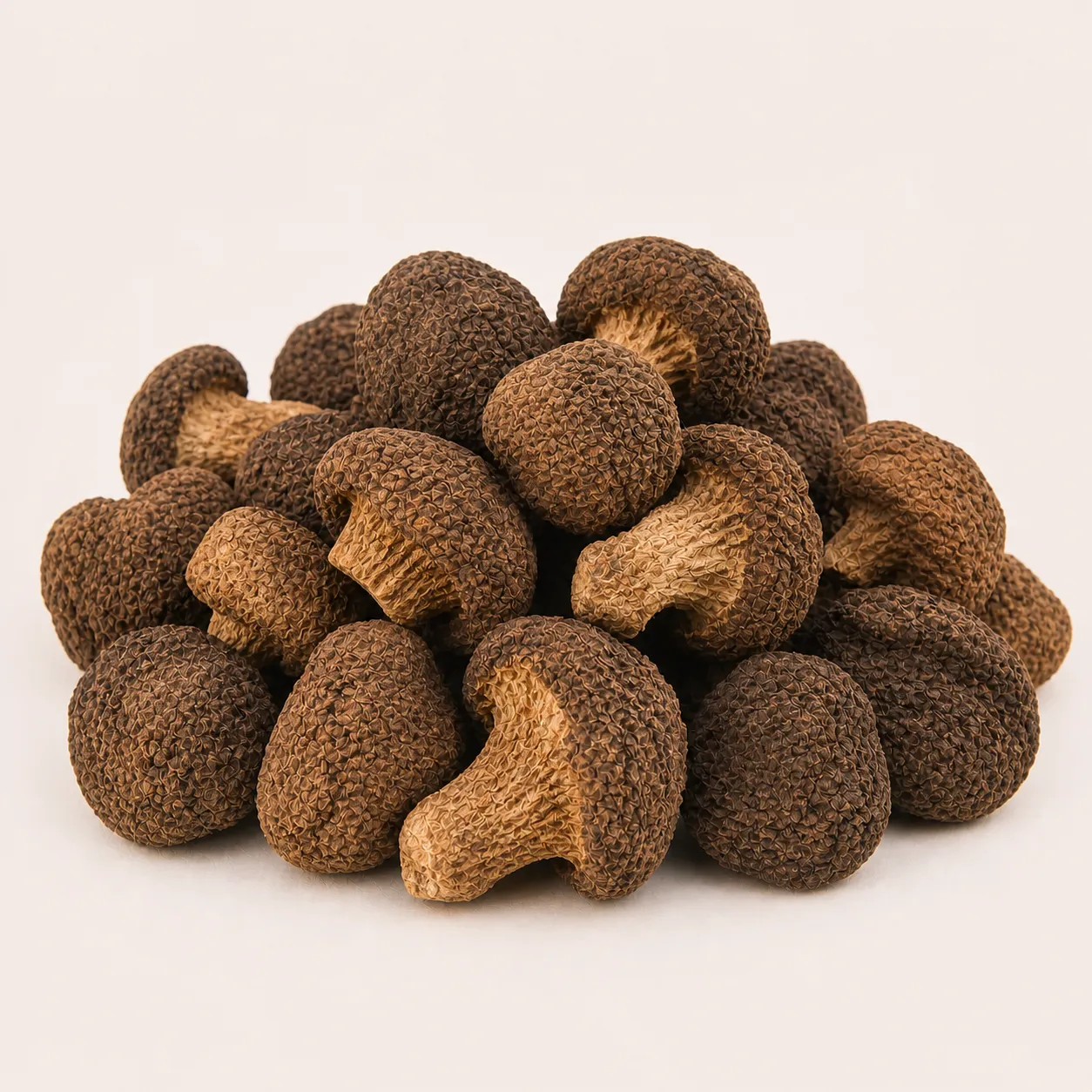
- Truffle slices (dried) — 100% real truffle (Tuber species)
- Truffle slices (oil-preserved) — real truffle pieces in oil
- Truffle butter (made with truffle slices) — real truffle integrated into butter
- Most commercial truffle oil — synthetic 2,4-dithiapentane in olive oil
- Premium real-truffle-infused oil — small truffle pieces with natural infusion (visible truffle in bottle)
- Truffle salt — variable; some real, some synthetic-aroma-based
For Canadian buyers, the practical decision tree: truffle slices deliver guaranteed real truffle content; truffle oil requires careful brand verification to confirm real-truffle content. Premium truffle oil brands that use real truffle infusion typically state this explicitly and show visible truffle pieces in the bottle.
Compare Flavor Authenticity and Restaurant Credibility
Real truffle and synthetic truffle aroma deliver different flavor experiences. Trained palates can distinguish them; casual diners often can't initially but develop discrimination over time.
Flavor authenticity comparison:
- Real truffle slices in dishes — complex aromatic profile with multiple compound layers
- Synthetic truffle oil — single-note aromatic intensity from 2,4-dithiapentane
- Real truffle aroma persists through proper cooking
- Synthetic truffle oil aroma is more linear and dissipates faster
- Real truffle's signature complexity comes from multiple sulfur compounds, not just one
For restaurant credibility, the real-vs-synthetic distinction matters more in fine-dining contexts than in casual restaurants. Fine-dining chefs and food media generally treat synthetic truffle oil as a quality compromise; casual restaurants often use synthetic oil as a low-cost flavor enhancer without significant guest pushback.
According to a 2024 fine-dining ingredient credibility survey, 78% of Canadian fine-dining chefs reported avoiding synthetic truffle oil in their kitchens — a substantial majority that reflects real ingredient-quality discipline.
Compare Pricing and Per-Application Economics
The pricing comparison between truffle slices and truffle oil isn't straightforward. Per-bottle pricing differs less than buyers might expect, but per-application economics differ meaningfully.
Pricing comparison:
- Synthetic truffle oil (250ml bottle) — CAD $15–$45 retail
- Real-truffle-infused oil (premium 100ml) — CAD $35–$120 retail
- Dried truffle slices (50g jar) — CAD $25–$90 retail (depending on species)
- Per-application cost (synthetic oil) — CAD $0.30–$1.00 per dish
- Per-application cost (truffle slices) — CAD $1.00–$8.00 per dish (depending on species)
Synthetic truffle oil delivers low per-application cost but at the cost of authentic truffle content. Real truffle slices cost more per application but deliver actual truffle to the dish. For restaurants competing on menu authenticity, the truffle slice premium is justified; for casual restaurants competing on menu accessibility, synthetic oil's lower per-application cost may make sense.
Match Each to Its Honest Best Use
Both products can have legitimate culinary roles — but the roles differ fundamentally.
Honest best uses for truffle slices:
- Fine-dining restaurant menu items
- Restaurants featuring "real truffle" on menu language
- Restaurants competing on ingredient authenticity
- Serious home cooks pursuing genuine truffle experience
- Tasting-menu courses with truffle storytelling
- Truffle butter, sauce, and integrated cooked applications
Honest best uses for synthetic truffle oil:
- Casual restaurants featuring "truffle-flavored" rather than "truffle" menu language
- Pizza chains adding "truffle" notes without ingredient-cost discipline
- Fast-casual concepts where ingredient authenticity isn't the positioning
- Home pantry products for occasional truffle-flavor enhancement
- Truffle-flavored snack foods and packaged products
- Cost-conscious operations not making fine-dining ingredient claims
The key is honest menu labeling. "Truffle" implies real truffle; "truffle-flavored" or "with truffle aroma" appropriately signals synthetic-aroma products. Restaurants using synthetic truffle oil while menu-labeling "real truffle" risk credibility issues if discovered by sophisticated diners or food media.
Frequently Asked Questions
Is all truffle oil fake?
No, but most commercial truffle oil contains synthetic 2,4-dithiapentane rather than real truffle. Premium brands sometimes use real truffle infusion with visible truffle pieces in the oil — these products are clearly labeled and priced accordingly (typically CAD $35–$120 per 100ml). Read ingredient lists carefully: "natural truffle aroma" often means synthetic compound, while "infused with truffle pieces" with visible truffle in the bottle suggests real-truffle product.
Can I tell if a restaurant is using fake truffle oil?
Trained palates can usually distinguish synthetic from real truffle, though casual diners often cannot. Synthetic truffle aroma is intense, single-note, and slightly chemical; real truffle has complex layered aromatic profile. Visual cues also help — restaurants showing diners actual truffle slices, shavings, or visible truffle in oil typically use real truffle. Restaurants featuring "truffle drizzle" with no visible truffle and bright aromatic intensity often use synthetic oil.
Should I avoid all truffle oil?
Not necessarily — but make informed choices. Real-truffle-infused oils (with visible truffle pieces and clear ingredient disclosure) deliver legitimate truffle content at higher pricing. Synthetic truffle oil works as a casual flavoring agent if you don't expect genuine truffle. The category isn't entirely fake; it's mostly synthetic with a real-truffle premium tier. Verify before purchasing for serious culinary applications.
Choose the Truffle Format That Matches Your Standards
For Canadian fine-dining restaurants and serious home cooks pursuing genuine truffle experience, dried and oil-preserved real truffle slices deliver verifiable truffle content. For casual restaurants and home cooks comfortable with truffle-flavor approximation, synthetic truffle oil works at a lower cost. The choice should follow honest culinary positioning — real ingredients for real-truffle menu language, synthetic options for clearly-labeled truffle-flavored applications.
Browse Fungi Origin's real truffle slice selection — dried and oil-preserved real Tuber species in multiple formats with full species and origin documentation. No synthetic aroma compounds, no marketing-driven naming confusion.
Shop this product
Buy truffle slices wholesale
Stocked in Ontario. Free GTA delivery over $350 CAD; courier shipping across Canada and to the US.
Wholesale
Dried Specialty Goods
Truffle Slices
Premium dried truffle slices for specialty food buyers and wholesale supply.
Wholesale price
$111.04/lb
$244.80/kg
Market reference
Approx. $400+/kg
Need wholesale support?
Contact Fungi Origin for pricing, product inspection, pickup, GTA delivery, or courier shipping across Canada and the US for bulk dried mushroom orders.
Contact Us