Chanterelle Mushroom
What Are Chanterelle Mushrooms? Identification, Flavor, and Uses
Chanterelle mushrooms are wild-foraged golden mushrooms with apricot-like aroma. Learn varieties, identification, and how Canadian buyers use them.
By Editorial Team
Food sourcing and kitchen operations specialists covering ingredient procurement, storage science, and commercial kitchen efficiency across Canada.
Chanterelles occupy a unique position among premium dried mushrooms — wild-foraged exclusively, golden-yellow in color, with a subtly fruity aroma unlike any other commercial mushroom. They appear on Canadian fine-dining menus during fall feature seasons and in specialty grocery stores year-round in dried form. Most buyers know the name but couldn't accurately describe what makes a real chanterelle different from look-alike species or why pricing varies dramatically across the same nominal product. Chanterelle mushroom is the common name for Cantharellus cibarius and closely related species, a wild-foraged forest fungus with a distinctive golden-yellow color, vase-shaped cap, false-gill ridges underneath, and a delicate apricot-adjacent aroma that intensifies with proper drying and storage.
Recognize the Distinctive Visual Identity
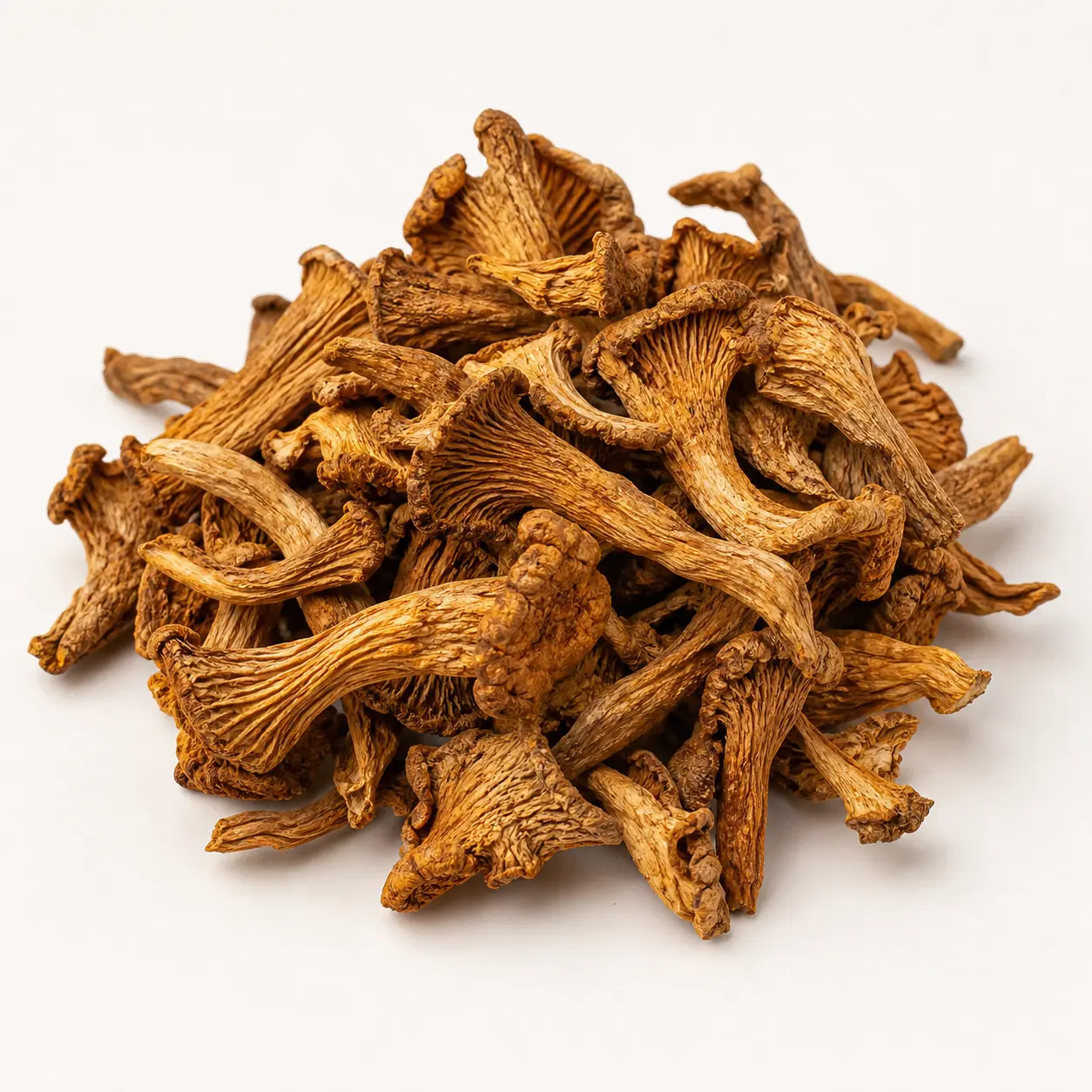
Chanterelles look unlike any other premium dried mushroom. The fruiting body is golden-yellow to deep orange-yellow with a wavy, vase-shaped cap that tapers down to a thick stem. Underneath the cap, instead of true gills, chanterelles have ridges — described as "false gills" or "decurrent ridges" — that run down onto the stem.
Key visual identification features:
- Color — golden-yellow to orange-yellow throughout
- Cap shape — vase-like, often wavy-edged or trumpet-shaped
- Underside — false gill ridges (not true gills) that extend down the stem
- Stem — thick, tapering, same color as cap
- Flesh — pale yellow to white when cut, dense and meaty
- Spore print — pale yellow
Identification matters because lookalikes exist. The "false chanterelle" (Hygrophoropsis aurantiaca) and the toxic "jack-o-lantern" mushroom (Omphalotus olearius) can both be mistaken for true chanterelles by inexperienced foragers — but only the true Cantharellus genus appears in legitimate commercial supply chains.
According to a 2024 quality survey of dried chanterelle imports into North America, approximately 8–12% of "chanterelle" lots from non-specialized suppliers contain adulteration with lookalike species. Buying from documented direct importers eliminates this risk.
Understand the Wild-Forage Reality
Chanterelles cannot be reliably cultivated at commercial scale — every chanterelle sold globally is wild-foraged. The fungus forms mycorrhizal partnerships with specific tree species (oak, beech, birch, pine) that require a complex forest ecosystem to fruit. Decades of cultivation research have produced only marginal results.
Implications of wild-only sourcing:
- Seasonal supply — chanterelles fruit primarily August–November in temperate zones
- Weather-dependent yields — wet summers favor chanterelles; dry summers reduce supply
- Origin matters — Pacific Northwest, Yunnan China, Lithuania, Romania are major commercial regions
- Pricing volatility — annual yield variation drives 15–35% price swings
- Sustainability questions — over-foraging concerns in some commercial regions
The wild-only reality is a key part of chanterelle's premium positioning. Unlike shiitake or oyster mushrooms (cultivated at massive commercial scale), chanterelles offer genuine forest-foraging provenance — a story that supports menu pricing and retail premium positioning.
Identify the Distinctive Flavor and Aroma Profile
Chanterelles deliver one of the most distinctive aromatic profiles in the dried mushroom category. The dominant note is described as fruity, apricot-adjacent, slightly peppery — unlike the earthy umami of porcini, the smoky depth of morel, or the savory richness of shiitake.
Flavor and aroma characteristics:
- Apricot-like fruity aroma — distinctive and immediately recognizable
- Slightly peppery undertones — can intensify during cooking
- Subtle nutty notes — particularly in well-dried lots
- Modest umami — present but not the dominant flavor
- Delicate sweetness — that contrasts with most savory mushrooms
- Buttery character when cooked in fat
The fruity aroma is genuine and drives chanterelle's culinary positioning. Pairing recommendations across European and North American cuisines emphasize the fruit affinity — chanterelles work beautifully with poultry, eggs, butter, cream, and gentle herb preparations. They clash with assertive ingredients (chili, strong fermented sauces, heavy spice blends) that mask their delicate identity.
Recognize the Standard Commercial Forms
Dried chanterelle ships to Canadian buyers in three primary formats. Format affects both pricing and best application meaningfully.
The three commercial formats:
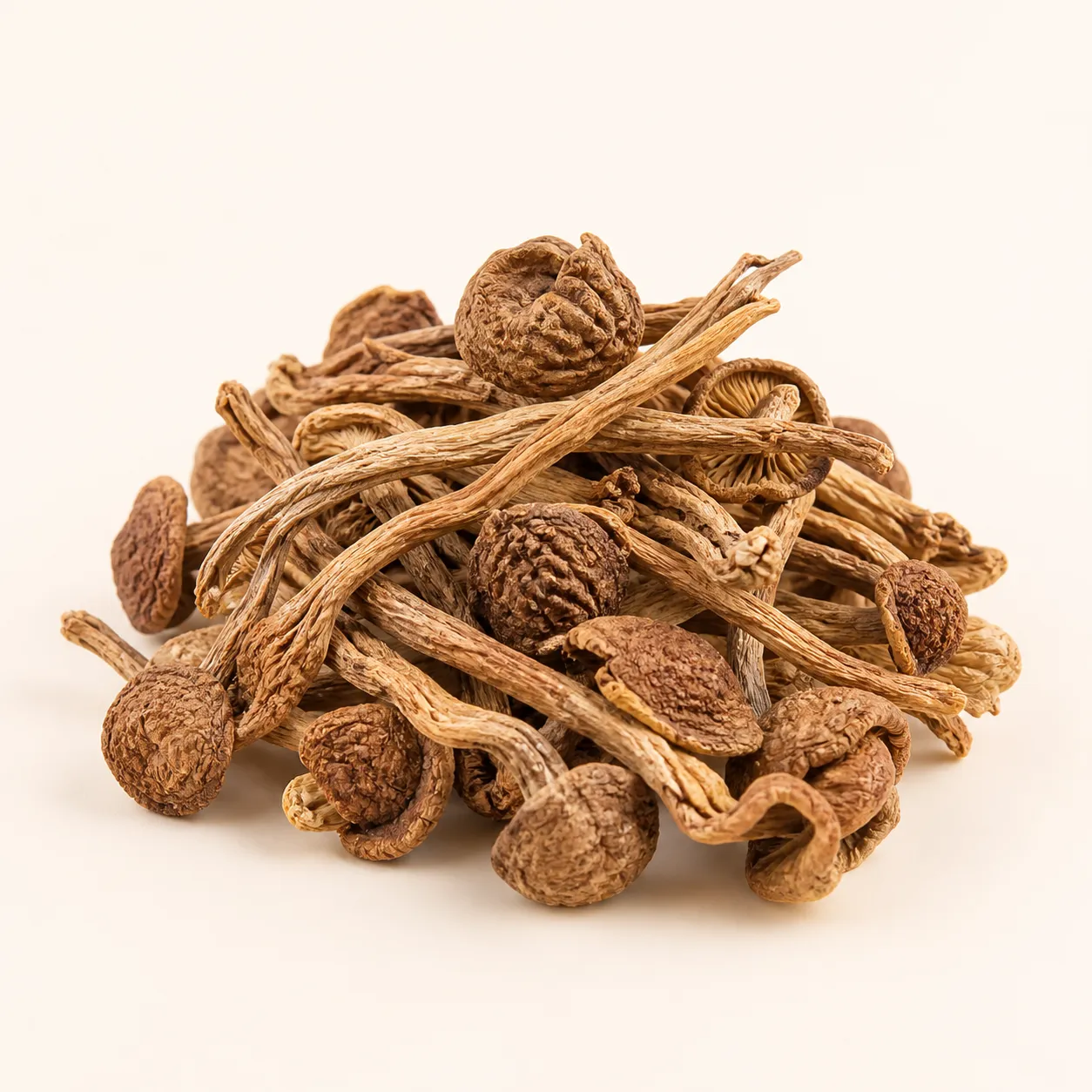
- Whole dried chanterelles — premium presentation, ideal for visible plate features
- Pieces and broken caps — for sauces, stocks, ragout-style applications
- Powder — for finishing, infusing oils, or seasoning blends
Whole format dominates the chanterelle market because the visual identity matters — a recognizable golden chanterelle on a plate is part of what diners pay for. Pieces format serves as a value alternative for sauce-driven dishes where the mushroom integrates rather than features. Powder is a niche format used in fine dining for finishing touches and in some specialty seasoning blends.
According to 2024 Canadian wholesale data, whole chanterelle accounts for approximately 80% of dried chanterelle volume; pieces 15%; powder 5%.
Frequently Asked Questions
Where do chanterelle mushrooms come from?
Chanterelles grow in temperate forests across North America, Europe, and parts of Asia, forming mycorrhizal partnerships with oak, beech, birch, and pine trees. Major commercial sourcing regions include the Pacific Northwest (Oregon, Washington, BC), Yunnan and Sichuan China, Lithuania, Romania, and Bulgaria. They cannot be reliably cultivated at commercial scale — virtually all commercial chanterelles are wild-foraged.
Are chanterelles healthy?
Yes, chanterelles deliver meaningful nutrition: significant vitamin D (especially when sun-exposed during drying), B vitamins, copper, manganese, and beta-glucan fiber. A 30g portion of dried chanterelles provides roughly 3g of fiber, B5, B3, and minerals with under 90 calories. Like other mushrooms, chanterelles offer antioxidant compounds and immune-supporting beta-glucans.
What's the difference between chanterelles and morels?
Chanterelles and morels are different species in different botanical families. Chanterelles (Cantharellus) are golden-yellow with vase-shaped caps and false gill ridges; they fruit in late summer and fall. Morels (Morchella) are brown-to-black with hollow honeycomb caps; they fruit in spring. Chanterelles taste fruity and apricot-like; morels taste smoky and earthy. Both are wild-foraged premium specialty mushrooms.
Stock Chanterelles for Canadian Fall Menus
Chanterelles deliver one of the most distinctive flavor profiles in the premium dried mushroom category — the fruity, apricot-adjacent aroma alone justifies their place on serious Canadian menus. Whether you're a fine-dining chef building autumn feature menus, a retailer stocking specialty European or wild-foraged ingredients, or a home cook expanding the seasonal pantry, dried chanterelles in graded format earn their cost.
Browse the Fungi Origin dried chanterelle collection for whole, pieces, and powder formats with full origin documentation, or contact our wholesale team for bulk pricing and case-pack options.
Shop this product
Buy chanterelle mushroom wholesale
Stocked in Ontario. Free GTA delivery over $350 CAD; courier shipping across Canada and to the US.
Wholesale
Dried Wild Mushrooms
Chanterelle Mushroom
High-quality dried chanterelle mushrooms with strong price advantage for bulk buyers.
Wholesale price
$30.54/lb
$67.32/kg
Market reference
Approx. $176/kg
Need wholesale support?
Contact Fungi Origin for pricing, product inspection, pickup, GTA delivery, or courier shipping across Canada and the US for bulk dried mushroom orders.
Contact Us