Oyster Mushroom
What Are Oyster Mushrooms? Varieties, Flavor, and Uses
Oyster mushrooms span pearl, king, pink, golden, and blue varieties — each with distinct uses. Canadian buyer's guide to identification, flavor, and cooking.
By Editorial Team
Food sourcing and kitchen operations specialists covering ingredient procurement, storage science, and commercial kitchen efficiency across Canada.
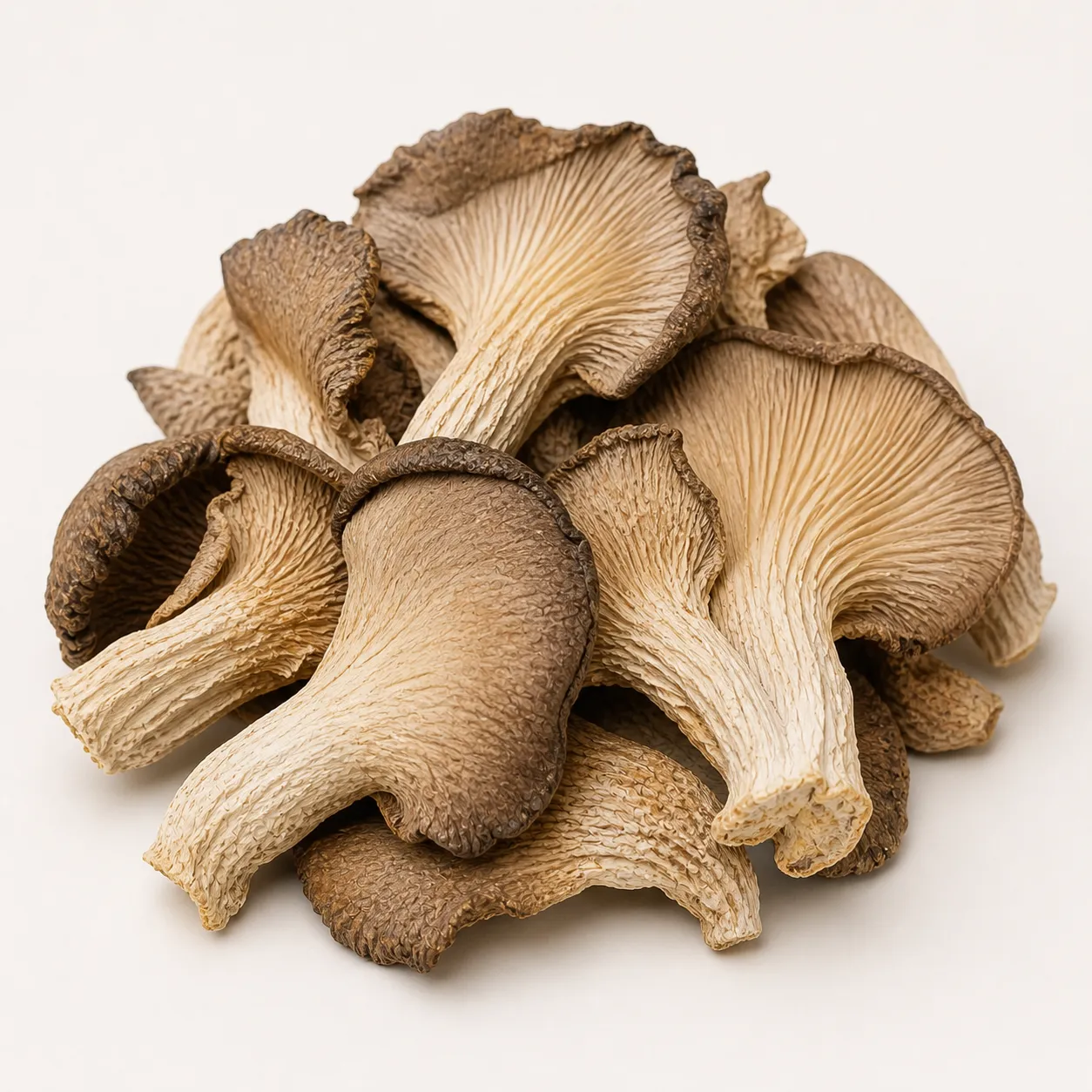
Oyster mushrooms are simultaneously among the most-cultivated mushrooms in the world and among the most-confused commercial categories — partly because "oyster mushroom" actually refers to multiple distinct species across the Pleurotus genus, each with different appearance, flavor, and ideal uses. Most Canadian buyers don't realize they have at least five different "oyster mushrooms" available, and choosing the right one matters meaningfully for cooking applications. Oyster mushroom is the common name for Pleurotus species — including Pleurotus ostreatus (pearl oyster), P. eryngii (king oyster / king trumpet), P. ostreatus pink-form (pink oyster), P. citrinopileatus (golden oyster), and P. ostreatus blue-form (blue oyster) — cultivated globally as one of the largest commercial mushroom categories with versatile culinary uses across cuisines.
Recognize the Five Main Commercial Varieties
The "oyster mushroom" label spans multiple species and varieties in commercial supply. Each has distinct appearance, flavor characteristics, and ideal applications that buyers should understand before defaulting to one variety.
The five main commercial oyster mushroom varieties:
- Pearl oyster (Pleurotus ostreatus) — the classic; gray-white shelf-shaped caps; mild flavor
- King oyster / King trumpet (Pleurotus eryngii) — large thick stem; meaty texture; nutty flavor
- Pink oyster (P. ostreatus pink-form) — bright pink caps; visual showstopper; mild flavor
- Golden oyster (Pleurotus citrinopileatus) — yellow-orange caps; nutty character; visual appeal
- Blue oyster (P. ostreatus blue-form) — blue-gray caps; firmer texture; mild flavor
Each variety appears in dried form at Canadian wholesale and retail, though pearl oyster and king oyster dominate commercial supply by far. Pink, golden, and blue oysters appear primarily at specialty and farmers'-market channels, with growing presence in fine-dining restaurants seeking visual differentiation.
According to a 2024 Canadian specialty mushroom market analysis, pearl oyster represents approximately 55% of dried oyster mushroom commercial volume, king oyster 30%, with pink, golden, and blue varieties together accounting for 15%.
Understand King Oyster as a Distinct Subcategory
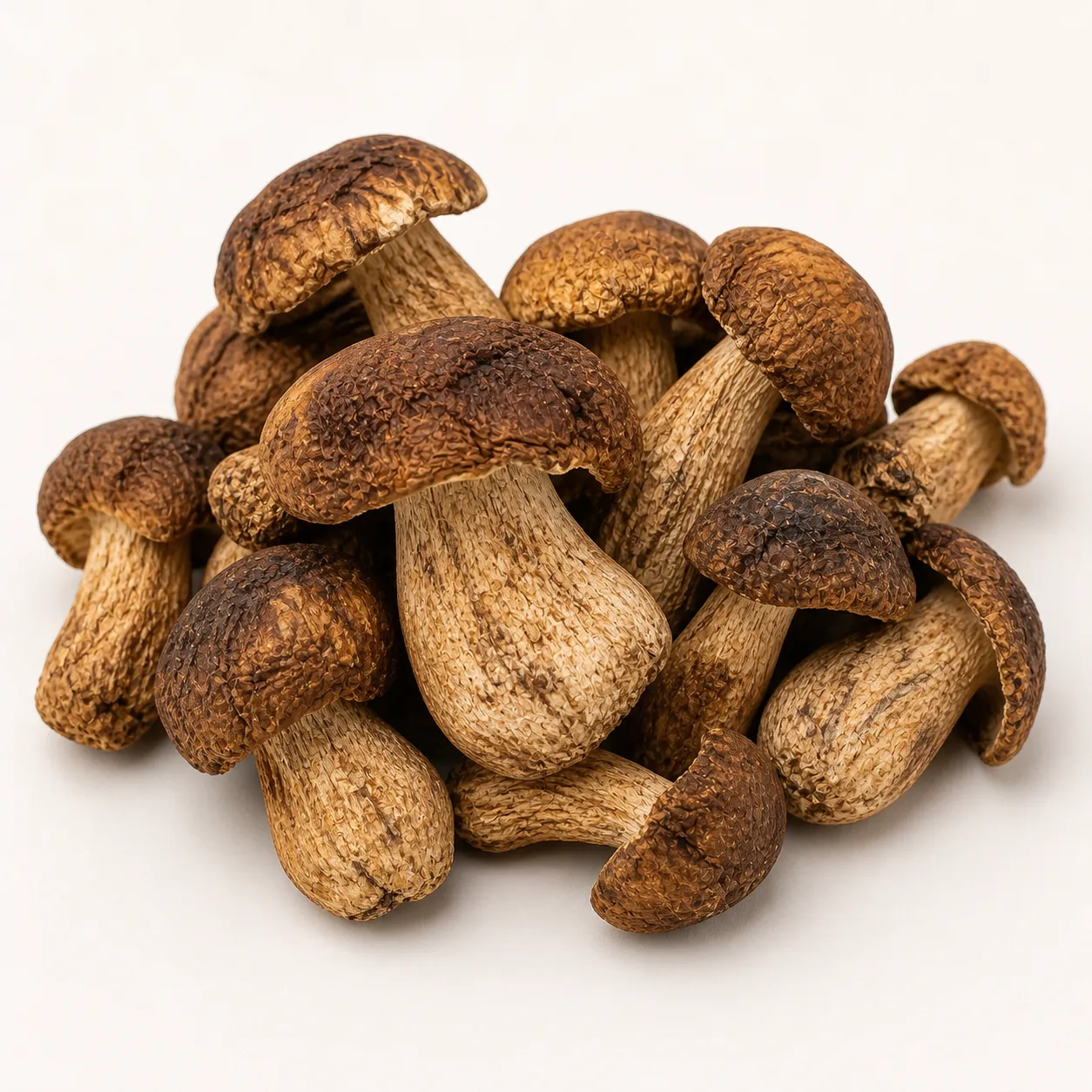
King oyster (Pleurotus eryngii) deserves separate attention because it represents a fundamentally different commercial product than pearl oyster — different appearance, different texture, different ideal uses. Many Canadian buyers don't realize king oyster is a different mushroom from standard oyster.
King oyster characteristics:
- Large thick stem — typically 3–5cm diameter, the dominant edible part
- Small cap — modest cap atop the substantial stem
- Color — beige to light brown
- Texture (dried, rehydrated) — meaty, dense, almost scallop-like when sliced
- Flavor — nutty, savory, more complex than pearl oyster
- Pricing — typically 25–40% higher than pearl oyster
King oyster's commercial breakthrough comes from its texture. Sliced king oyster cooks like a scallop or steak — searing into golden-crusted rounds with tender interior. This makes king oyster valuable for plant-based menu development, vegan steak preparations, and applications where texture matters as much as flavor.
Compare the Flavor Profiles Across Varieties
Oyster mushroom flavors vary meaningfully across varieties, though the family share a generally mild, slightly sweet, nutty character that distinguishes them from earthier mushrooms (porcini, morel) or umami-driven mushrooms (shiitake).
Variety flavor comparison:
- Pearl oyster — mild, slightly anise/seafood, delicate
- King oyster — nutty, savory, more complex; closer to scallop than mushroom
- Pink oyster — milder than pearl; often described as bacon-like when crisp-cooked
- Golden oyster — nutty, mild, slightly cashew-like
- Blue oyster — mild, slightly anise/seafood, similar to pearl
Across all varieties, oyster mushrooms tend to "take on" surrounding flavors rather than imposing strong identities. They pair beautifully with butter, garlic, herbs, soy, and a wide range of culinary frameworks. This versatility is part of why oyster mushrooms have become one of the largest commercial mushroom categories globally.
Recognize the Cultivated-vs-Foraged Reality
Unlike chanterelles or morels, oyster mushrooms are commercially cultivated at very large scale globally. This makes oyster mushrooms among the most-affordable serious dried mushrooms in the Canadian market and supports stable year-round supply.
Oyster cultivation reality:
- Year-round commercial cultivation at large scale globally
- Rapid growth cycle — fruiting in 4–8 weeks from inoculation
- Multiple commercial substrates — straw, wood logs, sawdust, agricultural waste
- Strong sustainability profile — uses post-harvest agricultural materials
- Supply stability — minimal seasonal price volatility
- Variety-specific cultivation — different commercial operations specialize in different varieties
Wild oyster mushroom foraging exists but represents a tiny fraction of commercial supply. For practical Canadian buying, "oyster mushroom" almost always means cultivated Pleurotus species. Some specialty foragers offer wild oyster mushrooms at farmers' markets and direct-sale during foraging seasons, but commercial supply is essentially all cultivated.
Examine the Common Commercial Forms
Dried oyster mushrooms ship to Canadian buyers in three primary formats. The format choice meaningfully affects what you can do with the product.
The three commercial formats:
- Whole dried oyster mushrooms — best for shredding, plating, and visible applications
- Sliced or chunked oysters — convenient for fast prep, pasta, stir-fries
- Powder format — for finishing dust, sauce thickening, vegan umami additions
Whole and sliced formats are interchangeable for most cooking applications; the difference is prep-time convenience. Powder is a niche format used in vegan and fine-dining applications. Most Canadian wholesale orders span at least two formats. Fungi Origin stocks all three formats with format-specific grading.
Frequently Asked Questions
Are oyster mushrooms different from regular button mushrooms?
Yes, oyster mushrooms (Pleurotus species) are botanically distinct from button mushrooms (Agaricus bisporus) — different genus, different family, different growth biology. Oyster mushrooms grow as shelf-shaped or trumpet-shaped fruiting bodies on dead wood; button mushrooms grow as round-capped mushrooms in soil-based substrates. The flavor and texture differences are also significant — oyster mushrooms have more complex flavor and firmer texture than typical button mushrooms.
Can I substitute different oyster mushroom varieties for each other?
Yes, substitution within the Pleurotus family generally works for most cooking applications, though king oyster is the major exception. King oyster's meaty texture and substantial stem don't substitute well for the delicate pearl oyster format. Pearl, pink, golden, and blue oysters substitute reasonably well for each other in most recipes. King oyster requires specific recipes that leverage its distinctive texture.
Where do oyster mushrooms come from?
Most commercial oyster mushrooms are cultivated globally — major production in China, Japan, Korea, the United States, Italy, the Netherlands, and Canada. Cultivation operations use various substrates including straw, hardwood logs, sawdust, and agricultural waste. Wild oyster mushrooms grow in temperate forests on dead and dying hardwoods, but commercial supply is essentially all cultivated due to scale economics.
Stock Oyster Mushrooms for Versatile Canadian Kitchens
Oyster mushrooms deliver exceptional versatility across cuisines and applications — the most plant-forward mushroom category, the strongest meat-substitute candidates after Lion's Mane, and the most affordable serious dried mushroom in the Canadian wholesale market. Whether you're a chef building plant-based menu items, a retailer stocking everyday Asian-cuisine ingredients, or a home cook expanding your dried-pantry range, dried oyster mushrooms in the right variety and format earn their place.
Browse the Fungi Origin oyster mushroom collection — pearl, king, and specialty varieties in whole, sliced, and powder formats with full origin documentation.
Shop this product
Buy oyster mushroom wholesale
Stocked in Ontario. Free GTA delivery over $350 CAD; courier shipping across Canada and to the US.
Wholesale
Dried Mushrooms
Oyster Mushroom
Dried oyster mushrooms suitable for bulk supply, restaurants, and distributors.
Wholesale price
$15.62/lb
$34.43/kg
Market reference
Approx. $35–60/kg
Need wholesale support?
Contact Fungi Origin for pricing, product inspection, pickup, GTA delivery, or courier shipping across Canada and the US for bulk dried mushroom orders.
Contact Us