Porcini Mushroom
What Is a Porcini Mushroom? Origins, Flavor, and Uses
Porcini mushrooms are wild-foraged Boletus edulis with a meaty texture and intense umami. Learn varieties, sourcing, and how Canadian buyers use them.
By Editorial Team
Food sourcing and kitchen operations specialists covering ingredient procurement, storage science, and commercial kitchen efficiency across Canada.
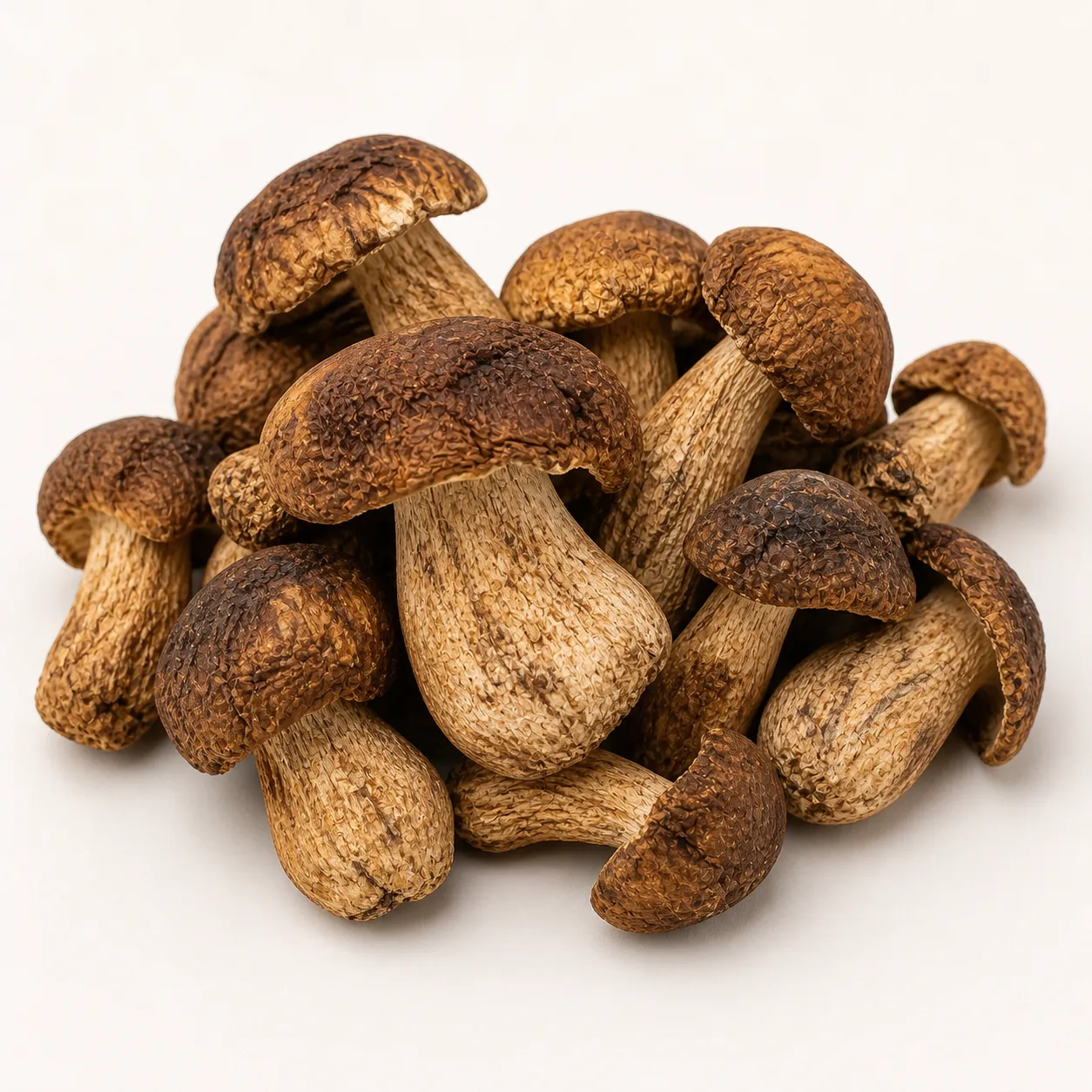
Porcini is the most-recognized name in the dried mushroom world, but most North American buyers couldn't accurately describe what makes one porcini different from another — or why pricing across porcini lots varies by 4x. The gap creates real problems for Canadian foodservice and grocery buyers who default to "porcini" as a generic category. According to a 2024 specialty-foods import analysis, porcini accounts for approximately 35% of Canadian dried specialty mushroom volume by weight. Porcini mushroom is the common Italian name for Boletus edulis, a wild-foraged forest mushroom prized worldwide for its dense meaty texture, beefy umami flavor, and complex earthy aroma that intensifies dramatically when dried.
Trace the Botanical Family and Wild Origin
Porcini belongs to the Boletaceae family — distinct from the morels (Morchellaceae), shiitake (Marasmiaceae), and chanterelles (Cantharellaceae) most buyers also stock. Within the broader Boletus family, "porcini" specifically refers to Boletus edulis and several closely related species sometimes sold under the same commercial name.
The four primary species in commercial trade:
- Boletus edulis — true porcini, the European reference standard
- Boletus pinophilus — pine porcini, slightly darker color and stronger flavor
- Boletus aereus — bronze porcini, dark cap, prized in Italy
- Boletus reticulatus — summer porcini, milder flavor, lighter color
Most buyers treat these interchangeably, and most suppliers blend them in commercial lots. The flavor and texture differences are real but modest. What matters more is whether the mushroom is a true Boletus edulis group member or a lower-grade lookalike like Boletus badius (bay bolete) — sometimes mixed into commodity-grade lots.
Understand Where Porcini Comes From
Porcini is wild-foraged across the Northern Hemisphere — virtually no commercial cultivation exists at scale. Mycorrhizal relationships with specific tree species (pine, spruce, oak, birch) make porcini extremely difficult to cultivate, and every porcini sold globally was harvested from a forest, not grown.
Major commercial sourcing regions:
- China (Yunnan, Sichuan) — global volume leader, autumn harvest
- Italy (Piedmont, Tuscany, Trentino) — heritage origin, premium pricing
- Eastern Europe (Romania, Bulgaria, Poland) — strong commercial sourcing
- France (Périgord, Aquitaine) — small-scale premium lots
- Pacific Northwest (Oregon, Washington, BC) — high-quality but limited volume
Origin matters for fine-dining storytelling and for slight flavor variations, but quality grade and supplier handling matter more than country of origin in most commercial decisions. Fungi Origin sources from multiple regions and grades each lot independently rather than pricing purely on origin.
Identify the Distinctive Flavor and Texture
Porcini's commercial dominance is built on flavor. The dried mushroom delivers an unmistakable aromatic signature — beefy, earthy, sweet, with a deep umami that lingers on the palate. The texture, when properly rehydrated, is firm and meaty, closer to a portobello than a typical mushroom.
Key flavor and texture characteristics:
- Umami intensity — among the highest of any dried mushroom, driven by glutamate concentration
- Aroma — earthy, slightly sweet, almost cocoa-like in premium lots
- Texture — dense and meaty, holds shape under sauce
- Cooking behavior — releases flavor into surrounding liquid faster than morels
- Aroma persistence — flavor compounds remain volatile during long cooks
According to a 2023 sensory analysis published in Food Chemistry, dried porcini contains roughly 2.5x the free glutamate concentration of fresh button mushrooms and 1.8x that of fresh shiitake. This is the chemical basis for porcini's reputation as an umami amplifier in Italian and French cuisines.
Recognize the Standard Commercial Forms
Porcini ships to Canadian buyers in four main formats, each suited to different applications. The format is at least as important as the grade for matching the product to the use.
The four commercial formats:
- Whole dried caps — premium presentation, ideal for risotto and visible plate features
- Sliced dried — pre-sliced for fast prep, the workhorse format for restaurants
- Pieces and broken caps — for sauces, stocks, and reduction-based dishes
- Powder — for finishing, dusting, infusing oils, and seasoning blends
Sliced dried porcini is the format most Canadian restaurants buy — it rehydrates faster than whole caps, plates more uniformly, and reduces kitchen prep time. Whole caps cost 15–25% more and are typically reserved for fine-dining showcase dishes. Powder is dramatically underused outside of fine-dining kitchens; a small dusting of porcini powder can transform a sauce or a finishing oil with minimal cost.
Frequently Asked Questions
Are porcini mushrooms the same as cèpes?
Yes, porcini and cèpes are the same mushroom species — Boletus edulis. "Porcini" is the Italian name; "cèpe" is the French name; "Steinpilz" is the German name; "ovuli buoni" or "king bolete" are sometimes-used English names. The naming reflects regional culinary tradition rather than botanical difference. Quality and grading conventions differ slightly between European and Asian sourcing.
Can you grow porcini mushrooms?
No, porcini cannot be reliably cultivated at commercial scale. They form mycorrhizal partnerships with specific tree species, requiring a complex forest ecosystem to fruit. Some research-scale cultivation has succeeded, but no commercial porcini farm operates today. Every porcini sold globally is wild-foraged, which is why supply is seasonal and weather-dependent.
What does porcini taste like compared to other mushrooms?
Porcini tastes meatier and more savory than common cultivated mushrooms, with a deep umami profile and subtle nutty-sweet notes. It's earthier than chanterelle, denser than morel, and more complex than shiitake. The flavor intensifies dramatically when dried — most chefs describe dried porcini as one of the most flavor-concentrated ingredients in the dry pantry.
Stock Porcini for Canadian Menus and Pantries
Porcini delivers more flavor per dollar than virtually any other dried specialty mushroom in the Canadian market. Whether you're a fine-dining chef building a porcini risotto, an Italian restaurant working through pasta and ragu applications, a grocer stocking specialty European ingredients, or a home cook upgrading the weeknight pantry — the right grade and format dramatically improves the result.
Browse the Fungi Origin dried porcini collection for whole, sliced, pieces, and powder formats with full origin documentation, or contact our wholesale team for bulk pricing and case-pack options.
Shop this product
Buy sliced porcini mushroom wholesale
Stocked in Ontario. Free GTA delivery over $350 CAD; courier shipping across Canada and to the US.
Wholesale
Dried Wild Mushrooms
Sliced Porcini Mushroom
Premium sliced dried porcini mushrooms for restaurants, distributors, and specialty food buyers.
Wholesale price
$72.87/lb
$160.65/kg
Market reference
Approx. $264/kg
Need wholesale support?
Contact Fungi Origin for pricing, product inspection, pickup, GTA delivery, or courier shipping across Canada and the US for bulk dried mushroom orders.
Contact Us